

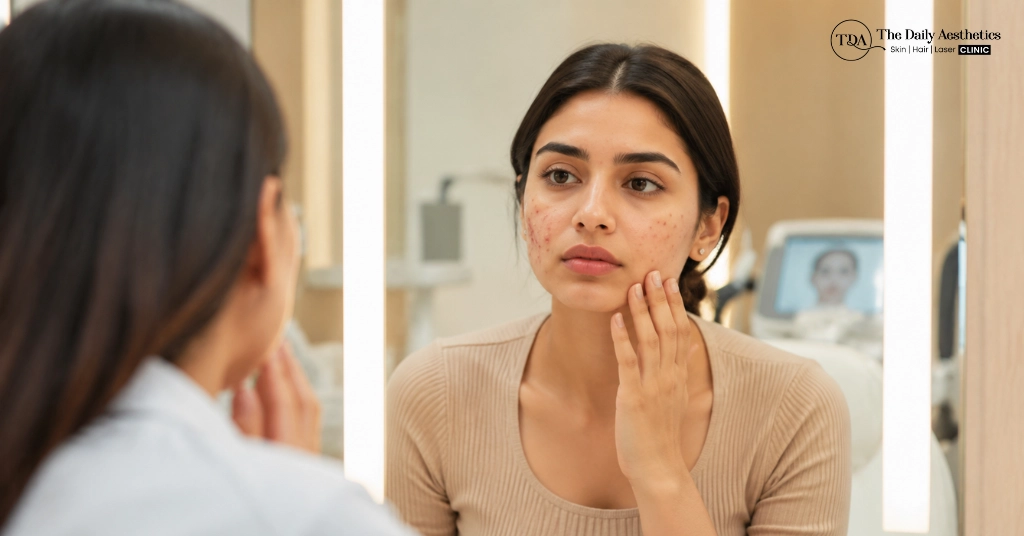
Acne vs Pimples: Difference, Causes & When to See a Dermatologist
Introduction A single red bump before a meeting, wedding function, college event, or date can feel annoying. But when the same bumps keep returning, leave dark marks, or become painful under the skin, the question changes from “How do I hide this?” to “Why does this keep happening?” Many people use acne and pimples as the same word. They are connected, but they are not exactly the same. A pimple is usually one visible breakout. Acne is a recurring skin condition that can include pimples, blackheads, whiteheads, painful cysts, marks, and scars. This difference matters because treating one random pimple is very different from treating ongoing acne. The wrong approach can lead to irritation, more breakouts, post-acne pigmentation, or scars that take much longer to improve. This guide explains acne vs pimples in simple language, why breakouts happen, what Pune patients often miss, what not to do at home, and when it is time to see a dermatologist or skin specialist. Key Takeaways What is the Real Difference Between Acne and Pimples? Acne is the wider skin condition. Pimples are one type of breakout that can happen within acne. Clinically, acne can develop when hair follicles become plugged with oil and dead skin cells, leading to whiteheads, blackheads, inflamed bumps, nodules, or cystic lesions. A pimple is more specific. The Cleveland Clinic explains pimples as small skin growths that may become inflamed or discolored, and pimples may be a symptom of acne. Think of acne as the full pattern and pimples as one visible expression of that pattern. One pimple before your period or after a sweaty commute may settle. Acne usually keeps returning, often in the same areas, and may involve different types of lesions at once. This is why a simple spot cream may help one pimple but fail when the real problem is recurring acne, hormonal acne, comedonal acne, or inflammation under the skin. Point of comparison Acne Pimples Meaning A recurring skin condition involving pores, oil glands, bacteria, and inflammation A single visible breakout or bump on the skin Pattern Often appears repeatedly in the same areas or in clusters May appear occasionally and settle on its own Types involved Whiteheads, blackheads, papules, pustules, nodules, cysts, marks, scars Usually one inflamed bump, whitehead, pustule, or clogged pore Duration Can continue for weeks, months, or years without the right plan May settle in a few days to a couple of weeks Common areas Face, jawline, chest, back, shoulders, and sometimes scalp margins Most often face, but can happen anywhere pores get blocked Care needed Needs consistent acne management and sometimes dermatologist-led care May respond to gentle care and correct spot treatment Note: A pimple can be part of acne, but not every occasional pimple means you have chronic acne. Bottom Line: If breakouts keep returning, treat the pattern – not just the newest bump. Not Sure If It’s Acne or Just Occasional Pimples? Recurring breakouts can have different causes and may require different treatment approaches. Our experts at The Daily Aesthetics can assess your skin and recommend the most suitable solution for long-term skin health. Book an Acne Consultation Why Do Acne and Pimples Happen? Acne and pimples usually begin when pores become blocked by oil, dead skin cells, and inflammation. But the reason this happens can vary widely. Hormones, genetics, stress, friction, skincare choices, sweat, certain medicines, and lifestyle triggers can all influence breakout patterns. For many Pune patients, the trigger is not just one thing. A person may have naturally oily skin, use heavy sunscreen, wear a helmet, sweat during commutes, apply makeup often, and change skincare products every week. Together, those habits can keep the skin irritated and congested. Acne also has an emotional side. When breakouts show up repeatedly on the cheeks, forehead, chin, or jawline, people often start avoiding photos, makeup-free outings, or social plans. That stress is real, and it deserves a practical treatment plan instead of blame. What Are the Most Common Acne and Pimple Triggers? Possible trigger How it can show up What to review Hormonal pattern Jawline acne, pre-period flares, adult acne, deep painful bumps Cycle timing, PCOS symptoms, stress, sleep, and medical history Product clogging Forehead bumps, cheek congestion, breakouts after new skincare or makeup Moisturizer, sunscreen, makeup, hair oil, and cleansing routine Sweat and friction Helmet acne, gym-related bumps, mask-zone breakouts, shoulder/back acne Helmet padding, towel hygiene, post-workout cleansing, clothing friction Inflammation Red, tender, pus-filled pimples or painful under-skin bumps Severity, pain, scarring risk, and need for prescription care Picking or squeezing Dark marks, scabs, repeated swelling, uneven texture Habit control, spot care, acne treatment, and scar prevention Note: This table is a guide, not a diagnosis. Persistent, painful, or spreading breakouts need professional assessment. Bottom Line: Acne treatment works better when the trigger pattern is identified before starting products or procedures. Recurring Breakouts and Not Sure What’s Triggering Them? Whether your breakouts are linked to periods, workouts, helmets, makeup, stress, or other lifestyle factors, the experts at The Daily Aesthetics can help identify the cause and recommend the most suitable treatment plan. Start an Online Dermatology Consultation Are Blackheads, Whiteheads, Cysts, and Acne Marks All the Same? No. Acne can appear in different forms, and each type needs a different level of care. The AAD symptoms guide explains that acne may include whiteheads, blackheads, pimples, nodules, cysts, dark spots, and scars. Whiteheads and blackheads are usually clogged pores. Papules and pustules are more inflamed. Nodules and cysts are deeper, more painful, and more likely to leave scars. Dark spots after acne are often post-inflammatory pigmentation, while true scars change skin texture. This difference is important for Indian skin because post-acne marks can stay visible for months, especially when acne is picked, irritated, or exposed to sun without proper protection. Breakout or mark What it may look like Care direction Whiteheads Small closed bumps that look white or skin-colored Regular acne routine, gentle exfoliation, sometimes topical medication Blackheads Open clogged pores with dark-looking tops Retinoid-based care, professional guidance if recurring Papules Red, inflamed, tender bumps without pus Anti-inflammatory acne care and avoid picking Pustules Red bumps with visible pus at the
Acne vs Pimples: Difference, Causes & When to See a Dermatologist Read More »
Acne Treatement