

Table of Contents
ToggleIntroduction
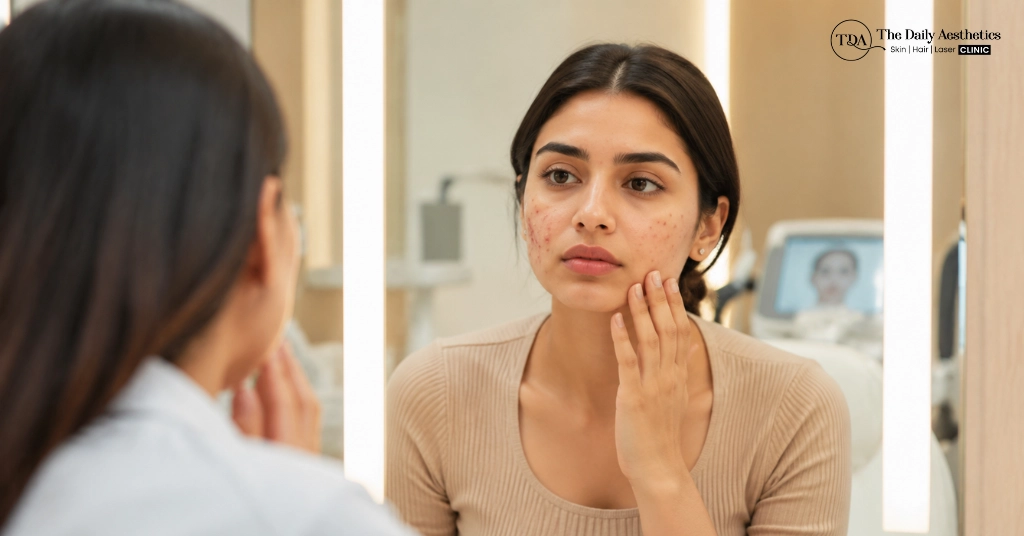
A single red bump before a meeting, wedding function, college event, or date can feel annoying. But when the same bumps keep returning, leave dark marks, or become painful under the skin, the question changes from “How do I hide this?” to “Why does this keep happening?”
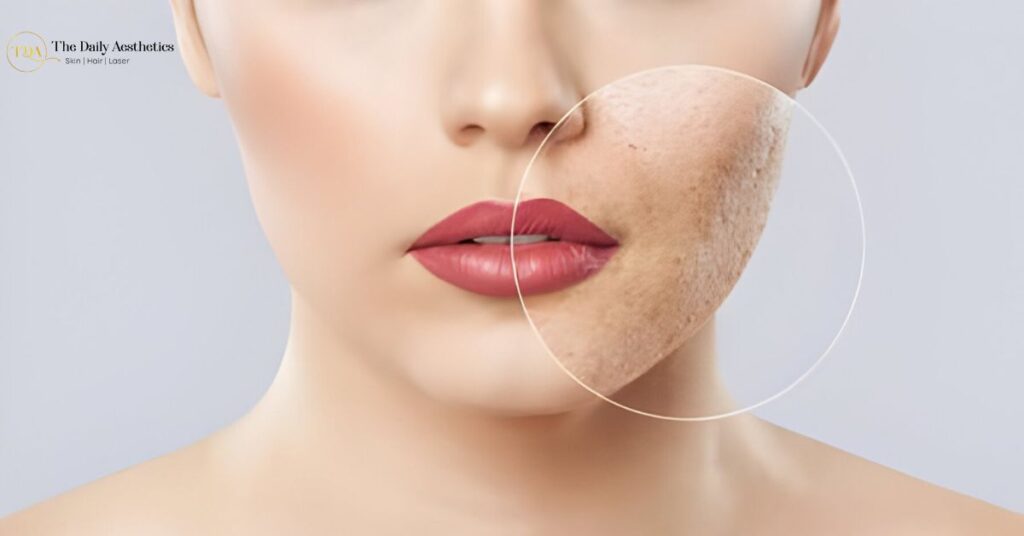
Many people use acne and pimples as the same word. They are connected, but they are not exactly the same. A pimple is usually one visible breakout. Acne is a recurring skin condition that can include pimples, blackheads, whiteheads, painful cysts, marks, and scars.
This difference matters because treating one random pimple is very different from treating ongoing acne. The wrong approach can lead to irritation, more breakouts, post-acne pigmentation, or scars that take much longer to improve.
This guide explains acne vs pimples in simple language, why breakouts happen, what Pune patients often miss, what not to do at home, and when it is time to see a dermatologist or skin specialist.
Key Takeaways
- Acne is the condition: Acne is an ongoing skin condition, while pimples are individual breakouts that may appear as one symptom of acne.
- One pimple is not always acne: An occasional bump can happen from sweat, stress, friction, makeup, hormones, or a clogged pore without meaning you have chronic acne.
- Recurring breakouts need a plan: If bumps return in the same areas, appear in clusters, or leave marks, acne management should focus on causes, not only spot treatment.
- Picking increases risk: Squeezing or scratching pimples can increase inflammation and may raise the risk of dark spots, infection, or acne scars.
- Pune skin needs extra care: Heat, sweat, sunscreen mistakes, pollution, helmets, makeup, and gym routines can make acne-prone skin more reactive.
- Painful acne is a warning sign: Deep, tender, cyst-like bumps or acne that leaves scars should be assessed early by a dermatologist.
- Treatment takes consistency: Acne treatment often needs weeks of regular use before visible improvement, so changing products every few days can delay results.
- Consultation prevents guesswork: A skin assessment helps decide whether skincare, prescription treatment, peels, lasers, or scar treatment is suitable.
What is the Real Difference Between Acne and Pimples?
Acne is the wider skin condition. Pimples are one type of breakout that can happen within acne. Clinically, acne can develop when hair follicles become plugged with oil and dead skin cells, leading to whiteheads, blackheads, inflamed bumps, nodules, or cystic lesions.
A pimple is more specific. The Cleveland Clinic explains pimples as small skin growths that may become inflamed or discolored, and pimples may be a symptom of acne.
Think of acne as the full pattern and pimples as one visible expression of that pattern. One pimple before your period or after a sweaty commute may settle. Acne usually keeps returning, often in the same areas, and may involve different types of lesions at once.
This is why a simple spot cream may help one pimple but fail when the real problem is recurring acne, hormonal acne, comedonal acne, or inflammation under the skin.
| Point of comparison | Acne | Pimples |
| Meaning | A recurring skin condition involving pores, oil glands, bacteria, and inflammation | A single visible breakout or bump on the skin |
| Pattern | Often appears repeatedly in the same areas or in clusters | May appear occasionally and settle on its own |
| Types involved | Whiteheads, blackheads, papules, pustules, nodules, cysts, marks, scars | Usually one inflamed bump, whitehead, pustule, or clogged pore |
| Duration | Can continue for weeks, months, or years without the right plan | May settle in a few days to a couple of weeks |
| Common areas | Face, jawline, chest, back, shoulders, and sometimes scalp margins | Most often face, but can happen anywhere pores get blocked |
| Care needed | Needs consistent acne management and sometimes dermatologist-led care | May respond to gentle care and correct spot treatment |
Note: A pimple can be part of acne, but not every occasional pimple means you have chronic acne.
Bottom Line: If breakouts keep returning, treat the pattern – not just the newest bump.
Not Sure If It’s Acne or Just Occasional Pimples?
Recurring breakouts can have different causes and may require different treatment approaches. Our experts at The Daily Aesthetics can assess your skin and recommend the most suitable solution for long-term skin health.
Book an Acne ConsultationWhy Do Acne and Pimples Happen?
Acne and pimples usually begin when pores become blocked by oil, dead skin cells, and inflammation. But the reason this happens can vary widely. Hormones, genetics, stress, friction, skincare choices, sweat, certain medicines, and lifestyle triggers can all influence breakout patterns.
For many Pune patients, the trigger is not just one thing. A person may have naturally oily skin, use heavy sunscreen, wear a helmet, sweat during commutes, apply makeup often, and change skincare products every week. Together, those habits can keep the skin irritated and congested.
Acne also has an emotional side. When breakouts show up repeatedly on the cheeks, forehead, chin, or jawline, people often start avoiding photos, makeup-free outings, or social plans. That stress is real, and it deserves a practical treatment plan instead of blame.
What Are the Most Common Acne and Pimple Triggers?
- Hormonal changes: Periods, PCOS tendency, puberty, pregnancy-related changes, and adult hormonal shifts can affect oil production and jawline breakouts.
- Heavy or unsuitable products: Thick creams, oily sunscreens, comedogenic makeup, or hair oils touching the face can clog pores.
- Sweat and friction: Helmets, masks, gym towels, tight collars, and backpacks can trap sweat and trigger acne-like bumps.
- Stress and sleep disruption: Stress may not be the only cause, but it can worsen inflammation and make breakouts feel more frequent.
- Picking and squeezing: Popping may push inflammation deeper, increase redness, and leave marks or scars.
- Delayed treatment: Waiting too long with painful or recurring acne can make scars and pigmentation more likely.
| Possible trigger | How it can show up | What to review |
| Hormonal pattern | Jawline acne, pre-period flares, adult acne, deep painful bumps | Cycle timing, PCOS symptoms, stress, sleep, and medical history |
| Product clogging | Forehead bumps, cheek congestion, breakouts after new skincare or makeup | Moisturizer, sunscreen, makeup, hair oil, and cleansing routine |
| Sweat and friction | Helmet acne, gym-related bumps, mask-zone breakouts, shoulder/back acne | Helmet padding, towel hygiene, post-workout cleansing, clothing friction |
| Inflammation | Red, tender, pus-filled pimples or painful under-skin bumps | Severity, pain, scarring risk, and need for prescription care |
| Picking or squeezing | Dark marks, scabs, repeated swelling, uneven texture | Habit control, spot care, acne treatment, and scar prevention |
Note: This table is a guide, not a diagnosis. Persistent, painful, or spreading breakouts need professional assessment.
Bottom Line: Acne treatment works better when the trigger pattern is identified before starting products or procedures.
Recurring Breakouts and Not Sure What’s Triggering Them?
Whether your breakouts are linked to periods, workouts, helmets, makeup, stress, or other lifestyle factors, the experts at The Daily Aesthetics can help identify the cause and recommend the most suitable treatment plan.
Start an Online Dermatology ConsultationAre Blackheads, Whiteheads, Cysts, and Acne Marks All the Same?
No. Acne can appear in different forms, and each type needs a different level of care. The AAD symptoms guide explains that acne may include whiteheads, blackheads, pimples, nodules, cysts, dark spots, and scars.
Whiteheads and blackheads are usually clogged pores. Papules and pustules are more inflamed. Nodules and cysts are deeper, more painful, and more likely to leave scars. Dark spots after acne are often post-inflammatory pigmentation, while true scars change skin texture.
This difference is important for Indian skin because post-acne marks can stay visible for months, especially when acne is picked, irritated, or exposed to sun without proper protection.
| Breakout or mark | What it may look like | Care direction |
| Whiteheads | Small closed bumps that look white or skin-colored | Regular acne routine, gentle exfoliation, sometimes topical medication |
| Blackheads | Open clogged pores with dark-looking tops | Retinoid-based care, professional guidance if recurring |
| Papules | Red, inflamed, tender bumps without pus | Anti-inflammatory acne care and avoid picking |
| Pustules | Red bumps with visible pus at the tip | Targeted acne treatment and hygiene support |
| Nodules / cysts | Deep, painful, under-skin lumps | Dermatologist assessment; higher risk of scarring |
| Post-acne marks | Brown, red, pink, or purple flat spots after acne heals | Sunscreen, pigmentation care, peels or lasers if suitable |
| Acne scars | Pits, depressions, raised scars, or uneven texture | Acne control first, then scar-focused procedures |
Note: Active acne should usually be controlled before planning intensive scar procedures.
Bottom Line: Do not treat every bump the same. The type of acne decides the treatment direction.
When Can You Manage a Pimple at Home?
You may be able to manage an occasional mild pimple at home if it is small, not very painful, not spreading, and not leaving repeated marks. Gentle cleansing, non-comedogenic moisturizer, sunscreen, and a suitable spot treatment may be enough for isolated breakouts.
The mistake many people make is over-treating. Scrubs, toothpaste, lemon juice, harsh masks, repeated exfoliation, and multiple actives at once can damage the skin barrier and make redness or pigmentation worse.
Safe at-home Basics for Occasional Pimples
- Wash your face gently, not aggressively, especially after sweating.
- Avoid squeezing, scratching, or “cleaning out” the pimple manually.
- Use non-comedogenic moisturizer and sunscreen that suits your skin type.
- Patch test new products instead of changing your full routine overnight.
- Keep helmets, pillow covers, makeup brushes, and phone screens clean.
- Give proven ingredients time; switching too quickly can irritate the skin.
If you have a deep painful bump, avoid squeezing it. The AAD deep pimple guidance warns that picking or squeezing nodular or cystic acne can increase the risk of infection, discoloration, and scarring.
When Should You See a Dermatologist for Acne or Pimples?
You should see a dermatologist when acne is painful, recurring, scarring, leaving dark spots, or not improving after consistent basic care. The AAD adult acne guidance notes that large painful pimples, acne that scars, and dark spots after acne clears often need dermatologist-led care.
You do not need to wait until acne becomes severe. Early care can help reduce inflammation, lower the chance of marks, and prevent trial-and-error product use. This is especially important if acne is affecting confidence, sleep, social comfort, or work life.
For teenagers, early treatment can help prevent acne from becoming deeper. For adults, acne may need a more detailed discussion about hormones, lifestyle, skincare, stress, or underlying triggers. For people with darker skin tones, acne marks and pigmentation need extra attention.
| Situation | Can basic care help? | When to consult |
| One small pimple before an event | Usually yes, with gentle care and correct spot treatment | If it becomes very painful, swollen, or keeps returning |
| Blackheads and whiteheads keep coming back | Sometimes, if mild and product-related | If texture worsens or over-the-counter care is not helping |
| Painful cyst-like bumps | Usually not enough | Consult early to reduce scarring risk |
| Acne leaves brown or red marks | Sunscreen and gentle care help, but may be slow | If marks are frequent, deep, or emotionally distressing |
| Acne scars or pits | Home care cannot reliably smooth deep texture | Consult for scar assessment after active acne control |
| Sudden adult acne | Sometimes, but cause should be reviewed | If acne appears after years of clear skin or follows a hormonal pattern |
Note: This table is not a diagnosis. Painful, spreading, infected-looking, or recurring breakouts need professional review.
Bottom Line: See a dermatologist earlier when acne is painful, repeated, scarring, or affecting your confidence.
What Treatments Can Help Acne, Pimples, Marks, and Scars?
Treatment depends on what you actually have: occasional pimples, comedonal acne, inflammatory acne, cystic acne, hormonal acne, post-acne marks, or true scars. A good plan may combine skincare, prescription support, in-clinic procedures, and long-term maintenance.
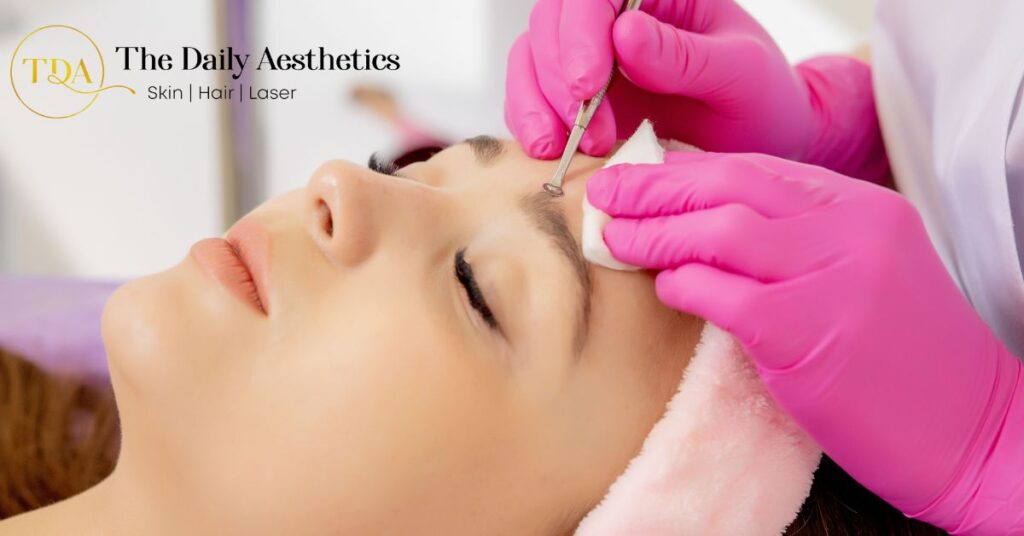
Dermatology treatment may include topical medicines, oral medicines, chemical peels, injections for selected painful breakouts, extraction in safe settings, and laser or light-based options. The AAD treatment guide emphasizes that different acne types often need different treatment plans.
For post-acne marks, chemical peels, pigment-control skincare, sunscreen, and selected laser treatments may be discussed after skin assessment. For acne scars, the treatment is different again because scars involve texture, not just color.
At TDA, acne-related care may connect active acne control with acne scar treatment, chemical peels, skin laser treatment, pigmentation care, and maintenance routines depending on the concern and skin response.
| Concern | Possible treatment direction | Important caution |
| Occasional pimple | Gentle routine, spot treatment, barrier support | Avoid harsh DIY remedies and popping |
| Blackheads / whiteheads | Retinoid-style care, salicylic acid, pore-focused routine | Do not squeeze blackheads aggressively |
| Inflamed acne | Prescription topical or oral care may be needed | Do not delay if painful or spreading |
| Hormonal pattern acne | Medical review, lifestyle discussion, prescription planning | Needs cause-based care, not only facials |
| Post-acne marks | Sunscreen, pigmentation routine, peels or lasers if suitable | Marks can worsen with sun and irritation |
| Acne scars | Laser, microneedling, subcision, peels, fillers, or combination plans | Active acne should be managed first |
Note: Treatment options vary by age, skin type, acne severity, medical history, pregnancy status, and previous reactions.
Bottom Line: Acne treatment is not one product. It is a plan matched to acne type, skin type, and scarring risk.
Concerned About Acne Marks or Scars?
If acne marks or scars are becoming more noticeable, the experts at The Daily Aesthetics can help you understand the available treatment options and choose the most suitable approach for smoother, clearer-looking skin.
Explore Acne Scar Treatment OptionsWhat Acne Mistakes Can Make Breakouts Worse?
Most acne mistakes come from impatience. When one product does not work quickly, people add another. Then a scrub, then a peel, then a drying mask. The skin becomes irritated, and the breakout starts looking angrier than before.
Picking is another major mistake. The AAD acne scar guidance explains that squeezing, popping, or picking acne increases the risk of scarring by increasing inflammation.
Avoid These Common Acne Mistakes:
- Using harsh face scrubs on inflamed acne.
- Applying toothpaste, lemon juice, or baking soda on pimples.
- Trying too many active ingredients at the same time.
- Stopping acne treatment after three or four days because there is no instant result.
- Skipping sunscreen because skin feels oily.
- Using heavy hair oils that touch the forehead, temples, or cheeks.
- Popping pimples before events and then covering the wound with makeup.
- Getting peels, lasers, or facials without first understanding whether acne is active.
How Does Pune Lifestyle Affect Acne-prone Skin?
Pune skin often deals with a mix of sun exposure, dust, pollution, sweat, gym routines, traffic commutes, helmets, air-conditioned offices, and event makeup. None of these alone means you will get acne, but they can make acne-prone skin more sensitive or congested.
Helmet acne is common around the forehead, temples, jawline, and cheeks. Gym-related breakouts may appear where sweat and friction stay on the skin. Heavy sunscreen or makeup can also clog pores if it is not removed properly at the end of the day.
This is why acne care in Pune should feel practical. A good routine should fit your commute, weather, work schedule, sunscreen needs, and social life. A plan that is too complicated usually fails, even if the ingredients are good.
Practical Routine Pointers for Pune Patients:
- Choose sunscreen that suits acne-prone skin instead of skipping SPF completely.
- Clean helmet padding or use a washable liner if forehead acne is frequent.
- Wash gently after heavy sweating, but do not over-cleanse through the day.
- Remove makeup fully before sleeping, especially after events or long workdays.
- Avoid applying hair oil close to the forehead if you get hairline acne.
- Carry blotting paper or a clean cloth instead of rubbing sweat aggressively.
Where Can You Consult for Acne and Pimples in Pune?
The Daily Aesthetics serves patients across Pune through clinics in Kalyani Nagar, Kharadi, and Baner. This makes follow-up easier for patients from areas such as Koregaon Park, Viman Nagar, Magarpatta, Aundh, Balewadi, Hinjewadi, and nearby neighborhoods.
For acne and pimple concerns, TDA brings together dermatology support, aesthetic physicians, skin and hair specialists, laser expertise, and treatment planning under one clinic brand. Dr. Arshi Rahul is positioned as a skincare, anti-ageing, laser treatment specialist and aesthetic physician, while Dr. Diksha G. supports dermatology-focused diagnosis and care for skin conditions.
The clinic also supports concerns that often overlap with acne, including pigmentation, acne scars, skin texture, chemical peels, skin laser treatment, dandruff, hair fall, and selected aesthetic treatments after consultation.
| TDA clinic | Address | Phone |
| Kalyani Nagar | Plot 17, Lane No. 7, next to Hotel Sudharshan, opposite Lunkad Sky Lounge, Kalyani Nagar, Pune, Maharashtra 411006 | +91 96738 58066 |
| Kharadi | Shop no. 120, Gera Imperial, Rajaram Patil Nagar, Vittal Nagar, Kharadi, Pune, Maharashtra 411014 | +91 97685 55421 |
| Baner | Shop No. 11, A-wing, SR. No. 32, Sterling Tower, Off Pancard Club Road, Baner, Pune, Maharashtra 411045 | +91 91585 80123 |
Note: Please confirm doctor availability, appointment timing, and clinic schedule before visiting.
Bottom Line: Choose the clinic that makes consultation and follow-up easiest for your routine.
Not Sure Whether to Choose an Online or In-Clinic Acne Consultation?
The experts at The Daily Aesthetics can help you understand the benefits of each option and guide you toward the consultation format that best suits your skin concerns, schedule, and treatment goals.
Contact The Daily Aesthetics TeamWhy Choose the Daily Aesthetics for Acne, Pimples, and Skin Concerns?
The Daily Aesthetics is built around skin, hair, body, and aesthetic treatments in Pune, with care available across Kalyani Nagar, Kharadi, and Baner. The clinic emphasizes personalized treatment planning, advanced technology, safety practices, and a calm patient experience.
TDA has over 11 years of trusted expertise and has cared for 25,000+ happy patients. For acne-prone skin, this matters because treatment often needs patience, follow-up, and a plan that changes as the skin responds.
Instead of treating every breakout as the same problem, the team can help identify whether you are dealing with occasional pimples, ongoing acne, post-acne pigmentation, acne scars, or another skin condition that only looks like acne.
Patients may benefit from this wider setup when active acne overlaps with pigmentation, texture changes, dandruff, hair fall, laser needs, or aesthetic skin goals. The right next step begins with assessment, not assumptions.
Conclusion
Acne and pimples may look similar in the mirror, but they need different thinking. A single pimple may settle with gentle care. Recurring acne needs a plan that looks at pores, oil, inflammation, hormones, skin type, products, lifestyle, and scarring risk.
The most important step is not buying the strongest product. It is understanding what your skin is trying to tell you. Painful bumps, frequent breakouts, dark marks, and acne scars are all signs that it may be time to stop guessing and speak to a trained skin professional.
For patients in Pune, The Daily Aesthetics offers consultation-led care across Kalyani Nagar, Kharadi, and Baner, with support for acne, pimples, post-acne marks, scars, pigmentation, and related skin concerns.
Frequently Asked Questions
1. Are Acne and Pimples the Same Thing?
No. Acne is a recurring skin condition, while pimples are individual bumps that may appear as part of acne. One pimple does not always mean you have chronic acne, but repeated breakouts usually need a fuller skin plan.
2. How Do I Know if I Have Acne or Just Pimples?
If you get occasional single bumps that settle, they may be pimples. If breakouts come back repeatedly, appear in clusters, include blackheads or painful bumps, or leave marks, you may be dealing with acne.
3. When should I see a dermatologist for acne?
See a dermatologist if acne is painful, recurring, leaving dark spots, causing scars, or not improving with consistent basic care. You should also seek help for sudden adult acne, deep cyst-like bumps, or acne that affects your confidence.
4. Can Pimples Leave Permanent Scars?
Small pimples may heal without a scar, but deep, inflamed, picked, or squeezed breakouts can increase scarring risk. Acne scars are easier to prevent than treat, so early care matters.
5. What Causes Acne on the Jawline and Chin?
Jawline and chin acne is often linked with hormonal patterns, stress, friction, skincare products, or hair products touching the skin. A consultation can help identify whether the pattern needs medical acne care or routine correction.
6. Should I Pop a Pimple if It Has Pus?
No. Popping can push inflammation deeper, spread bacteria, and increase the risk of dark marks or scars. Use safe spot care and consult a specialist if the pimple is painful, large, or recurrent.
7. Can Chemical Peels or Lasers Help Acne Marks?
Chemical peels and selected lasers may help post-acne pigmentation or uneven tone in suitable patients. Active acne, skin type, sensitivity, and sun exposure habits should be assessed before planning any procedure.
8. Which Tda Clinic Should I Visit for Acne in Pune?
You can choose the TDA clinic that is easiest for your follow-up: Kalyani Nagar, Kharadi, or Baner. Call the clinic or book online to confirm availability, appointment timing, and the right consultation option.
The Daily Aesthetics Clinic – Redefining Skin & Hair Treatments in Pune
The Daily Aesthetics Clinic is a trusted dermatology and aesthetic center in Pune, offering advanced treatments for acne, pigmentation, hair loss, laser hair removal, Hydrafacials, hair transplants, and personalized skincare.
Under the guidance of Dr. Arshi Rahul, the clinic combines medical expertise with FDA-approved technology to deliver customized treatment plans that focus on restoring skin health, enhancing radiance, and ensuring every patient feels confident and cared for.
With the trust of over 3,500 patients and a 4.9★ rating, The Daily Aesthetics Clinic is known for delivering effective, safe, and personalized care in a calm, welcoming setting.
We serve clients across Pune through our three conveniently located clinics in Baner, Kharadi, and Kalyani Nagar.
Read More:
- Different Types of Acne: Causes, Symptoms, Treatments & Prevention
- Best Acne Scar Treatment in Baner & Hair Loss treatment in Pune
- Achieve Flawless Skin: Your Guide to Acne Scar Treatment in Kharadi, Pune
- Erase Acne Scars: The Best Treatments in Pune by The Daily Aesthetic
- The Journey to Clear Skin: Acne Scar Treatments in Magarpatta – The Daily Aesthetics

Dr. Arshi Rahul
Aesthetic Physician & Skin Specialist | 11+ years of experience
Expert Dermo-Cosmetologist & Trichologist (Gold Coast Training Academy, Australia) | Certified in Laser, Botox, Fillers & Thread Lifting | Over 10 Years of Advanced Aesthetic Expertise