

Introduction
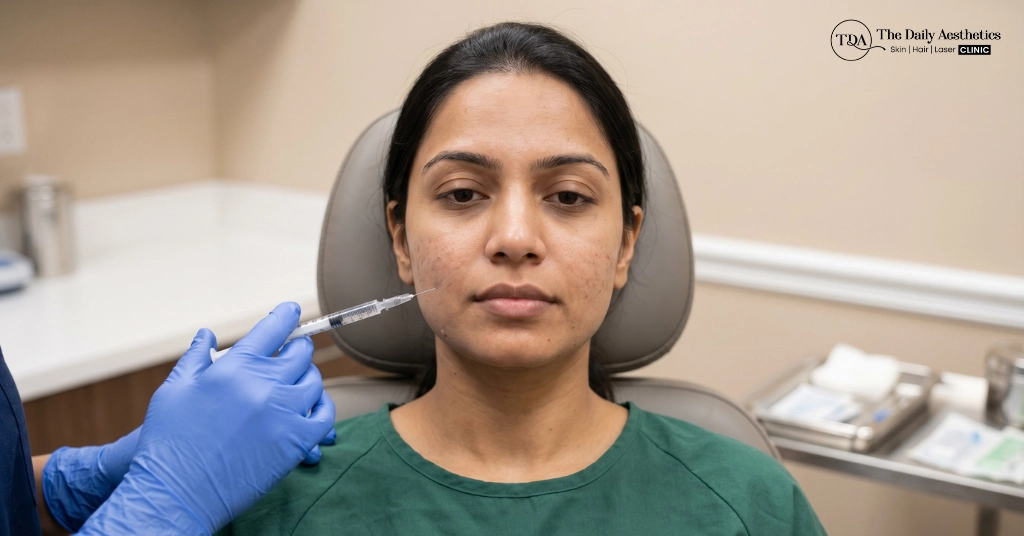
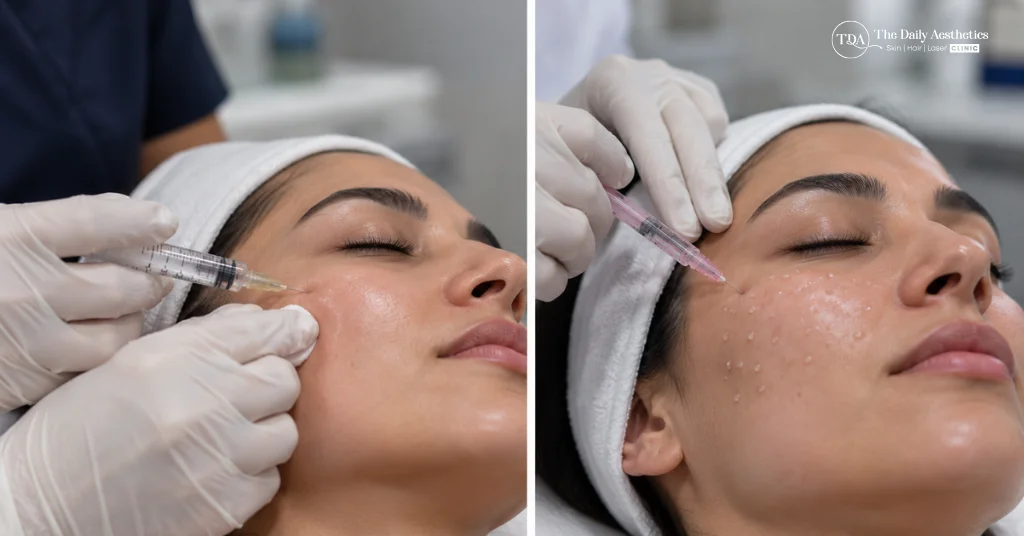
You may have seen PDRN, PN, polynucleotides and Salmon DNA skin boosters everywhere lately. They sound similar, they are often used in the same conversations, and they are promoted for many of the same skin goals: glow, repair, hydration, texture, fine lines and early visible ageing.
The confusion is understandable. PDRN and polynucleotides are both DNA-derived regenerative treatments, but they should not be treated like two identical labels for the same thing. The formulation, molecular structure, treatment area, delivery method and your skin concern all matter.
At The Daily Aesthetics Clinic, many Pune patients ask a very practical question: should I choose PDRN, polynucleotides, Rejuran, Salmon DNA therapy or a different skin booster altogether? The honest answer is that the right choice depends on your skin, not the trend.
This guide keeps the comparison simple. You will understand how PDRN and polynucleotides overlap, where they may differ, what results may be realistic, and why consultation-led treatment planning is safer than choosing whichever acronym is popular online.
Key Takeaways
- PDRN and PN are related, not identical: Both are DNA-derived regenerative treatments, but they may differ in chain length, formulation, concentration and clinical use.
- No option is universally better: PDRN may suit one patient, while polynucleotides may be preferred for another depending on the treatment goal and product used.
- Skin quality is the main focus: These treatments are generally used to support hydration, texture, elasticity, fine lines, dullness and overall skin repair rather than add facial volume.
- The product matters: The name on the treatment is less important than the exact formulation, brand quality, concentration, protocol and provider skill.
- Results are gradual: Most regenerative skin-quality treatments work over weeks and sessions, so they should not be compared with instant-volume procedures like fillers.
- Assessment prevents mismatch: A skin assessment helps decide whether PDRN, PN, a hyaluronic acid skin booster, PRP, microneedling, laser or a combination plan makes more sense.
- Pune patients should ask for clarity: Before booking, ask what product is being used, why it suits your concern, how many sessions may be needed and what aftercare is required.
Confused Between PDRN and Polynucleotides?
A skin assessment can help match the treatment approach to your skin concern, treatment area and goals
Book a Skin ConsultationAre PDRN and Polynucleotides the Same Thing?
PDRN and polynucleotides are closely related DNA-derived treatments, but they are not always the same in practice. PDRN usually refers to polydeoxyribonucleotide fragments, while PN usually refers to longer polynucleotide chains. Both may support skin repair and quality, but product formulation and protocol decide the actual treatment experience.
Think of them as part of the same regenerative skin-treatment family. They are often discussed together because both are used to improve skin quality rather than reshape the face. Both may be delivered through microinjections or microneedling-style protocols depending on the product and clinical plan.
The mistake is assuming the labels alone tell the full story. A clinic may call a treatment PDRN, PN, Salmon DNA or a skin booster, but the actual product, concentration, purification process, delivery technique and treatment area are what shape the result.
That is why the better question is not only, “Which is better?” It is, “Which formulation and protocol fits my skin concern safely?”
What Is PDRN?
PDRN stands for polydeoxyribonucleotide. In aesthetic skin care, it is used as a regenerative skin booster that may support skin repair, hydration, texture and overall skin quality. It is often discussed for dullness, fine lines, acne-marked texture, under-eye skin quality and post-procedure recovery planning.
For patients comparing options, PDRN Treatment in Pune can be discussed through consultation-led protocols that may involve microinjections or microneedling, depending on the treatment area, product and skin concern.
From a practical patient point of view, PDRN is usually chosen when the goal is not volume, but skin-quality support. It may be considered when the skin looks tired, damaged, dull, rough, dehydrated or less resilient than before.
Current clinical literature describes PDRN as a DNA-derived biopolymer that can act through tissue-repair pathways, including adenosine receptor-related mechanisms. That does not mean every patient gets the same result, and it does not make the treatment a cure for every texture, ageing or pigmentation concern.
What Are Polynucleotides?
Polynucleotides, often shortened to PN, are longer DNA-derived chains used in regenerative aesthetic treatments to support skin hydration, elasticity, texture and overall skin quality. They are often positioned as injectable skin boosters for patients who want progressive improvement without changing facial volume.
At The Daily Aesthetics Clinic, Polynucleotide Treatment in Pune is considered for patients who want gradual support for hydration, elasticity, texture and natural-looking skin-quality improvement.
Polynucleotide treatments may be discussed for fine lines, dull or tired-looking skin, enlarged-looking pores, uneven texture, early ageing changes, under-eye skin quality and selected acne-scar texture concerns. Like PDRN, results are usually gradual.
The evidence base for polynucleotides in aesthetic medicine is promising but still developing, which is why medically careful language matters. These treatments may support visible skin-quality improvement, but they should not be described as guaranteed collagen replacement or permanent anti-ageing solutions.
PDRN vs Polynucleotides: What Is the Main Difference?
The main difference is that PDRN usually refers to shorter polydeoxyribonucleotide fragments, while PN usually refers to longer polynucleotide chains. In everyday clinic conversations, both are used for regenerative skin-quality goals, but exact results depend on the product, molecular profile, delivery method and patient suitability.
This is where online comparisons can become too simple. Some content presents PN as “stronger” and PDRN as “lighter,” but that is not always clinically useful. Product quality, concentration, depth, number of sessions and treatment area may matter more than the acronym.
Use the table below as a decision guide, not a final diagnosis.
| Comparison Point | PDRN | Polynucleotides / PN | What It Means for Patients |
| Full Form | Polydeoxyribonucleotide | Polynucleotides | Both sit within the DNA-derived regenerative skin-treatment category. |
| Molecular Profile | Usually shorter DNA fragments | Usually longer DNA chains | The exact formulation and product quality matter more than the simple label. |
| Common Treatment Emphasis | Repair support, glow, texture, under-eye quality and selected post-procedure recovery planning | Hydration, elasticity, skin density, fine lines and progressive rejuvenation | The overlap is significant, so suitability depends on assessment. |
| Result Style | Gradual skin-quality improvement rather than facial reshaping | Gradual skin-quality improvement rather than facial reshaping | Neither should be expected to work like a filler or surgery. |
| Best-Fit Discussion | May be discussed for tired, dull, damaged, thin or acne-marked skin | May be discussed for texture, elasticity, fine lines, hydration and overall rejuvenation | The same patient may be offered either depending on product availability and treatment plan. |
| Important Caution | Not every PDRN product or protocol is the same | Not every PN product or protocol is the same | Ask what formulation is being used and why it suits your concern. |
Note: Categories can overlap. Individual products, concentrations, indications and delivery methods vary, so this table should not replace a clinical assessment.
Bottom Line: PDRN and PN are best compared by formulation, concern and treatment plan, not by declaring one universally better.
Compare the Options With a Professional
Understand whether PDRN, PN or another skin-quality treatment may be more suitable for your needs.
Explore Your Treatment OptionsWhich Is Better for Your Skin, PDRN or Polynucleotides?
Neither PDRN nor polynucleotides are automatically better for everyone. The better option depends on what you want to improve: hydration, texture, fine lines, under-eye quality, acne marks, elasticity or overall skin freshness. Your skin history, sensitivity, previous treatments and downtime comfort also matter.
A good treatment plan begins with the concern you can actually see and feel. Is your skin dehydrated? Is makeup sitting unevenly? Are fine lines showing earlier than expected? Are you worried about under-eye crepiness, acne-marked texture or tired-looking skin? The answer changes the recommendation.
For Dehydrated or Tired-Looking Skin
Both PDRN and PN may be considered when the skin looks tired, dull or dehydrated. If the main concern is hydration, your clinician may also compare them with other options under the broader skin booster treatment category.
For some patients, a hyaluronic acid booster, HydraFacial, gentle peel or barrier-focused skincare plan may be enough. For others, regenerative skin boosters may be discussed when the concern is deeper skin quality rather than surface dryness alone.
For Fine Lines and Elasticity
Fine lines linked to early ageing, dehydration and reduced elasticity may respond gradually to regenerative skin-quality support. Polynucleotide treatments are often discussed for elasticity and density, while PDRN may be discussed for repair support and texture.
The goal should be realistic softening and healthier-looking skin, not wrinkle erasure. If deeper folds, facial volume loss or muscle-related lines are present, other treatments may be more relevant.
For Under-Eye Skin Quality
The under-eye area needs extra caution because the skin is thin and swelling, bruising or product mismatch can be more noticeable. PDRN or PN may be considered for selected under-eye fine lines, crepey texture or tired-looking skin, but not every patient is suitable.
If your under-eye concern is mainly hollowing, pigmentation, puffiness or allergy-related rubbing, a different plan may be needed. The treatment should follow the cause, not the trend.
For Acne Marks, Scars and Uneven Texture
PDRN and PN may be discussed for selected acne-marked skin or uneven texture, often as part of a broader plan. Depending on scar type, skin tone and sensitivity, your clinician may also consider microneedling, laser, chemical peel, topical care or staged combination treatment.
The important point is sequence. Regenerative boosters may support the skin environment, but they may not replace resurfacing or scar-specific procedures when deeper acne scars are present.
For Overall Rejuvenation
For patients who want subtle rejuvenation without looking “done,” both categories can be part of a natural-looking skin-quality plan. The improvement is usually progressive: smoother texture, better hydration, a healthier glow and slightly fresher-looking skin over time.
If your goal is a major face-lift effect, volume restoration or sharp contour change, PDRN and PN alone are unlikely to match that expectation.
How Might a Clinician Choose Between PDRN and PN?
A clinician may choose between PDRN and PN by looking at your skin concern, treatment area, skin thickness, product formulation, previous procedures, medical history, allergies and downtime tolerance. The final choice should be based on clinical suitability, not social media popularity.
This is especially important for Indian skin tones, where irritation, post-inflammatory marks and over-aggressive treatment can become concerns. A cautious plan may work better than doing too much too soon.
| Decision Factor | Why It Matters | What to Ask During Consultation |
| Main Skin Concern | Hydration, fine lines, elasticity, under-eye skin and acne texture may need different approaches. | Is my concern surface dryness, deeper skin quality or structural ageing? |
| Treatment Area | Full face, under-eye, neck, hands and scarred areas may not need the same depth or product. | Which areas are suitable for PDRN or PN in my case? |
| Product Formulation | Different brands and concentrations can behave differently even within the same category. | Which product will be used, and why was it chosen? |
| Delivery Technique | Microinjections, microneedling and combination protocols can affect comfort, downtime and results. | How will the treatment be delivered and how much downtime should I expect? |
| Skin Tone and Sensitivity | Reactive or pigmentation-prone skin may need gentler planning and aftercare. | What are the risks for my skin type and how will they be minimized? |
| Medical History | Allergies, active skin issues, pregnancy, infections or certain medical conditions may change suitability. | Is there any reason I should delay or avoid this treatment? |
| Previous Procedures | Recent peels, lasers, fillers or injectables can affect timing and sequence. | How much gap should I keep between treatments? |
Note: A consultation is needed before selecting a regenerative skin treatment, especially for injectable or microneedling-based protocols.
Bottom Line: The safest choice is the one that matches your skin assessment, not the treatment name that sounds most advanced.
Looking Beyond the Trend?
Choose a treatment based on your skin assessment, not only on what is currently popular online
Get Expert Skin AdviceWhat Results Can You Expect From PDRN and Polynucleotide Treatments?
PDRN and polynucleotide results are usually gradual. Many patients look for better hydration, smoother texture, fresher-looking skin, softer fine lines and improved overall skin quality. The visible change may build over weeks and sessions rather than appear instantly after one appointment.
Current randomized-trial evidence suggests growing interest in PN- and PDRN-based interventions for skin rejuvenation, scars and wound-healing contexts, but evidence quality and treatment protocols vary. That is why the blog should not promise guaranteed collagen production, scar removal or permanent anti-ageing results.
A realistic timeline may include mild immediate plumpness from treatment-related hydration or swelling, followed by gradual texture and skin-quality improvement over the following weeks. Your clinician may recommend a series of sessions depending on the area, product and goal.
Results may vary because of age, skin quality, sun exposure, sleep, smoking, inflammation, skincare routine, aftercare and how your skin responds to regenerative stimulation.
Are PDRN and Polynucleotide Treatments Safe?
PDRN and polynucleotide treatments may be safe for suitable candidates when performed with appropriate screening, product selection, sterile technique and aftercare. However, they are not risk-free. Temporary redness, swelling, tenderness, bruising, small bumps or sensitivity can happen after injectable or microneedling-based treatments.
Safety starts before the treatment. Your clinic should ask about allergies, especially fish or salmon-related allergy concerns where relevant, active infections, pregnancy or breastfeeding, autoimmune history, medications, previous filler or laser treatments and any tendency toward pigmentation or scarring.
You should also avoid treating active acne flare-ups, irritated skin, open wounds or infected areas without medical evaluation. A skin booster should improve the plan, not create unnecessary risk because the timing was wrong.
After treatment, you may be advised to avoid heat, heavy workouts, saunas, active skincare ingredients and sun exposure for a short period. Follow-up matters because your provider can assess how your skin is responding before the next session.
Does the Name on the Treatment Matter More Than the Product?
No. The treatment name is only a starting point. The exact product, formulation, purity, concentration, technique, treatment area and clinical judgment matter more than whether the appointment is marketed as PDRN, PN, Rejuran, Salmon DNA or a skin booster.
This is an important patient-safety point because “Salmon DNA” has become a popular phrase online. It may help people understand the general origin of some products, but it is not a precise enough medical description by itself.
During your consultation, ask these questions before booking:
- What exact product or formulation will be used?
- Is this PDRN, PN, a named product such as Rejuran, or another type of skin booster?
- Why is this product suitable for my concern and treatment area?
- How many sessions may be considered, and how far apart?
- What temporary reactions should I expect?
- What should I avoid after the treatment?
- What is the backup plan if my skin is not suitable right now?
Are PDRN, Polynucleotides and Salmon DNA the Same Thing?
They are related terms, but they should not be used carelessly as identical labels. PDRN and PN are DNA-derived categories. Salmon DNA is often used as a patient-friendly phrase because some products are derived from purified salmon DNA, but the actual formulation still needs to be checked.
If your clinician discusses Salmon DNA treatment, ask what the formulation contains, how it is delivered and whether it is suitable for your skin. The phrase may be familiar, but it should never replace proper product and suitability screening.
If you are comparing PDRN, PN, Rejuran and other skin boosters, it is helpful to think of them as overlapping options within regenerative skin-quality care. They may share goals, but they are not automatically interchangeable for every face, every under-eye concern or every skin type.
Where Can You Get PDRN or Polynucleotide Treatment in Pune?
Pune patients can consider PDRN or polynucleotide treatment when they want consultation-led skin-quality improvement rather than a quick trend-based procedure. The most suitable option depends on your skin concern, treatment area, medical history and the exact formulation recommended after assessment.
The Daily Aesthetics Clinic offers regenerative skin-treatment options across Kalyani Nagar, Kharadi and Baner, with consultation-led planning for patients who want natural-looking, gradual skin improvement.
Patients can visit the nearest Pune clinic:
- Kalyani Nagar: Plot 17, Lane No. 7, next to Hotel Sudharshan, opposite Lunkad Sky Lounge, Kalyani Nagar, Pune, Maharashtra 411006. Phone: +91 96738 58066.
- Kharadi: Shop No. 120, Gera Imperial, Rajaram Patil Nagar, Vittal Nagar, Kharadi, Pune, Maharashtra 411014. Phone: +91 97685 55421.
- Baner: Shop No. 11, A-wing, SR. No. 32, Sterling Tower, Off Pancard Club Road, Baner, Pune, Maharashtra 411045. Phone: +91 91585 80123.
Considering Regenerative Skin Treatment in Pune?
Explore consultation-led PDRN and Polynucleotide options at The Daily Aesthetics Clinic.
Book Your ConsultationWhy Choose The Daily Aesthetics Clinic?
Choosing between regenerative treatments can feel confusing because the language often sounds more technical than the skin concern itself. The Daily Aesthetics Clinic focuses on consultation-led planning, so the discussion begins with your skin, not with a fixed treatment package.
The clinic offers skin, hair, body and aesthetic treatments across Kalyani Nagar, Kharadi and Baner, with 11+ years of trusted expertise and 25,000+ happy patients. For patients considering regenerative options, that means PDRN, PN, Rejuran, Salmon DNA therapy and other skin boosters can be discussed within a broader skin-quality plan rather than in isolation.
This matters because some patients need regenerative support, while others may benefit more from a HydraFacial, chemical peel, laser, acne-scar protocol, under-eye plan or simple skincare correction. A good recommendation should make sense for your skin today and your longer-term goals.
The best treatment is not the one with the most advanced name. It is the one that fits your concern, your skin type, your safety profile and your expectations.
Conclusion
PDRN and polynucleotides are closely related regenerative skin treatments, but they are not a simple winner-versus-loser comparison. Both may support hydration, texture, elasticity, fine lines and overall skin quality, but the right choice depends on the product, protocol, treatment area and your skin assessment.
If your skin looks tired, dehydrated, textured, acne-marked or less resilient than before, the next step is not to chase the newest acronym. It is to understand what your skin actually needs and whether PDRN, PN, another skin booster or a different treatment is more suitable.
At The Daily Aesthetics Clinic, your consultation can help you compare these options clearly and choose a plan that feels safe, natural-looking and aligned with your skin goals.
Frequently Asked Questions
1. Is PDRN the Same as Polynucleotides?
PDRN and polynucleotides are related, but they are not always the same in clinical use. PDRN usually refers to polydeoxyribonucleotide fragments, while PN usually refers to longer polynucleotide chains. The exact formulation and treatment protocol matter more than the label alone.
2. Which Is Better, PDRN or PN?
Neither is universally better. PDRN may suit certain repair-focused concerns, while PN may be discussed for hydration, elasticity, texture and progressive rejuvenation. A skin assessment helps decide which option is more appropriate for your concern and treatment area.
3. Is PDRN a Skin Booster?
Yes, PDRN is commonly positioned as a regenerative skin booster because it is used to support skin quality rather than add facial volume. It may be discussed for dullness, texture, fine lines, under-eye skin quality and selected acne-marked skin.
4. Are PDRN and PN Both Made From Salmon DNA?
Some PDRN and PN products are derived from highly purified salmon DNA, but “Salmon DNA” is a broad marketing phrase rather than a complete scientific description. Patients should ask what exact product is being used, how it is purified and whether it is suitable for their medical history.
5. Which Is Better for Under-Eye Skin, PDRN or Polynucleotides?
Either may be considered for selected under-eye skin-quality concerns, but the under-eye area needs careful assessment. Hollowing, pigmentation, puffiness, allergy-related rubbing and thin skin need different planning, so the best option depends on the actual cause.
6. How Many PDRN or PN Sessions Might Be Needed?
The number of sessions depends on your skin concern, treatment area, product and response. Many regenerative skin-quality plans are performed as a series, with results developing gradually over weeks rather than instantly after one session.
7. Can PDRN or PN Be Combined With Microneedling?
PDRN or PN may be combined with microneedling-style delivery in selected cases, but timing and suitability matter. Your provider should assess skin sensitivity, pigmentation risk, acne activity, previous procedures and downtime before recommending a combination plan.
8. How Do I Know Which Regenerative Skin Treatment Is Right for Me?
Start with a professional skin assessment. Your clinician should explain whether your main concern is hydration, texture, fine lines, under-eye quality, acne marks, scarring, pigmentation or overall rejuvenation, then recommend the safest option based on your skin and goals.