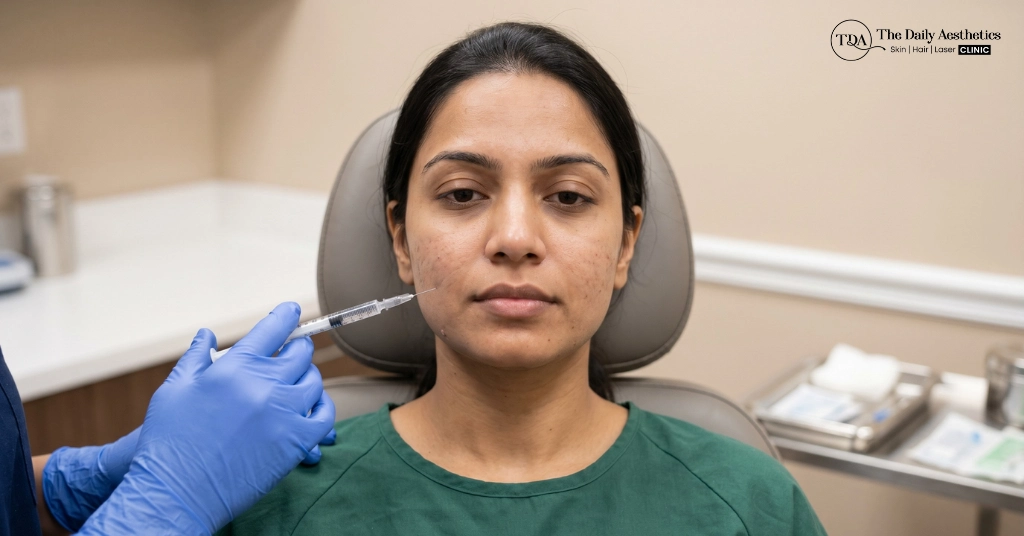

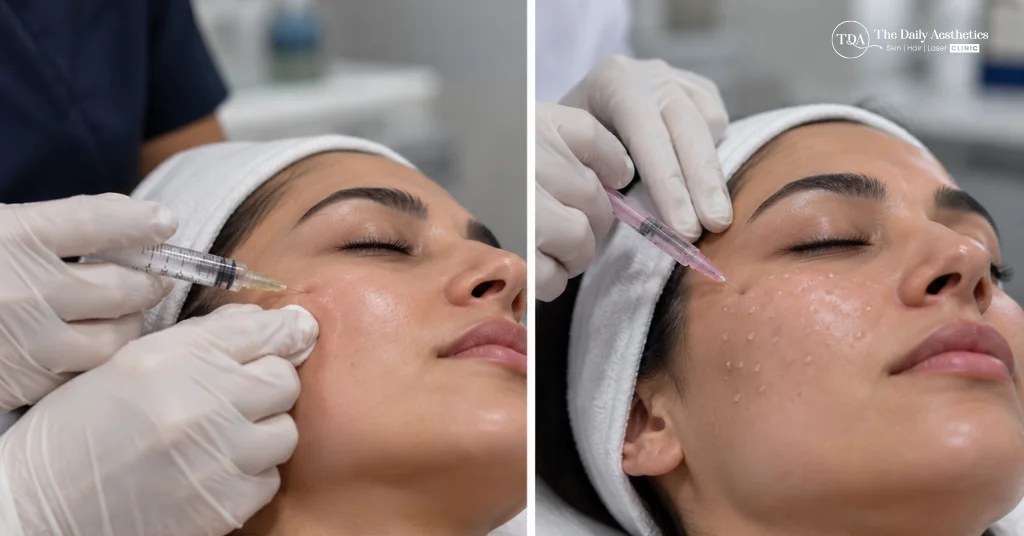
PDRN vs Polynucleotides: What Is the Difference and Which Skin Booster Is Right for You?
Introduction You may have seen PDRN, PN, polynucleotides and Salmon DNA skin boosters everywhere lately. They sound similar, they are often used in the same conversations, and they are promoted for many of the same skin goals: glow, repair, hydration, texture, fine lines and early visible ageing. The confusion is understandable. PDRN and polynucleotides are both DNA-derived regenerative treatments, but they should not be treated like two identical labels for the same thing. The formulation, molecular structure, treatment area, delivery method and your skin concern all matter. At The Daily Aesthetics Clinic, many Pune patients ask a very practical question: should I choose PDRN, polynucleotides, Rejuran, Salmon DNA therapy or a different skin booster altogether? The honest answer is that the right choice depends on your skin, not the trend. This guide keeps the comparison simple. You will understand how PDRN and polynucleotides overlap, where they may differ, what results may be realistic, and why consultation-led treatment planning is safer than choosing whichever acronym is popular online. Key Takeaways Confused Between PDRN and Polynucleotides? A skin assessment can help match the treatment approach to your skin concern, treatment area and goals Book a Skin Consultation Are PDRN and Polynucleotides the Same Thing? PDRN and polynucleotides are closely related DNA-derived treatments, but they are not always the same in practice. PDRN usually refers to polydeoxyribonucleotide fragments, while PN usually refers to longer polynucleotide chains. Both may support skin repair and quality, but product formulation and protocol decide the actual treatment experience. Think of them as part of the same regenerative skin-treatment family. They are often discussed together because both are used to improve skin quality rather than reshape the face. Both may be delivered through microinjections or microneedling-style protocols depending on the product and clinical plan. The mistake is assuming the labels alone tell the full story. A clinic may call a treatment PDRN, PN, Salmon DNA or a skin booster, but the actual product, concentration, purification process, delivery technique and treatment area are what shape the result. That is why the better question is not only, “Which is better?” It is, “Which formulation and protocol fits my skin concern safely?” What Is PDRN? PDRN stands for polydeoxyribonucleotide. In aesthetic skin care, it is used as a regenerative skin booster that may support skin repair, hydration, texture and overall skin quality. It is often discussed for dullness, fine lines, acne-marked texture, under-eye skin quality and post-procedure recovery planning. For patients comparing options, PDRN Treatment in Pune can be discussed through consultation-led protocols that may involve microinjections or microneedling, depending on the treatment area, product and skin concern. From a practical patient point of view, PDRN is usually chosen when the goal is not volume, but skin-quality support. It may be considered when the skin looks tired, damaged, dull, rough, dehydrated or less resilient than before. Current clinical literature describes PDRN as a DNA-derived biopolymer that can act through tissue-repair pathways, including adenosine receptor-related mechanisms. That does not mean every patient gets the same result, and it does not make the treatment a cure for every texture, ageing or pigmentation concern. What Are Polynucleotides? Polynucleotides, often shortened to PN, are longer DNA-derived chains used in regenerative aesthetic treatments to support skin hydration, elasticity, texture and overall skin quality. They are often positioned as injectable skin boosters for patients who want progressive improvement without changing facial volume. At The Daily Aesthetics Clinic, Polynucleotide Treatment in Pune is considered for patients who want gradual support for hydration, elasticity, texture and natural-looking skin-quality improvement. Polynucleotide treatments may be discussed for fine lines, dull or tired-looking skin, enlarged-looking pores, uneven texture, early ageing changes, under-eye skin quality and selected acne-scar texture concerns. Like PDRN, results are usually gradual. The evidence base for polynucleotides in aesthetic medicine is promising but still developing, which is why medically careful language matters. These treatments may support visible skin-quality improvement, but they should not be described as guaranteed collagen replacement or permanent anti-ageing solutions. PDRN vs Polynucleotides: What Is the Main Difference? The main difference is that PDRN usually refers to shorter polydeoxyribonucleotide fragments, while PN usually refers to longer polynucleotide chains. In everyday clinic conversations, both are used for regenerative skin-quality goals, but exact results depend on the product, molecular profile, delivery method and patient suitability. This is where online comparisons can become too simple. Some content presents PN as “stronger” and PDRN as “lighter,” but that is not always clinically useful. Product quality, concentration, depth, number of sessions and treatment area may matter more than the acronym. Use the table below as a decision guide, not a final diagnosis. Comparison Point PDRN Polynucleotides / PN What It Means for Patients Full Form Polydeoxyribonucleotide Polynucleotides Both sit within the DNA-derived regenerative skin-treatment category. Molecular Profile Usually shorter DNA fragments Usually longer DNA chains The exact formulation and product quality matter more than the simple label. Common Treatment Emphasis Repair support, glow, texture, under-eye quality and selected post-procedure recovery planning Hydration, elasticity, skin density, fine lines and progressive rejuvenation The overlap is significant, so suitability depends on assessment. Result Style Gradual skin-quality improvement rather than facial reshaping Gradual skin-quality improvement rather than facial reshaping Neither should be expected to work like a filler or surgery. Best-Fit Discussion May be discussed for tired, dull, damaged, thin or acne-marked skin May be discussed for texture, elasticity, fine lines, hydration and overall rejuvenation The same patient may be offered either depending on product availability and treatment plan. Important Caution Not every PDRN product or protocol is the same Not every PN product or protocol is the same Ask what formulation is being used and why it suits your concern. Note: Categories can overlap. Individual products, concentrations, indications and delivery methods vary, so this table should not replace a clinical assessment. Bottom Line: PDRN and PN are best compared by formulation, concern and treatment plan, not by declaring one universally better. Compare the Options With a Professional Understand whether PDRN, PN or another skin-quality
PDRN vs Polynucleotides: What Is the Difference and Which Skin Booster Is Right for You? Read More »
PDRN Treatment