


Introduction
Picture this: your skin, right now, is trying to repair itself. Every hour. Every day. It builds new collagen, sheds old cells, and fights oxidative damage from the inside out. For most of your twenties, it does this effortlessly. Then, somewhere around your late twenties and early thirties, that internal repair engine starts to sputter.
Creams and serums can support the process – but they cannot replicate it. That is where PDRN therapy changes the conversation entirely. Short for Polydeoxyribonucleotide, PDRN is a scientifically validated skin regeneration treatment that works at the DNA level, supplying your skin cells with the exact building blocks they need to accelerate their own natural healing and collagen production.
Originally developed in Italy in the 1990s for post-surgical wound care, PDRN therapy has since been adopted by medical aesthetics clinics across South Korea, Europe, and now India – where it is fast becoming one of the most sought-after injectable treatments for patients who want genuine, medically backed results without surgery or significant downtime.
At The Daily Aesthetics, Pune’s trusted aesthetic clinic with over a decade of clinical experience, PDRN therapy is part of a growing suite of science-first treatments designed to deliver visible, lasting skin transformation. This guide covers everything you need to know – the science, the real-world benefits, what research says, and exactly what to expect when you walk in for your first session.
Key Takeaways
- PDRN Defined: PDRN (Polydeoxyribonucleotide) is a purified, fragmented form of DNA derived from salmon sperm cells, processed for safe medical use in humans due to its ~97% structural similarity with human DNA.
- Cellular Mechanism: PDRN triggers skin renewal by activating the A2A adenosine receptor in fibroblasts, which directly stimulates collagen synthesis, reduces inflammation, and promotes new blood vessel formation for better tissue nourishment.
- Research-Backed: Multiple peer-reviewed studies confirm PDRN’s effectiveness for skin rejuvenation, with clinical trials showing statistically significant improvements in skin elasticity, wrinkle depth, hydration, and tone.
- Five Key Benefits: Deep skin repair, anti-aging collagen stimulation, pigmentation reduction, long-lasting hydration, and measurable anti-inflammatory action are the most consistently reported patient outcomes.
- Minimal Downtime: Most patients resume their day immediately after a PDRN session. Mild redness or micro-swelling at injection sites typically resolves within 2 to 4 hours.
- Treatment Course: 4 to 6 sessions spaced 1 to 2 weeks apart form a standard course, with results building progressively – most patients see meaningful improvement from session 3 onward.
- Ideal Candidates: PDRN works well for aging skin, post-acne scarring, sun damage, dull or dehydrated complexion, and early skin laxity. It is suitable across most skin tones, including South Asian skin.
- Combination Potential: PDRN pairs effectively with chemical peels, HydraFacials, PRP, and microneedling for a layered, comprehensive approach to skin health.
What Is PDRN? The Salmon DNA Skin Treatment Explained
PDRN – Polydeoxyribonucleotide – is a biologically active compound made from highly purified, fragmented DNA chains extracted from salmon sperm cells (specifically, Oncorhynchus mykiss). The extraction process involves multiple stages of sterilization and purification to remove all proteins, pathogens, and cellular debris, leaving behind only the short DNA fragments that the human body can recognize and use as cellular raw material.
This is not a cosmetic ingredient. PDRN is a pharmaceutical-grade compound with a documented pharmacological mechanism – meaning it does not just sit on the surface of your skin. It is injected into the dermis, where it interacts with specific cell receptors to trigger measurable biological responses.
Why Salmon DNA? The Biocompatibility Factor
The use of salmon DNA is not arbitrary. Salmon sperm DNA shares an exceptionally high structural similarity with human DNA – research estimates this at approximately 97% – which means the immune system does not flag it as a foreign invader. Instead, skin cells absorb the fragmented nucleotides and use them directly through what scientists call the salvage synthesis pathway, recycling them to build new DNA for cell replication and repair.
PDRN was first commercialized in Italy under the brand Placentex and spent its first decade in clinical use as a wound-healing agent for post-surgical tissue repair, diabetic ulcers, and burn recovery. The transition into aesthetic medicine happened naturally – once clinicians observed that PDRN didn’t just repair damaged tissue but actively improved the quality of healthy tissue around it. Today, it is one of the most widely studied injectable skin treatments in academic dermatology literature, with a growing body of published research across European and Asian clinical journals.
How Does PDRN Therapy Work?
PDRN works through two simultaneous biological pathways, and understanding both helps you see why it produces results that surface-level treatments simply cannot match.
The A2A Receptor Pathway: The Science in Plain English
The most significant mechanism involves the A2A adenosine receptor – a receptor found on the surface of fibroblasts (your skin’s collagen-producing cells), keratinocytes (the cells that form the outer skin layer), and endothelial cells (which line blood vessels). When PDRN binds to this receptor, it sets off a cascade of cellular activity that has been confirmed in multiple peer-reviewed studies, including research published in journals such as the Journal of Photochemistry and Photobiology.
Clinical research shows A2A receptor activation by PDRN increases type I collagen synthesis in fibroblasts, reduces levels of the inflammatory cytokine TNF-α, and stimulates angiogenesis – the formation of new blood vessels – improving the nutrient and oxygen supply to treated tissue.
What this means in practical terms: your skin does not just get a hydration boost. It gets a biological signal to rebuild. Collagen levels increase. Elastin production improves. Inflammation – one of the primary drivers of visible aging – is measurably reduced. And the improved blood supply means treated skin is better nourished on an ongoing basis.
The Salvage Pathway: Cellular Fuel for Repair
The second mechanism is more direct. The fragmented DNA nucleotides in PDRN are absorbed by local cells and enter the salvage synthesis pathway – essentially, your cells recycle these raw materials to produce new DNA needed for healthy cell division and tissue turnover. This accelerates the skin’s natural renewal cycle, which typically slows with age, sun damage, and environmental stress.
Think of it this way: if your skin’s repair process is a construction site, PDRN delivers both the instruction manual (A2A signaling) and the building materials (nucleotides). Most treatments deliver one or the other. PDRN delivers both simultaneously – which is why its regenerative effect on the skin tends to outperform traditional skin boosters in clinical comparisons.
Curious about what PDRN therapy could do for your skin?
Our expert team at The Daily Aesthetics, Pune provides personalized skin assessments to help you understand exactly which treatments will work for your specific concerns.
Book Your ConsultationWhat Are the Benefits of PDRN Therapy?
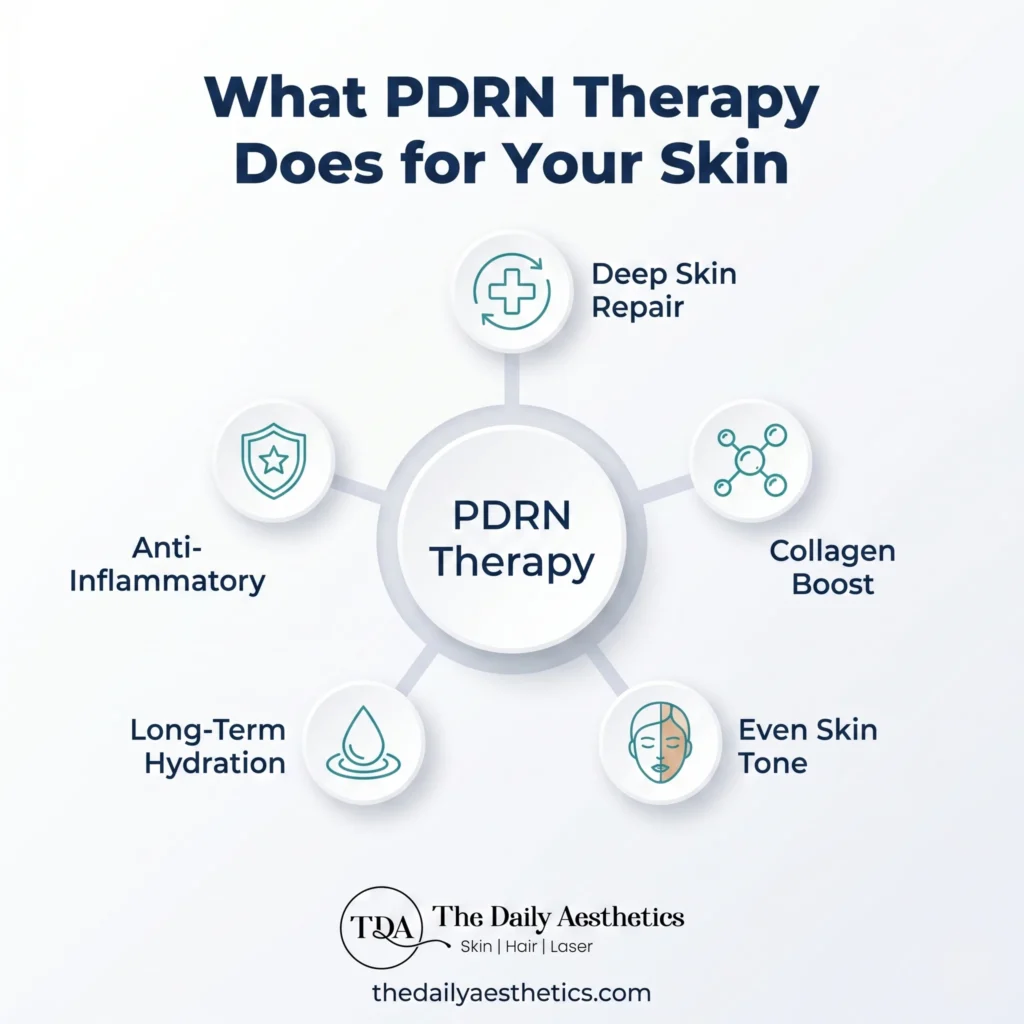
The clinical evidence behind PDRN therapy spans over two decades. Here are the five most consistently documented benefits, with the research context that backs them up.
1. Deep Skin Repair and Scar Reduction
PDRN’s wound-healing origins are its most clinically validated capability. A 2014 study published in the Journal of Cosmetic Dermatology demonstrated that intradermal PDRN injections significantly accelerated dermal repair and collagen remodeling in patients with atrophic (depressed) acne scars, with histological evidence of new collagen fiber deposition at the treated sites.
For patients with post-acne scarring or textural irregularities, PDRN therapy – often used in combination with laser skin resurfacing – addresses the underlying dermal damage rather than just smoothing the surface. This makes the results more durable and more structurally meaningful than topical solutions alone.
2. Anti-Aging: More Collagen, Fewer Fine Lines
Collagen loss is the central biological story of aging skin. From our mid-twenties, the body produces approximately 1% less collagen per year – a slow decline that accumulates into visible wrinkles, hollowing, and loss of skin firmness over time. PDRN directly addresses this by upregulating collagen synthesis in fibroblasts through A2A receptor activation.
A randomized, double-blind trial on photoaged skin found that subjects who received PDRN injections showed a statistically significant reduction in wrinkle severity scores compared to the placebo group, with improvements visible as early as 4 weeks into the treatment course. These results are particularly relevant for patients considering PDRN as a non-surgical complement to treatments like anti-wrinkle injections – where PDRN works on the underlying skin quality while Botox targets the dynamic muscle activity driving expression lines.
3. Brighter, More Even Skin Tone
Hyperpigmentation – dark spots, uneven tone, post-inflammatory marks – is one of the most common skin concerns among patients in India. PDRN addresses this through two routes: its anti-inflammatory action reduces the chronic inflammation that triggers excess melanin production, and its acceleration of skin cell turnover helps push pigmented cells out of the skin more rapidly.
Research published in the Aesthetic Surgery Journal found measurable reductions in melanin index scores in patients treated with PDRN over a 6-session course. Many patients at The Daily Aesthetics combine PDRN with chemical peel treatments for a two-layer approach: the peel clears pigmented surface cells while PDRN suppresses the inflammatory signal driving melanin overproduction at the dermal level.
4. Deep, Long-Lasting Hydration
Unlike hyaluronic acid-based skin boosters – which attract water molecules and create a temporary plumping effect in the dermis – PDRN improves the skin’s intrinsic capacity to retain moisture. It does this by promoting the production of glycosaminoglycans (GAGs), the naturally occurring molecules that form the dermis’s moisture-retaining matrix.
This is a structural improvement rather than a topical one. Patients who complete a full PDRN course consistently report that their skin feels more supple and hydrated even between sessions – a sign that the underlying tissue quality has genuinely improved, not just been temporarily filled. This effect complements HydraFacial treatments, which cleanse and hydrate the surface – creating a highly effective combination for comprehensive skin health.
5. Anti-Inflammatory Action: Calmer, Less Reactive Skin
The A2A receptor activation triggered by PDRN has a well-documented inhibitory effect on pro-inflammatory cytokines, particularly TNF-α (tumor necrosis factor-alpha) – a key signalling molecule in skin inflammation. For patients dealing with redness, reactive skin, or chronic low-grade inflammatory conditions such as rosacea-prone skin, this mechanism makes PDRN uniquely beneficial.
Chronic inflammation accelerates collagen breakdown, disrupts the skin barrier, and worsens both pigmentation and sensitivity. By modulating this at the molecular level, PDRN creates a less hostile internal environment – one where other treatments also work more effectively.
PDRN vs. Other Skin Boosters: How Does It Compare?
PDRN is one of several injectable skin booster options available today. Understanding where it fits relative to alternatives like dermal fillers, hyaluronic acid boosters, and PRP therapy helps clarify which treatment – or combination – is right for your skin goals.
| Parameter | PDRN Therapy | Hyaluronic Acid Booster | PRP Therapy | Dermal Fillers |
| Primary Mechanism | A2A receptor activation + nucleotide salvage pathway → cellular regeneration | Moisture attraction and temporary volume via hydrophilic HA molecules | Concentrated platelets release growth factors to stimulate cell repair | Volume restoration via cross-linked HA or CaHA filler gel |
| Core Benefit | Genuine tissue regeneration: collagen, elastin, hydration matrix | Instant hydration and surface plumping | Natural regeneration using patient’s own blood components | Structural volume addition and contour restoration |
| Onset of Results | 2-4 weeks (progressive build) | Immediate to 1 week | 4-6 weeks | Immediate |
| Duration of Results | 4-6 months (maintenance) | 6-12 months | 3-4 months | 12-18+ months |
| Downtime | Virtually none – same-day return | Minimal | 24-48 hrs mild redness | Minimal to 2-3 days |
| Best Suited For | Aging, scarring, pigmentation, dull skin, reactive skin | Dehydration, dullness, fine surface lines | Hair loss, skin laxity, natural treatment preference | Volume loss, deep folds, contouring |
| Works Alongside | Peels, HydraFacial, PRP, microneedling | Most treatments | PDRN, microneedling, laser | Botox, threads, laser |
Note: Results vary between individuals. The best treatment – or combination – is determined through a professional skin consultation. Individual suitability must always be assessed by a qualified clinician.
What Happens During a PDRN Treatment Session?
Step 1: Consultation and Skin Assessment
Every PDRN treatment at The Daily Aesthetics begins with a detailed consultation. Your clinician will assess your skin type, identify specific areas of concern, review your medical history and any contraindications, and discuss your skin goals. This step is not a formality – it is what makes the difference between a generic treatment and one tailored to produce results that are right for your skin specifically.
You can learn more about the team who will be assessing your skin on the Our Team page, which details the qualifications and areas of expertise of every member of TDA’s clinical staff.
Step 2: Preparation and Numbing
Before the injections begin, the treatment area is cleansed thoroughly. A topical anaesthetic cream is applied and left for 15 to 20 minutes to minimize discomfort during the procedure. Most patients describe the sensation of the injections themselves as a mild pinprick – manageable and brief. Sessions are typically completed within 20 to 30 minutes for a full face.
Step 3: The PDRN Injections
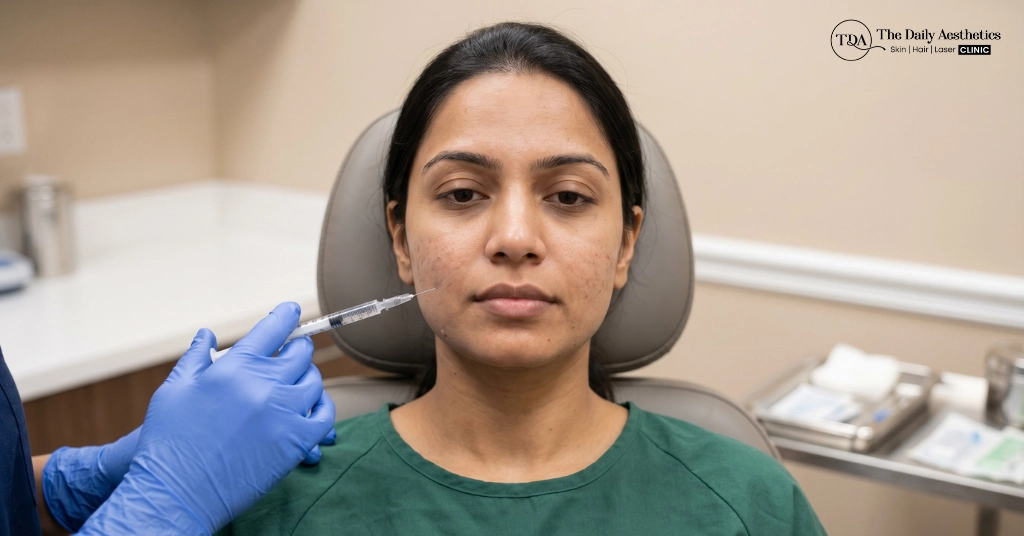
PDRN is administered using a fine-gauge needle through micro-injection techniques – either a grid pattern, a papule technique, or linear threading, depending on the area and the specific concern being targeted. The depth and placement of injections are determined by the clinician to ensure the PDRN reaches the dermis, where it can interact with fibroblasts and trigger the A2A receptor pathway.
Step 4: Immediate post-treatment
Once the session is complete, the treatment area may appear slightly flushed or have small raised bumps at injection points. This is normal and typically resolves within 2 to 4 hours. You are free to leave the clinic immediately – there is no recovery period required.
For the first 24 to 48 hours post-treatment, your clinician will advise you to avoid direct sun exposure (and apply a broad-spectrum SPF if going outdoors), alcohol consumption, strenuous exercise, and heavy makeup or skincare products on the treated area. These precautions support the early tissue response and allow the PDRN to work without interference.
Ready to see how PDRN therapy can transform your skin?
Our expert team at The Daily Aesthetics, Pune, is here to guide you. Book your personalized skin consultation today and discover the right treatment plan for you.
Book Your ConsultationHow Many PDRN Sessions Do You Need?
One of the most practical questions patients ask is how quickly they will see results and how many sessions form a complete course. The honest answer is that it depends on the starting condition of the skin and the specific concern being addressed – but the following table provides evidence-based guidance based on clinical practice and published treatment protocols.
| Skin Concern | Recommended Sessions | Session Interval | When Results Become Visible | Maintenance |
| General Skin Rejuvenation | 4 sessions | 2 weeks apart | From session 2-3 | Every 4-6 months |
| Fine Lines and Wrinkles | 4-6 sessions | 1-2 weeks apart | From session 3-4 | Every 3-4 months |
| Hyperpigmentation / Uneven Tone | 5-6 sessions | 1-2 weeks apart | From session 3-4 | Every 4-6 months |
| Post-Acne Scarring | 6-8 sessions | 1-2 weeks apart | From session 4-5 | Every 3-4 months |
| Sun Damage (Photoaging) | 6 sessions | 2 weeks apart | From session 3-4 | Every 4 months |
| Skin Dehydration and Dullness | 3-4 sessions | 2 weeks apart | From session 1-2 | Every 6 months |
| Reactive or Sensitive Skin | 4 sessions | 2-3 weeks apart | From session 2-3 | Every 5-6 months |
Note: These are general clinical guidelines. Your personalized treatment protocol will be confirmed during your consultation at The Daily Aesthetics based on your skin assessment.
Most patients experience a gradual build of results rather than a dramatic overnight change. The collagen-stimulating effects of PDRN continue to develop for several weeks after the final session in a course – which means the skin quality you see at your 6-week review will typically be better than it was immediately after treatment concluded.

Is PDRN Therapy Safe? Side Effects Explained
PDRN therapy has a well-established safety profile that spans over 30 years of clinical use, beginning in wound care and extending into aesthetic medicine. Because the compound is derived from a natural source and shares such high structural compatibility with human DNA, the risk of immune-mediated adverse reactions is very low when administered using pharmaceutical-grade products.
A 2021 systematic review of PDRN clinical trials in aesthetic applications reported no serious adverse events across the reviewed studies, with side effects limited to mild, transient reactions at injection sites that resolved within 24 hours in the majority of participants.
Common and expected side effects include:
- Mild redness or warmth at injection sites – typically resolves within 2 to 4 hours
- Minor swelling or small papules at the treatment area – usually gone by the next morning
- Occasional micro-bruising – particularly in patients on aspirin or blood-thinning supplements; usually resolves within 3 to 5 days
More significant reactions are rare and are further minimized when treatment is performed by a clinically trained professional using certified products. Contraindications include known allergy to salmon or fish-derived compounds, active skin infection in the treatment area, pregnancy or breastfeeding, and certain autoimmune skin conditions.
Why Choose The Daily Aesthetics for PDRN Therapy in Pune?
Choosing where to receive injectable skin treatments is a decision that directly affects your safety, your results, and your overall experience. At The Daily Aesthetics, PDRN therapy is not a new offering added to keep up with trends – it is part of a rigorously maintained, clinically driven treatment menu that has been built and refined over more than ten years of patient care in Pune.
Here is what that means in practice:
- Over 1,51,905 patients treated across three Pune locations – Kalyani Nagar, Baner, and Kharadi
- A 4.8-star Google rating backed by more than 1,900 verified patient reviews
- A clinical team with qualifications spanning MBBS, specialized cosmetology diplomas, and international training in aesthetic medicine
- FDA-approved pharmaceutical-grade PDRN products only – no compromise on product quality
- Personalized treatment protocols – no one-size-fits-all packages, no upselling, no pressure
The Daily Aesthetics also offers the full range of complementary treatments that work alongside PDRN for patients seeking comprehensive skin renewal: from HydraFacial, chemical peels, and PRP therapy to dermal fillers, anti-wrinkle injections, and IV Glutathione therapy. Your clinician can design a layered plan that addresses multiple concerns in a single, coordinated program.
The Bottom Line on PDRN Therapy
Your skin is not a passive surface. It is a living organ with an extraordinary capacity to repair and renew itself – it just needs the right conditions and the right inputs to do so effectively. PDRN therapy provides both: the biological signal (via A2A receptor activation) and the raw material (nucleotide fragments) that skin cells need to shift from maintenance mode into active regeneration.
For patients in Pune who are looking beyond skin care routines and into clinically validated treatments that work at the level where aging and damage occur, PDRN therapy represents one of the most compelling, evidence-backed, and accessible options available in 2026.
Whether you are dealing with the early signs of aging, persistent pigmentation, post-acne scarring, or simply skin that has lost the quality it once had, The Daily Aesthetics is equipped to assess your skin, design a personalized plan, and guide you through every step of the process.
📍 Give your skin the regenerative reset it deserves. Our expert team at The Daily Aesthetics, Pune is ready to help you build a science-backed skin treatment plan. Book your consultation at thedailyaesthetics.com today.
Frequently Asked Questions About PDRN Therapy
1. How quickly will I see results from PDRN therapy?
Most patients notice better hydration, smoother texture, and glow within 2–4 weeks after the first session. Firmer skin, reduced lines, and brighter tone usually appear after 3–4 sessions, with best results seen 6–8 weeks after completing the course.
2. Is PDRN better than Profhilo or HA skin boosters?
They work differently—HA boosters mainly hydrate and plump, while PDRN supports collagen repair and skin regeneration. PDRN is often better for aging, scarring, or damaged skin, while HA boosters give quicker hydration results.
3. Can PDRN therapy be combined with other treatments at the same clinic?
Yes, PDRN combines well with treatments like HydraFacial, chemical peels, microneedling, and PRP. Your clinician will plan the right timing and sequence based on your skin goals.
4. Does PDRN therapy hurt?
Most patients describe it as mild pinpricks that last only a second. Numbing cream is applied beforehand, and the session usually takes 20–30 minutes with minimal discomfort.
5. Is PDRN therapy safe for Indian skin tones?
Yes, PDRN is suitable for all skin tones, including Indian and South Asian skin types. Since it is non-ablative, it has a lower risk of pigmentation issues compared with aggressive laser treatments.
6. How long do the results of a PDRN course last?
Results typically last 4–6 months before maintenance is needed. Regular upkeep sessions plus good skincare and daily SPF can help extend the benefits further.
7. What should I tell my clinician before starting PDRN therapy?
Inform your clinician about fish/salmon allergies, medications (especially blood thinners), pregnancy, skin infections, open wounds, or autoimmune skin conditions. This helps ensure safe and suitable treatment.
8. How does PDRN compare to PRP for skin rejuvenation?
PRP uses growth factors from your own blood, while PDRN uses purified DNA fragments to stimulate repair. Both are effective, and many patients benefit from using them individually or in combination.
The Daily Aesthetics Clinic – Redefining Skin & Hair Treatments in Pune
The Daily Aesthetics Clinic is a trusted dermatology and aesthetic center in Pune, offering advanced treatments for acne, pigmentation, hair loss, laser hair removal, Hydrafacials, hair transplants, and personalized skincare.
Under the guidance of Dr. Arshi Rahul, the clinic combines medical expertise with FDA-approved technology to deliver customized treatment plans that focus on restoring skin health, enhancing radiance, and ensuring every patient feels confident and cared for.
With the trust of over 3,500 patients and a 4.9★ rating, The Daily Aesthetics Clinic is known for delivering effective, safe, and personalized care in a calm, welcoming setting.
We serve clients across Pune through our three conveniently located clinics in Baner, Kharadi, and Kalyani Nagar.
Read More: