

Introduction
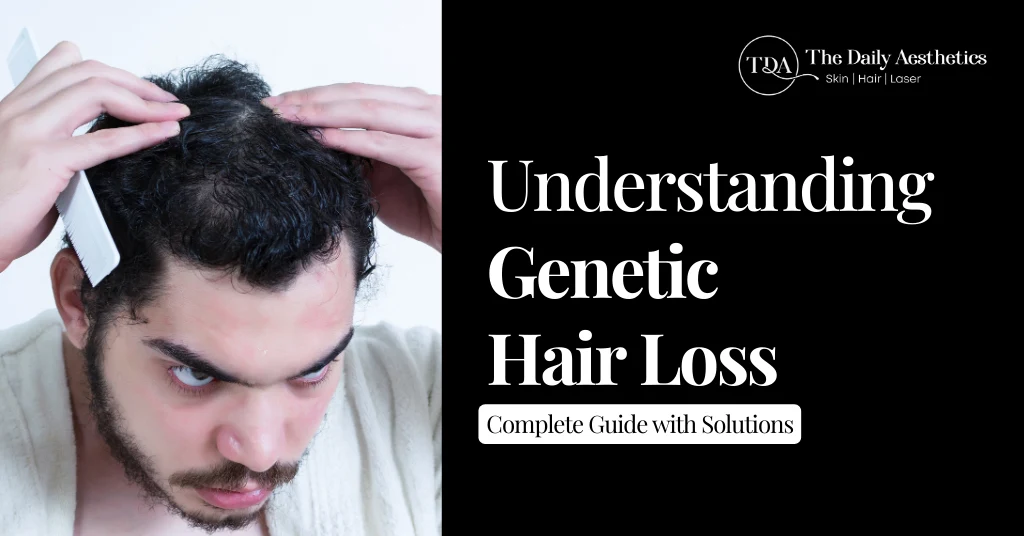
Hair thinning can feel deeply personal. It is not only about strands on a pillow or hair in the shower drain. It can change how you style your hair, how confident you feel in photos, and how much you worry every time you comb or wash your scalp.
That worry often becomes more confusing because every treatment sounds promising. PRP, GFC, low-level laser therapy, hair transplant, serums, supplements, and now exosome hair therapy all appear in search results. The difficult part is knowing which option actually fits your stage of hair loss.
Exosome hair therapy is an emerging regenerative scalp treatment that uses cell-derived signaling vesicles to support the follicle environment. It is usually discussed for early to moderate hair thinning, weak hair density, and selected scalp rejuvenation plans. It is not a magic cure and it cannot replace hair transplant when follicles are permanently lost.
This guide explains exosome hair therapy in Pune in a practical, medically responsible way. You will learn how it works, who may benefit, what the procedure involves, what affects cost, when results may appear, and when a consultation at The Daily Aesthetics Clinic may help you make a safer decision.
Key Takeaways
- Exosome therapy is regenerative support: Exosome hair therapy uses cell-signaling vesicles to support scalp repair, follicle communication, and the hair growth environment.
- It is best for selected thinning patterns: People with early to moderate hair thinning may be better candidates than people with long-standing smooth bald patches.
- Diagnosis comes before treatment: Hair fall can be caused by genetics, stress, hormones, deficiencies, dandruff, medications, illness, or scalp disease, so assessment matters first.
- Results are gradual: Most regenerative hair treatments need time because the hair cycle changes slowly, and visible improvement may take months.
- Cost depends on the treatment plan: Exosome hair therapy cost in Pune depends on the scalp area, sessions, product quality, delivery method, combination of care, and follow-up.
- Evidence is promising but still developing: Clinical research is growing, but exosome therapy should be presented as an emerging option, not a guaranteed cure.
- Safety depends on sourcing and technique: Sterile handling, qualified supervision, product transparency, and medical history review are important before exosome-based treatments.
- Combination plans are common: Exosome therapy may be discussed with PRP, GFC, low-level laser therapy, topical medication, scalp care, or hair transplant planning where suitable.
What Is Exosome Hair Therapy?
Exosome hair therapy is an emerging scalp treatment that uses tiny extracellular vesicles to send biological signals to cells around the hair follicle. Scientific reviews describe exosomes as nano-sized vesicles that can carry proteins, lipids, and nucleic acids involved in cell-to-cell communication.
In simple words, exosomes are like cellular messengers. They do not create new follicles from nothing, but they may help improve the scalp environment around existing, miniaturized, or weakened follicles. That is why the treatment is usually discussed for hair thinning rather than completely bald skin.
For hair patients, the goal is to support follicle activity, scalp repair, inflammation balance, and hair-shaft quality over time. The treatment is often positioned as a non-surgical option for people who want regenerative support before considering more invasive steps.
The Daily Aesthetics Clinic includes exosome therapy within its wider hair growth therapy approach, where it is considered alongside PRP, hair mesotherapy, growth factor support, low-level laser therapy, scalp care, and hair transplant planning when needed.
Curious Whether Exosome Therapy Fits Your Hair Loss Pattern?
Hair fall has different causes, and the right plan starts with a scalp assessment at The Daily Aesthetics Clinic in Pune.
Book a Hair ConsultationHow Does Exosome Hair Therapy Work for Hair Growth?
Exosome hair therapy may work by supporting communication around the hair follicle, improving the scalp repair environment, and encouraging signals linked with hair growth. A 2025 systematic review found encouraging early clinical evidence for hair regrowth, while also showing that more standardized research is still needed.
Healthy hair depends on the follicle, blood supply, scalp inflammation, hormones, nutrition, genetics, and the normal hair cycle. When follicles miniaturize, hair strands can become thinner, shorter, and weaker over time.
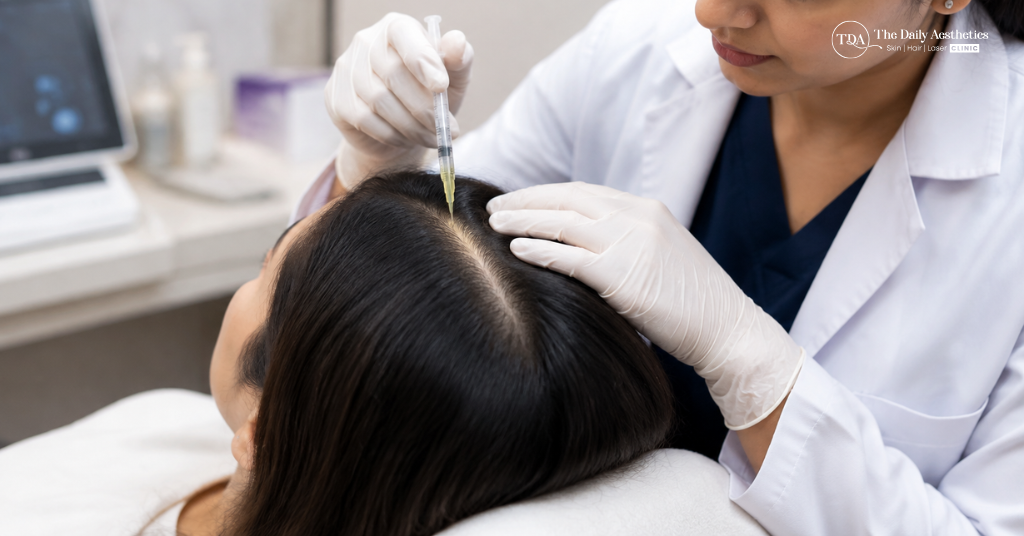
Exosome therapy is designed to support the micro-environment around those follicles. Depending on the protocol, the exosome solution may be delivered through microneedling, scalp infusion, mesotherapy-style delivery, or targeted application after creating controlled channels in the scalp.
The treatment is usually discussed for these possible support mechanisms:
- Growth-factor signaling: exosomes may carry proteins and signals that support follicle activity.
- Scalp repair support: the treatment may help create a healthier environment for weak follicles.
- Inflammation balance: a calmer scalp may support better hair-care response in selected patients.
- Hair-cycle support: the aim is to encourage follicles to stay productive for longer periods.
- Combination potential: it may be paired with PRP, GFC, low-level laser therapy, or topical treatment when appropriate.
This does not mean every patient will respond the same way. A person with recent shedding after stress may need a different plan from someone with genetic pattern hair loss, dandruff-related inflammation, thyroid imbalance, or advanced baldness.
Which Hair Concerns Can Exosome Therapy Help With?
Exosome hair therapy may be considered for selected patients with early to moderate hair thinning, reduced density, weak hair quality, or scalp rejuvenation needs. It is less suitable as a standalone answer for long-standing bald patches where active follicles are no longer present.
The most important step is identifying whether your hair loss is reversible shedding, progressive thinning, inflammatory scalp disease, nutritional deficiency, hormonal hair loss, or advanced follicle loss. Treatment choice should follow that diagnosis.
| Hair Concern | How It May Look | How Exosome Therapy May Fit | When Another Option May Be Needed |
| Early Pattern Thinning | Widening part, temple thinning, crown thinning, thinner ponytail | May support existing weak follicles and scalp health | Medical therapy, PRP, GFC, or transplant planning may also be discussed |
| Stress-Related Shedding | Sudden extra hair fall after stress, illness, diet change, or life event | May be considered only after triggers are reviewed | Blood tests, nutrition correction, and time may be more important first |
| Post-Partum Hair Fall | Diffuse shedding after childbirth | Usually needs careful timing and medical clearance | Breastfeeding, hormones, and deficiencies should be reviewed first |
| Weak Hair Quality | Fine, dull, slow-growing, fragile-looking hair | May support scalp rejuvenation and hair-shaft quality over time | Skincare, nutrition, scalp disease control, or product changes may also matter |
| After Hair Transplant Planning | Existing weak hair around transplanted or thinning areas | May be discussed as supportive care in selected cases | A transplant is still needed when coverage requires new graft placement |
| Smooth Bald Patches | Areas with little or no visible hair for a long time | Usually limited benefit as a standalone plan | Hair transplant or medical evaluation may be more relevant |
Note: This table is educational only. Hair loss assessment is needed before choosing any regenerative treatment.
Bottom Line: Exosome therapy is most useful when there are still follicles to support, not when the area has no recoverable hair.
Not Sure If It Is Hair Fall, Thinning, or Density Loss?
The hair team at The Daily Aesthetics Clinic can review your scalp, history, and visible pattern before recommending exosome therapy or another option.
Explore Hair Growth TherapyWhat Are the Benefits of Exosome Hair Therapy?
The main benefits of exosome hair therapy are its non-surgical nature, regenerative signaling approach, short treatment time, minimal downtime, and potential to support scalp and follicle health in suitable patients. The strongest benefit is better personalization when it is used after diagnosis, not as a trend-based package.
Patients often consider exosome therapy because it may feel less intimidating than surgery and may avoid a blood draw in protocols that use ready-prepared exosome products. It can also fit people who want a gradual hair-density plan rather than an immediate transplant decision.
Potential benefits may include:
- Non-surgical support: no graft extraction, no donor-area surgery, and no hairline incision.
- Scalp rejuvenation: the treatment aims to improve the environment around existing follicles.
- Hair-quality support: some patients may notice better texture, reduced breakage, or improved density over time.
- No PRP-style blood draw in some protocols: depending on the product and method used, the session may not require blood collection.
- Combination-friendly approach: it can be planned with PRP, GFC, low-level laser therapy, topical care, or transplant support when suitable.
- Lower downtime than surgery: many patients return to routine activities quickly, depending on the delivery method and scalp sensitivity.
The benefit should still be measured realistically. Hair regrowth takes time, and some patients may need investigations, medication, dandruff control, hormonal support, or transplant planning instead of relying only on exosomes.
How Is the Exosome Hair Therapy Procedure Done?
The procedure usually starts with consultation, scalp assessment, hair loss history, and treatment planning. The scalp is then cleansed, the treatment area is prepared, and an exosome solution is delivered through a suitable method such as microneedling, scalp infusion, or targeted professional application.
A responsible session should feel structured rather than rushed. Your provider should first understand how long hair fall has been happening, whether it is sudden or gradual, what treatments you have tried, and whether any medical triggers need to review.
| Procedure Step | What Happens | Why It Matters |
| Scalp And Hair Assessment | The provider checks thinning pattern, scalp health, hair density, and history. | This helps decide whether exosome therapy is suitable or whether another cause needs treatment first. |
| Medical And Lifestyle Review | Stress, diet, medications, pregnancy, illness, dandruff, hormones, and previous treatments are discussed. | Hair fall often has more than one trigger, so the plan should not be generic. |
| Treatment Planning | The scalp zones, delivery method, number of sessions, and combination options are discussed. | Clear planning helps set realistic expectations for results and cost. |
| Scalp Preparation | The scalp is cleaned and, if required, numbing may be used for comfort. | A clean, comfortable procedure supports safety and patient confidence. |
| Exosome Delivery | The product is delivered through the selected professional technique. | Delivery methods affect absorption, downtime, and treatment experience. |
| Post-Care Guidance | You receive instructions about washing, heat exposure, products, exercise, and follow-up. | Aftercare helps reduce irritation and supports the treatment environment. |
Note: Exact steps may vary depending on scalp condition, product protocol, delivery method, and provider assessment.
Bottom Line: A good exosome hair therapy session should start with diagnosis and end with clear aftercare, not just product application.
Need a Hair Plan Before Starting Advanced Therapy?
Speak with The Daily Aesthetics Clinic about your hair fall history, scalp condition, and whether exosome therapy should be used alone or in combination.
Schedule an Online ConsultationHow Many Sessions Are Usually Needed?
Most patients should expect a planned course rather than one session. The number of exosome hair therapy sessions depends on the hair loss pattern, scalp health, response to treatment, product protocol, and whether the therapy is combined with PRP, GFC, medication, or low-level laser therapy.
Some people may notice early improvements in shedding or scalp feel, while density changes usually take longer. Hair grows slowly, so the treatment plan should be judged over months, not days.
Session planning may depend on:
- Stage of thinning: early thinning may need a different protocol than advanced crown or frontal loss.
- Cause of hair fall: stress shedding, pattern hair loss, dandruff, and deficiency-related hair fall need different support.
- Scalp health: inflammation, itching, flaking, or infection should be controlled before regenerative therapy.
- Combination care: PRP, GFC, topical medication, or low-level laser therapy can change the overall plan.
- Response pattern: follow-up photos and scalp review help decide whether maintenance is useful.
When Can You See Results from Exosome Hair Therapy?
Exosome hair therapy results are usually gradual because hair follicles follow a slow growth cycle. Some patients may notice reduced shedding or better hair texture earlier, but visible density improvement often needs several months and repeated review.
| Timeline | What You May Notice | What to Remember |
| First Few Days | Mild scalp redness, tenderness, or sensitivity may occur depending on the delivery method. | Follow aftercare and avoid harsh scalp products unless advised. |
| First 4 To 8 Weeks | Some patients may feel shedding is more controlled or scalp quality feels better. | This is not the final density stage. |
| Around 3 Months | Early hair-quality changes or small regrowth signs may begin in responsive follicles. | Photos help compare subtle change better than daily mirror checks. |
| Around 4 To 6 Months | Visible density or thickness changes may become easier to notice if the treatment is working. | Response varies by diagnosis, age, genetics, and combination care. |
| 6 To 12 Months | Longer-term review may show whether maintenance or another treatment path is needed. | Some patients may need PRP, medication, low-level laser therapy, or transplant planning. |
Note: Timelines vary. Regenerative hair treatments cannot guarantee regrowth and should be monitored with clinical review.
Bottom Line: Judge exosome hair therapy by long-term progress, not by what happens in the first few days after treatment.
How Much Does Exosome Hair Therapy Cost in Pune?
Exosome hair therapy cost in Pune depends on the scalp area, number of sessions, exosome formulation, product sourcing, delivery method, practitioner expertise, clinic protocols, and whether combination treatments are included. Exact cost should be discussed only after scalp assessment.
Avoid choosing exosome therapy only by the lowest package price. With regenerative treatments, important questions include product transparency, sterility, storage, technique, follow-up, and whether the plan is actually suitable for your type of hair loss.
| Cost Factor | What It Means | Why It Affects Cost |
| Scalp Area | Small crown area, hairline zone, temples, or wider diffuse thinning | A larger area may need more product, time, and planning. |
| Number Of Sessions | Single session, starter protocol, or maintenance plan | Multiple sessions increase total treatment investment. |
| Product Type And Source | The quality, concentration, handling, and sourcing of exosome product used | Regenerative products differ widely, so transparency matters. |
| Delivery Method | Microneedling, infusion, mesotherapy-style approach, or combined technique | More advanced delivery may require more equipment and expertise. |
| Combination Treatment | PRP, GFC, low-level laser therapy, dandruff care, topical plans, or transplant support | A combined plan may be more complete but changes total cost. |
| Specialist Supervision | Consultation, scalp review, treatment planning, aftercare, and follow-up | You are paying for a safe plan, not only the vial used. |
Note: This section explains cost factors only. A personalized quote should come after assessment and treatment planning.
Bottom Line: A fair cost discussion should explain what is included, why exosome therapy is recommended, and how progress will be reviewed.
Want a Cost Estimate Based on Your Actual Scalp Condition?
The team at The Daily Aesthetics Clinic can review your thinning pattern and explain whether exosome therapy, PRP, GFC, or another hair plan is more suitable.
Request a Treatment PlanIs Exosome Hair Therapy Safe?
Exosome hair therapy appears promising, but safety depends on product quality, sterile handling, delivery technique, medical screening, and provider training. The FDA has warned consumers about unapproved regenerative products, including exosomes, so patients should ask careful questions before treatment.
This does not mean every exosome-based aesthetic treatment is unsafe. It means patients should avoid hype, unclear sourcing, self-use products, online injections, or clinics that promise guaranteed regrowth without diagnosis.
Possible short-term effects may include:
- Mild redness: temporary redness or warmth can occur after microneedling or scalp delivery.
- Scalp tenderness: the treated area may feel sensitive for a short period.
- Swelling or pinpoint bleeding: this may occur depending on the delivery method.
- Itching or dryness: scalp sensitivity can happen during early recovery.
- Infection risk: any scalp procedure needs clean technique and proper aftercare.
- Variable response: some patients may not respond enough to justify continuing the same plan.
You should discuss caution if you are pregnant or breastfeeding, have an active scalp infection, uncontrolled dandruff or dermatitis, autoimmune scalp disease, bleeding disorders, recent scalp procedure, cancer history, significant medical illness, or allergy concerns.
How Does Exosome Hair Therapy Compare With PRP, GFC, Low-Level Laser Therapy, and Hair Transplant?
Exosome therapy is not automatically better than PRP, GFC, low-level laser therapy, or hair transplant. Each option has a different role. Exosomes may support follicle signaling, PRP and GFC use blood-derived growth factors, low-level laser therapy supports scalp stimulation, and hair transplant relocates follicles into areas needing coverage.
The right choice depends on whether you are dealing with shedding, early thinning, progressive pattern hair loss, scalp inflammation, or areas where follicles are already lost.
| Treatment Option | Best Fit | Main Strength | Key Limitation |
| Exosome Hair Therapy | Selected early to moderate thinning and scalp rejuvenation needs | Regenerative signaling support without surgery | Evidence and protocols are still evolving; results vary |
| PRP Hair Treatment | Hair thinning where platelet-rich plasma may support follicle activity | Uses the patient’s own blood-derived platelets | Response depends on blood quality, sessions, and diagnosis |
| GFC Hair Treatment | Patients seeking concentrated growth-factor support | May offer more concentrated growth-factor planning than basic PRP | Still needs correct diagnosis and repeated monitoring |
| Low-Level Laser Therapy | Supportive care for selected thinning patterns | Non-invasive scalp stimulation option | Usually gradual and may need consistency |
| Hair Transplant | Permanent coverage for suitable bald or thinning areas with donor hair | Moves real follicles into recipient areas | Surgical planning, donor supply, and recovery are important |
Note: Treatment selection should be personalized. Some patients need combination care rather than one option alone.
Bottom Line: The best hair treatment is the one that matches the cause and stage of hair loss, not the newest name on the market.
Who Is a Good Candidate for Exosome Hair Therapy?
A good candidate for exosome hair therapy is usually someone with early to moderate hair thinning, recoverable follicles, realistic expectations, stable medical health, and willingness to follow a planned course. It may not be right for advanced baldness, untreated scalp disease, or unexplained sudden hair loss without evaluation.
You may be a suitable candidate if you:
- Have early thinning: your scalp is more visible, but the area is not completely smooth or scarred.
- Want non-surgical support: you are not ready for hair transplant or do not currently need surgery.
- Have weak density: your hair feels thinner, lighter, or less full than before.
- Need scalp rejuvenation: your treatment goal includes improving the scalp environment, not only reducing hair fall.
- Can stay patient: you understand that hair growth requires months of monitoring.
You may need a different first step if you have sudden patchy hair loss, severe dandruff or itching, scalp infection, scarring alopecia, hormonal imbalance, nutritional deficiency, thyroid concerns, recent major illness, or long-standing bald areas that require transplant evaluation.
What Should You Do Before and After Exosome Hair Therapy?
Before exosome hair therapy, prepare by sharing your medical history, current medications, hair products, prior treatments, diet changes, stress history, and scalp symptoms. After treatment, follow the clinic’s washing, heat, exercise, sun, and product-use instructions to reduce irritation and support recovery.
Before your session:
- Bring treatment history: share minoxidil, finasteride, supplements, PRP, GFC, hair transplant, or salon procedures you have tried.
- Avoid hiding scalp symptoms: itching, flaking, pain, boils, redness, or dandruff can change the plan.
- Ask about sourcing: understand what product is being used, how it is handled, and why it is recommended.
- Clarify expectations: ask what improvement is realistic for your stage of hair loss.
After your session:
- Follow washing guidance: do not shampoo immediately unless your provider specifically allows it.
- Avoid heat and sweating: heavy workouts, sauna, steam, and intense heat may irritate the scalp soon after treatment.
- Use gentle scalp care: avoid harsh actives, strong oils, chemical treatments, or scratching the area early after treatment.
- Track progress with photos: monthly comparison photos are more useful than daily checking.
- Attend follow-ups: your plan may need adjustment depending on the response.
Why Choose The Daily Aesthetics Clinic for Exosome Hair Therapy in Pune?
The Daily Aesthetics Clinic offers advanced skin, hair, body, and aesthetic treatments across Pune with a consultation-led approach. For hair concerns, the clinic provides options such as PRP therapy, growth factor treatments, scalp rejuvenation solutions, low-level laser therapy, hair mesotherapy, and exosome-based support where suitable.
With over 11 years of trusted expertise and 25,000+ happy patients, The Daily Aesthetics Clinic focuses on personalized treatment planning rather than one-size-fits-all hair packages. The aim is to identify the cause of thinning first, then build a practical plan around your scalp, lifestyle, expectations, and long-term goals.
You can visit the clinic nearest to you in Pune:
| Clinic Location | Address | Phone |
| Kalyani Nagar | Plot 17, Lane No. 7, next to Hotel Sudharshan, opposite Lunkad Sky Lounge, Kalyani Nagar, Pune, Maharashtra 411006 | +91 96738 58066 |
| Kharadi | Shop No. 120, Gera Imperial, Rajaram Patil Nagar, Vittal Nagar, Kharadi, Pune, Maharashtra 411014 | +91 97685 55421 |
| Baner | Shop No. 11, A-wing, SR. No. 32, Sterling Tower, Off Pancard Club Road, Baner, Pune, Maharashtra 411045 | +91 91585 80123 |
Note: Clinic timings and availability can change, so confirm before visiting or booking online.
Bottom Line: A convenient Pune location matters when hair treatments require follow-up, monitoring, and progress review.
Conclusion
Exosome hair therapy in Pune can be a helpful option for selected patients with early to moderate thinning, weak density, or scalp rejuvenation needs. It works by supporting the follicle environment through cellular signaling, but it should not be treated as a guaranteed cure or a replacement for diagnosis.
The safest decision starts with understanding why your hair is thinning. Once the cause and stage are clear, your provider can decide whether exosome therapy, PRP, GFC, low-level laser therapy, medication, scalp care, or hair transplant planning makes the most sense.
Ready to Understand Your Best Hair Growth Option?
Visit The Daily Aesthetics Clinic in Kalyani Nagar, Kharadi, or Baner for a scalp-focused consultation and a realistic plan for thinning hair.
Book Your Hair ConsultationFrequently Asked Questions
1. Is Exosome Hair Therapy Effective for Hair Fall?
Exosome hair therapy may support selected hair fall and thinning cases, especially when follicles are still active. It is not a guaranteed cure, and results depend on the cause of hair fall, scalp condition, age, genetics, and treatment plan.
2. How Long Does Exosome Hair Therapy Take to Show Results?
Some patients may notice reduced shedding or better scalp feel within weeks, but visible density changes usually take months. Most people should review progress through photos and follow-up visits rather than daily mirror checks.
3. Is Exosome Hair Therapy Better Than PRP?
Exosome therapy and PRP work differently. PRP uses growth factors from your own blood, while exosome products use cell-derived signaling vesicles; the better option depends on your diagnosis, treatment history, comfort, and provider recommendation.
4. Can Exosome Therapy Regrow Hair on Completely Bald Areas?
Exosome therapy is unlikely to restore strong growth where follicles are permanently lost or the skin is smooth and bald. In such cases, hair transplant evaluation may be more relevant if donor hair is suitable.
5. How Many Exosome Hair Therapy Sessions Are Needed?
The number of sessions depends on your thinning stage, scalp health, treatment response, and whether exosome therapy is combined with PRP, GFC, low-level laser therapy, or topical treatment. Your provider should explain the expected plan after assessment.
6. Can Exosome Therapy Be Combined With Minoxidil, PRP, or GFC?
It may be combined with other hair treatments when medically suitable. Do not start or stop prescribed hair medication without asking your provider, because consistency often matters in progressive hair loss.
7. Is Exosome Hair Therapy Painful?
Most patients describe the procedure as manageable, especially when scalp preparation and comfort measures are used. Mild tenderness, redness, or sensitivity can happen for a short period after treatment.
8. What Should I Ask Before Booking Exosome Hair Therapy in Pune?
Ask what type of hair loss you have, why exosome therapy is recommended, what product and delivery method will be used, how many sessions may be needed, what side effects are possible, and how results will be tracked.
The Daily Aesthetics Clinic – Redefining Skin & Hair Treatments in Pune
The Daily Aesthetics Clinic is a trusted dermatology and aesthetic center in Pune, offering advanced treatments for acne, pigmentation, hair loss, laser hair removal, Hydrafacials, hair transplants, and personalized skincare.
Under the guidance of Dr. Arshi Rahul, the clinic combines medical expertise with FDA-approved technology to deliver customized treatment plans that focus on restoring skin health, enhancing radiance, and ensuring every patient feels confident and cared for.
With the trust of over 3,500 patients and a 4.9★ rating, The Daily Aesthetics Clinic is known for delivering effective, safe, and personalized care in a calm, welcoming setting.
We serve clients across Pune through our three conveniently located clinics in Baner, Kharadi, and Kalyani Nagar.
Read More: