
Dandruff vs Dry Scalp: How to Tell the Difference and When to Get Treatment
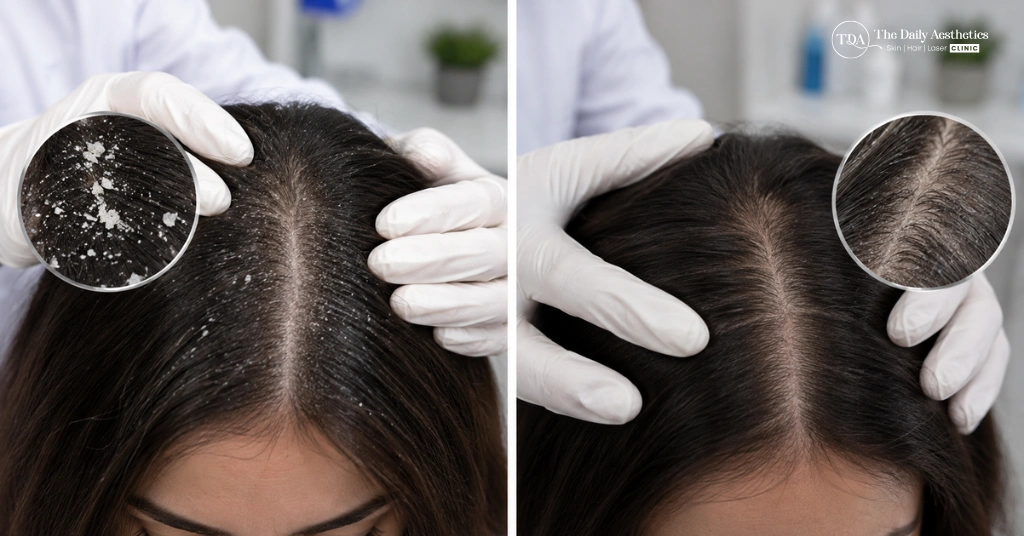
Introduction White flakes on your shoulders can feel embarrassing, especially when you are wearing dark clothes, sitting in a meeting, going out with friends, or getting ready for an important event. The itching can be just as frustrating because it keeps pulling your attention back to your scalp. The difficult part is that dandruff and dry scalp can look almost the same at first. Both can cause flakes, itching and discomfort, but they do not always need the same care. In fact, using the wrong shampoo or home remedy can sometimes make the scalp feel worse. At The Daily Aesthetics Clinic in Pune, scalp concerns are approached by first understanding what is actually causing the flakes. Some people need oil and fungal-control support, while others need barrier repair, product changes, or assessment for another scalp condition. This guide explains the difference between dandruff and dry scalp in simple language. It also explains what the flakes may look like, why your scalp may feel itchy or oily, what you can try at home, and when professional dandruff or scalp treatment may be the safer next step. Key Takeaways What Is the Main Difference Between Dandruff and Dry Scalp? The main difference is the cause. Dandruff is usually linked with faster skin-cell shedding, oil imbalance and yeast-related scalp activity, while dry scalp is linked with moisture loss and barrier dryness. Both can create flakes, but their texture, scalp feel and treatment direction are usually different. This is why many people stay stuck in a cycle of switching shampoos. A person with dandruff may not improve with only oils or moisturising products. A person with dry scalp may feel more irritated if they overuse harsh anti-dandruff shampoos without knowing the real cause. Feature Dandruff Dry Scalp Flake Appearance Often larger, white, grey or yellowish flakes that may stick to hair or scalp. Usually smaller, dry, powdery white flakes that shed more easily. Scalp Feel Can feel oily, itchy, greasy, inflamed or coated with buildup. Can feel tight, dry, sensitive, rough or uncomfortable after washing. Common Trigger Pattern May worsen with oiliness, sweat, stress, irregular washing or seborrheic tendency. May worsen with hot water, harsh shampoo, low humidity, winter dryness or product irritation. Usual Treatment Direction Anti-dandruff care, scalp balancing, antifungal support or professional scalp treatment may be needed. Gentle shampoo, less irritation, hydration support and barrier-friendly scalp care may help. When to Get Checked Recurring flakes, severe itching, redness, thick scales or poor response to shampoo. Persistent dryness, burning, cracking, sensitivity or flaking that does not settle after routine changes. Note: This comparison is a guide only. A scalp assessment is needed when symptoms are persistent, painful, spreading, or confusing. Bottom Line: The right care starts with identifying whether the scalp is oily and reactive, dry and depleted, or affected by another condition. Not Sure Whether It Is Dandruff or Dry Scalp? A scalp consultation can help identify whether your flakes are linked to dandruff, dryness, product irritation, or a different scalp concern. Book a Scalp Assessment What Does Dandruff Look and Feel Like? Dandruff commonly appears as visible white, grey or yellowish flakes on the scalp, hair or clothing. The scalp may also feel itchy, oily, irritated or coated. In many people, dandruff comes and goes instead of disappearing permanently after one wash or one product change. A key clue is oiliness. If your scalp gets greasy quickly but still flakes, dandruff or seborrheic-type scalp activity may be more likely than simple dryness. The flakes may also feel slightly sticky or heavier compared with fine dry-skin flakes. Common dandruff signs may include: Dandruff is not a sign of poor hygiene, and it is not something to feel ashamed of. It is a common scalp concern, but recurring symptoms should be handled properly instead of being hidden under caps, dry shampoo or repeated oiling. What Does Dry Scalp Look and Feel Like? Dry scalp usually feels tight, rough, sensitive or uncomfortable, especially after shampooing, hot showers, swimming, hair coloring, weather changes or frequent product use. The flakes are often smaller and powdery because the skin is shedding from dryness rather than oil-heavy buildup. A dry scalp can happen even if the hair itself is oily. Sometimes the scalp barrier is irritated or dehydrated, while the oil glands continue producing sebum. This is one reason self-diagnosis becomes confusing. Common dry scalp triggers may include: If dryness is the main issue, the goal is not to attack the scalp with stronger products. The goal is to calm irritation, reduce stripping, and rebuild comfort without creating extra buildup. Can You Have Dandruff and Dry Scalp at the Same Time? Yes, some people can have overlapping scalp symptoms. A scalp may be oily in some areas, dry in others, irritated by products, or inflamed from repeated scratching. This mixed pattern is common when people keep changing shampoos, oils and home remedies without identifying the cause. For example, a person may start with dandruff and then use strong shampoos too often. The flakes may reduce for a while, but the scalp may become dry, tight and sensitive. Another person may start with dryness and then apply heavy oils that worsen buildup and itching. Your Scalp Pattern What It May Suggest What to Do Next Oily Roots Plus Greasy Flakes Dandruff or seborrheic tendency may be involved. Avoid heavy oiling and consider targeted dandruff care or assessment. Tight Scalp Plus Powdery Flakes Dryness, irritation or barrier disruption may be more likely. Switch to gentle care and reduce harsh washing habits. Itching After Hair Color Or New Product Contact irritation or sensitivity may be possible. Stop the suspected product and get checked if redness or burning continues. Thick Scales Or Patches Psoriasis, seborrheic dermatitis or another scalp condition may need evaluation. Do not scrape aggressively; book a scalp assessment. Flakes With Hair Fall Or Soreness Inflammation, scratching or another condition may be affecting scalp comfort. Seek professional guidance instead of trying repeated home remedies. Note: Scalp symptoms can overlap.
Dandruff vs Dry Scalp: How to Tell the Difference and When to Get Treatment Read More »
Hair Care