

TDA

Exosome Therapy Benefits

Exosome Therapy for Skin in Pune A Complete Guide to Rejuvenation, Collagen & Anti-Aging

Exosome Therapy for Skin in Pune: A Complete Guide to Rejuvenation, Collagen & Anti-Aging

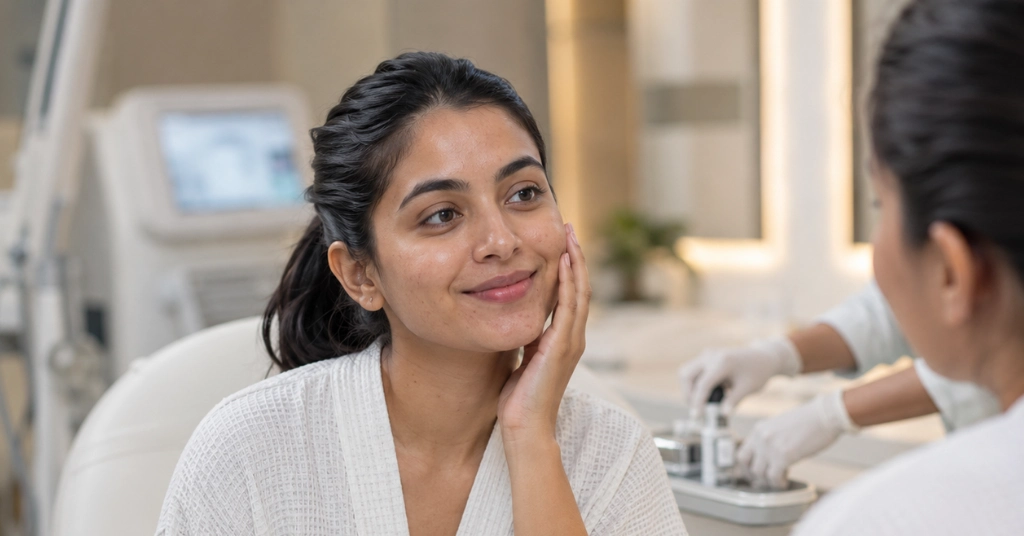
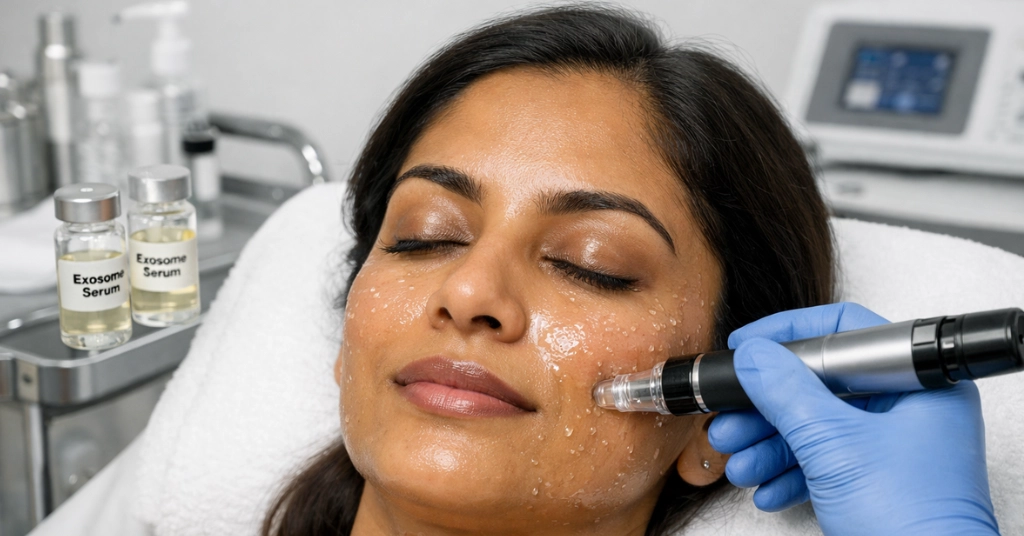
Introduction When most people hear the words “exosome therapy,” they picture something out of a laboratory science fiction film.   In reality, exosomes are tiny messenger particles your own cells already use every day to talk to each other, coordinate repair, and keep skin functioning as it did in your twenties. Aesthetic medicine has learned to bottle that conversation.  If you have been researching regenerative treatments for fine lines, dull skin, acne scars, or loss of firmness, you have almost certainly seen exosomes mentioned alongside PRP, polynucleotides, and skin boosters.   What is genuinely new here is not a stronger version of collagen cream; it is a way of sending your cells a direct instruction to rebuild.  At The Daily Aesthetics Clinic in Pune, our advanced exosome therapy protocols are physician-led, combined with medical-grade delivery devices, and tailored to how Indian skin actually responds to regenerative treatments.   Every plan is built around your Fitzpatrick skin type, your goal, and the concern you actually want addressed, whether that is post-acne texture, early aging, or a full glass-skin reset.  This guide walks you through what exosome therapy for skin really is, how it works at a cellular level, what it can and cannot treat, and what a session in Pune costs.   Plus, we also cover how it compares to PRP and PDRN, and what you need to know about safety and regulatory status before you book.  Key Takeaways  What Is Exosome Therapy for Skin?  Exosomes are nano-sized vesicles, roughly 30 to 150 nm in diameter, released by nearly every cell type in the human body.  They ferry proteins, lipids, messenger RNA, and microRNA between cells and act as a coordination layer for tissue repair, immune signaling, and, of relevance to dermatology, collagen production and pigment regulation.   A 2025 narrative review in the peer-reviewed dermatology literature describes exosomes as one of the most active frontiers in regenerative skin science, with clinical interest concentrated on wounds, scars, photoaging, and inflammatory dermatoses.  In aesthetic practice, exosomes are typically sourced from lab-cultured stem cells (commonly mesenchymal stem cells or Wharton’s jelly-derived cells), purified into a serum, and delivered via microneedling, targeted injection, or radiofrequency channels.   They contain no live cells or DNA, so they do not replicate.   They act as pure signals: aged cells behave lazily, and exosomes hand them a fresh set of instructions.  How Exosome Therapy Rejuvenates the Skin  Three effects matter for the results you actually see in the mirror.  1. Collagen and elastin stimulation. Exosomes carry growth factors and RNA cargo that signal fibroblasts, the cells that build your skin’s structural framework, to ramp production of Type I and Type III collagen and elastin. Over weeks, this shows up as firmer skin, tighter pores, and smoother texture.  2. Inflammation control. Exosomes have well-documented anti-inflammatory activity, which is why they are often used to speed up recovery after CO2 laser, microneedling, or aggressive peels. Less inflammation on Indian skin usually means less post-inflammatory pigmentation risk.  3. Cellular energy and turnover. By delivering functional proteins to older skin cells, exosomes support healthier keratinocyte turnover, better barrier function, and a more even tone, which is what most patients describe as the “glow” outcome.  A clinical study on topical Wharton’s jelly MSC-derived exosome treatments after microneedling, published in the Journal of Cosmetic Dermatology, reported measurable improvements in skin hydration, elasticity, and appearance across the study period, supporting the mechanism at the visible skin level.  What Exosome Therapy Actually Treats  The strongest use cases in aesthetic practice today:  Exosomes are not a substitute for volume restoration (that is filler territory), muscle relaxation (that is Botox), or deep structural lifting (that is HIFU, threads, or surgery). They are a skin-quality treatment.  Exosome Treatment Protocols Used in Aesthetic Practice  Most Pune clinics that offer exosomes will use one or more of the following delivery routes.   At The Daily Aesthetics, Dr. Arshi Rahul selects the protocol based on your concern, skin type, and pain tolerance, rather than a one-size-fits-all menu.  Protocol  Best For  Typical Session Time  Exosome + Microneedling Infusion  Early aging, dullness, texture, mild acne scars  60 to 75 minutes  Exosome + RF Microneedling  Deeper acne scars, laxity, larger pores  75 to 90 minutes  Targeted Exosome Injection  Under-eye thinning, focal scars, localized dark spots  30 to 45 minutes  Exosome + Hyaluronic Booster  Dehydration, barrier repair, sensitive or mature skin  45 to 60 minutes  Post-Laser Exosome Recovery  Reducing downtime and PIH risk after CO2 or fractional laser  20 to 30 minutes add-on  Exosome Mesotherapy (superficial)  Overall glow, tone evenness, prep before events  45 minutes  The protocol you get should be a clinical decision, not an upsell. Always ask which delivery route is being used and why. Exosomes vs. PRP vs. PDRN: How to Choose  This is the single most common question patients ask, because all three treatments sit in the “regenerative” bucket and get pitched interchangeably. They are not the same.  Feature  PRP (Vampire Facial)  Exosome Therapy  PDRN / Salmon DNA  Source  Your own blood, spun in a centrifuge  Lab-purified vesicles from cultured stem cells  Purified DNA fragments from salmon sperm  Growth factor content  ~20 to 30 natural growth factors  Hundreds of standardized signaling molecules  Nucleotide precursors, not growth factors  Consistency batch to batch  Depends on your age, health, and blood quality  Standardized, high potency  Standardized  Preparation  Requires blood draw and centrifuge  Ready-to-use serum vial  Ready-to-use injectable  Primary aesthetic use  Skin quality, mild texture, hair loss  Skin regeneration, scars, post-procedure repair, glow  Deep hydration, elasticity, under-eye rejuvenation  Ideal for  Patients wanting an autologous option  Patients wanting maximum signaling potency  Patients wanting hydration and structural elasticity  Downtime  24 to 48 hours redness  12 to 24 hours mild redness  Minimal, mostly injection marks  In practice, many Pune plans layer these treatments. PDRN or PRP for the base rebuild, exosomes as the finisher, and a course of chemical peels or laser sitting alongside.   If you want a deeper read on the specific role of nucleotide-based regeneration, our guide to PDRN therapy covers the science in more depth.  Sessions, Downtime, and Results Timeline  A realistic plan for most face concerns looks like this:  Deeper concerns like pitted acne scars sit at the top of that range. Maintenance sessions every 6 to
Exosome Therapy for Skin in Pune: A Complete Guide to Rejuvenation, Collagen & Anti-Aging Read More »

Exosomes
What Are Exosomes and How They Help Skin Repair Naturally

What Are Exosomes and How They Help Skin Repair Naturally

Introduction What if your skin could repair itself faster, look healthier, and glow naturally without surgery or harsh treatments?  That idea is no longer futuristic. It is happening right now with exosome therapy.  If you have been researching advanced skincare treatments, you have probably seen the word “exosomes” everywhere. Clinics promote them. Dermatologists talk about them. Regenerative medicine experts call them the future of aesthetics.  But what are exosomes really? And how can they help your skin repair itself naturally?  In simple terms, exosomes are tiny messengers that help your cells communicate and heal. They play a powerful role in tissue repair, collagen production, and reducing inflammation. When applied in aesthetic treatments, they support your skin’s natural ability to regenerate.  Unlike treatments that only work on the surface, exosomes work at the cellular level. That means they do not just temporarily improve how your skin looks. They help improve how your skin functions.  According to research published by the National Institutes of Health, exosomes are involved in cell-to-cell communication and tissue repair processes.  That scientific foundation is why exosome therapy is gaining so much attention in modern skincare.  In this guide, you’ll learn exactly what exosomes are, how they work inside your skin, and why they are becoming one of the most talked-about innovations in regenerative aesthetics.  What Are Exosomes?  You have probably heard exosomes described as revolutionary. But before you decide whether they are right for your skin, you need a clear and simple understanding of what they actually are.  Exosomes are tiny particles released by cells that act as messengers between other cells.  They are microscopic extracellular vesicles that carry important biological information. Inside each exosome are proteins, growth factors, lipids, and genetic material that help regulate how cells behave.  In simple terms, exosomes deliver instructions.  They tell other cells when to repair, when to produce collagen, when to reduce inflammation, and when to regenerate damaged tissue.  According to research, exosomes play a critical role in cell-to-cell communication and tissue healing.  When applied in aesthetic treatments, exosomes enhance your skin’s natural repair process instead of forcing artificial change.  That is what makes them different from many traditional cosmetic procedures.  Where Do Exosomes Come From?  Exosomes are naturally produced by nearly every cell in your body.   However, the exosomes used in professional skincare treatments are typically derived from mesenchymal stem cells in controlled laboratory environments.  Here is what that means for you:  This is important because some people confuse exosome therapy with stem cell injections. They are not the same thing.  Exosome treatments use the signaling components that stem cells release, not the cells themselves.  This approach provides regenerative benefits while reducing risks associated with live cell therapies.  How Exosomes Work in the Body  Your skin constantly communicates at the cellular level.   When you experience damage from aging, sun exposure, acne, or procedures like microneedling, your cells send signals to trigger repair.  Exosomes amplify and improve that signaling process.  Here is what happens during an exosome-based skin treatment:  Instead of overwhelming your skin, exosomes support what your body already knows how to do.  This is why they are often described as regenerative skincare rather than corrective skincare.  Now that you understand what exosomes are and how they function, the next question becomes even more important.  How exactly do they help your skin repair naturally?  Let’s explore that next.  How Exosomes Help Skin Repair Naturally  Now that you understand what exosomes are, let’s talk about what really matters to you.  How do they actually improve your skin?  Exosomes work by enhancing your skin’s natural healing and regeneration processes. Instead of covering up problems, they help your cells function better from within. Over time, that leads to smoother texture, improved firmness, reduced redness, and healthier-looking skin.  Here is how that happens.  1. Boosting Collagen and Elastin Production  Collagen is the structural protein that keeps your skin firm and smooth. Elastin allows your skin to stretch and snap back into place.  As you age, collagen production slows down. That is when you start noticing fine lines, wrinkles, and skin laxity.  Exosomes help stimulate fibroblasts, which are the cells responsible for producing collagen and elastin. When fibroblasts receive regenerative signals from exosomes, they increase their activity.  What this means for you:  Unlike fillers, which add volume immediately, exosomes help your skin rebuild its own structural support.   The improvement happens progressively and naturally.  2. Accelerating Wound Healing  Your skin is constantly repairing itself. Every time you experience sun exposure, acne breakouts, or undergo treatments like microneedling or laser therapy, your skin enters a healing phase.  Exosomes enhance that healing response.  They promote:  This is why exosomes are often paired with microneedling or laser treatments. They help your skin recover faster and respond better to the procedure.  If you have ever experienced redness or prolonged healing after aesthetic treatments, exosomes may help shorten that recovery window.  3. Reducing Inflammation and Redness  Inflammation plays a major role in many skin concerns.  Conditions like acne, rosacea, and post-procedure irritation all involve inflammatory responses. Chronic inflammation can also accelerate skin aging.  Exosomes contain anti-inflammatory signaling molecules that help calm overactive skin responses.  For you, that can mean:  By regulating inflammatory pathways, exosomes help create a healthier skin environment overall.  4. Improving Skin Texture and Tone  Uneven texture and pigmentation are common concerns.   Whether caused by acne scarring, sun damage, or aging, these issues often stem from disrupted cellular function.  Exosomes help encourage balanced cellular turnover and improved tissue remodeling.  Over time, you may notice:  It is important to set realistic expectations. Exosomes are not an overnight miracle. They work gradually by supporting natural regeneration. Results typically improve over several weeks as collagen production increases.  That is what makes this treatment appealing if you prefer subtle, progressive improvements rather than dramatic changes.  Exosomes vs Stem Cells vs PRP  If you have been researching regenerative treatments, you have probably come across PRP and stem cell therapy.   At first glance, they may seem similar to exosomes. They all focus on healing and regeneration.  But they are not the same.  Understanding the differences helps you make a more informed decision about what is right for your skin.  What Is PRP?  PRP stands

What Are Exosomes and How They Help Skin Repair Naturally Read More »

Exosomes
Call
Scroll to Top