

TDA

hair care

Dandruff vs Dry Scalp: Symptoms & Treatment

Dandruff vs Dry Scalp: How to Tell the Difference and When to Get Treatment

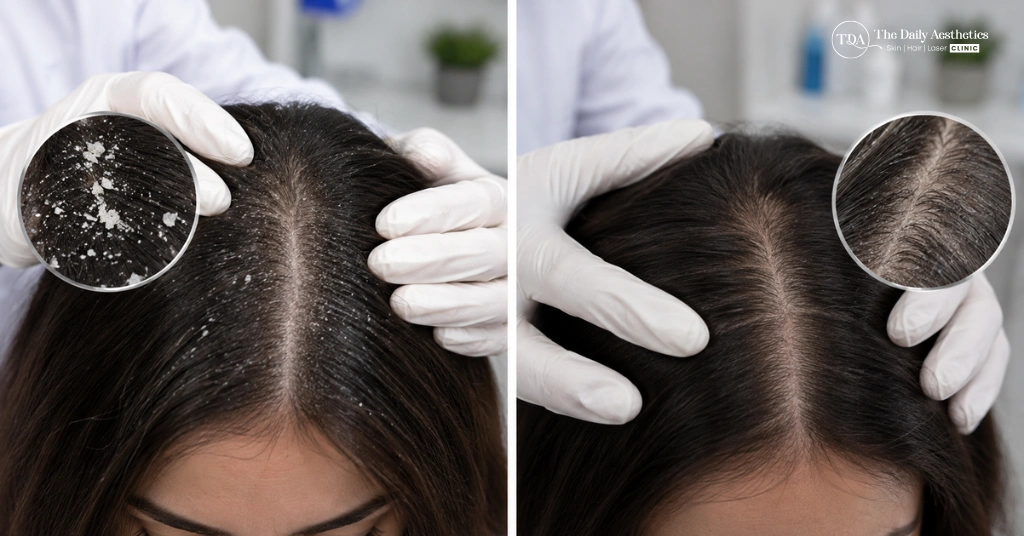
Introduction  White flakes on your shoulders can feel embarrassing, especially when you are wearing dark clothes, sitting in a meeting, going out with friends, or getting ready for an important event. The itching can be just as frustrating because it keeps pulling your attention back to your scalp.  The difficult part is that dandruff and dry scalp can look almost the same at first. Both can cause flakes, itching and discomfort, but they do not always need the same care. In fact, using the wrong shampoo or home remedy can sometimes make the scalp feel worse.  At The Daily Aesthetics Clinic in Pune, scalp concerns are approached by first understanding what is actually causing the flakes. Some people need oil and fungal-control support, while others need barrier repair, product changes, or assessment for another scalp condition.  This guide explains the difference between dandruff and dry scalp in simple language. It also explains what the flakes may look like, why your scalp may feel itchy or oily, what you can try at home, and when professional dandruff or scalp treatment may be the safer next step.  Key Takeaways  What Is the Main Difference Between Dandruff and Dry Scalp?  The main difference is the cause. Dandruff is usually linked with faster skin-cell shedding, oil imbalance and yeast-related scalp activity, while dry scalp is linked with moisture loss and barrier dryness. Both can create flakes, but their texture, scalp feel and treatment direction are usually different.  This is why many people stay stuck in a cycle of switching shampoos. A person with dandruff may not improve with only oils or moisturising products. A person with dry scalp may feel more irritated if they overuse harsh anti-dandruff shampoos without knowing the real cause.  Feature  Dandruff  Dry Scalp  Flake Appearance  Often larger, white, grey or yellowish flakes that may stick to hair or scalp.  Usually smaller, dry, powdery white flakes that shed more easily.  Scalp Feel  Can feel oily, itchy, greasy, inflamed or coated with buildup.  Can feel tight, dry, sensitive, rough or uncomfortable after washing.  Common Trigger Pattern  May worsen with oiliness, sweat, stress, irregular washing or seborrheic tendency.  May worsen with hot water, harsh shampoo, low humidity, winter dryness or product irritation.  Usual Treatment Direction  Anti-dandruff care, scalp balancing, antifungal support or professional scalp treatment may be needed.  Gentle shampoo, less irritation, hydration support and barrier-friendly scalp care may help.  When to Get Checked  Recurring flakes, severe itching, redness, thick scales or poor response to shampoo.  Persistent dryness, burning, cracking, sensitivity or flaking that does not settle after routine changes.  Note: This comparison is a guide only. A scalp assessment is needed when symptoms are persistent, painful, spreading, or confusing.  Bottom Line: The right care starts with identifying whether the scalp is oily and reactive, dry and depleted, or affected by another condition.  Not Sure Whether It Is Dandruff or Dry Scalp? A scalp consultation can help identify whether your flakes are linked to dandruff, dryness, product irritation, or a different scalp concern. Book a Scalp Assessment What Does Dandruff Look and Feel Like?  Dandruff commonly appears as visible white, grey or yellowish flakes on the scalp, hair or clothing. The scalp may also feel itchy, oily, irritated or coated. In many people, dandruff comes and goes instead of disappearing permanently after one wash or one product change.  A key clue is oiliness. If your scalp gets greasy quickly but still flakes, dandruff or seborrheic-type scalp activity may be more likely than simple dryness. The flakes may also feel slightly sticky or heavier compared with fine dry-skin flakes.  Common dandruff signs may include:  Dandruff is not a sign of poor hygiene, and it is not something to feel ashamed of. It is a common scalp concern, but recurring symptoms should be handled properly instead of being hidden under caps, dry shampoo or repeated oiling.  What Does Dry Scalp Look and Feel Like?  Dry scalp usually feels tight, rough, sensitive or uncomfortable, especially after shampooing, hot showers, swimming, hair coloring, weather changes or frequent product use. The flakes are often smaller and powdery because the skin is shedding from dryness rather than oil-heavy buildup.  A dry scalp can happen even if the hair itself is oily. Sometimes the scalp barrier is irritated or dehydrated, while the oil glands continue producing sebum. This is one reason self-diagnosis becomes confusing.  Common dry scalp triggers may include:  If dryness is the main issue, the goal is not to attack the scalp with stronger products. The goal is to calm irritation, reduce stripping, and rebuild comfort without creating extra buildup.  Can You Have Dandruff and Dry Scalp at the Same Time?  Yes, some people can have overlapping scalp symptoms. A scalp may be oily in some areas, dry in others, irritated by products, or inflamed from repeated scratching. This mixed pattern is common when people keep changing shampoos, oils and home remedies without identifying the cause.  For example, a person may start with dandruff and then use strong shampoos too often. The flakes may reduce for a while, but the scalp may become dry, tight and sensitive. Another person may start with dryness and then apply heavy oils that worsen buildup and itching.  Your Scalp Pattern  What It May Suggest  What to Do Next  Oily Roots Plus Greasy Flakes  Dandruff or seborrheic tendency may be involved.  Avoid heavy oiling and consider targeted dandruff care or assessment.  Tight Scalp Plus Powdery Flakes  Dryness, irritation or barrier disruption may be more likely.  Switch to gentle care and reduce harsh washing habits.  Itching After Hair Color Or New Product  Contact irritation or sensitivity may be possible.  Stop the suspected product and get checked if redness or burning continues.  Thick Scales Or Patches  Psoriasis, seborrheic dermatitis or another scalp condition may need evaluation.  Do not scrape aggressively; book a scalp assessment.  Flakes With Hair Fall Or Soreness  Inflammation, scratching or another condition may be affecting scalp comfort.  Seek professional guidance instead of trying repeated home remedies.  Note: Scalp symptoms can overlap.

Dandruff vs Dry Scalp: How to Tell the Difference and When to Get Treatment Read More »

Hair Care

Monsoon Hair Care: How to Prevent Excessive Hair Fall

The monsoon season brings relief from the scorching heat of summer and its own set of hair care challenges. Excessive humidity, rainwater, and fungal infections can wreak havoc on our hair, leading to increased hair fall. However, with the right care and precautions, you can maintain healthy and lustrous locks even during the rainy season. This blog will discuss effective tips to prevent hair fall during monsoons. Use a Mild Shampoo and Limit Washing Frequency One of the most important steps in preventing hair fall during the monsoon is to use a mild shampoo and limit the frequency of hair washing. Here’s why this is crucial and how you can incorporate it into your hair care routine: Choose a Mild Shampoo: Opt for a mild, pH-balanced shampoo that is gentle on your hair and scalp. Harsh shampoos can strip away the natural oils from your scalp, leaving your hair dry, brittle, and prone to breakage. Look for shampoos specifically formulated for everyday use or dry and damaged hair, as they tend to be milder and more moisturizing. Avoid Excessive Washing: While keeping your hair clean is important, over-washing can do more harm than good, especially during the monsoon. Frequent washing can strip away the protective oils that keep your hair healthy and hydrated, leading to dryness, frizz, and increased hair fall. Aim to wash your hair no more than two to three times weekly to balance cleanliness and moisture retention. Rinse Thoroughly: When washing your hair, make sure to rinse it thoroughly to remove all traces of shampoo. Residual shampoo can build up on the scalp and hair strands, causing irritation, dryness, and clogged follicles. Rinse your hair properly, ensuring no shampoo is left behind. Use Lukewarm Water: Avoid washing your hair with hot water, as it can strip away the natural oils and moisture from your hair, leaving it dry and prone to breakage. Instead, use lukewarm water to wash your hair during the monsoon. By opening the hair cuticles with lukewarm water, shampoo may efficiently cleanse the hair while preserving the natural oils. Massage Gently: When applying shampoo, be gentle with your hair and scalp. Avoid vigorous scrubbing or rubbing, as it can cause friction and damage the hair cuticles. Instead, use your fingertips to massage the shampoo into your scalp in circular motions. This will help stimulate blood circulation, promote hair growth, and cleanse the scalp without causing unnecessary stress to your hair. Follow with a Conditioner: After shampooing, always use a conditioner to restore moisture and nourish your hair. Choose a conditioner that suits your hair type and apply it mainly to the mid-lengths and ends of your hair. Before giving it a good rinse, let it sit for a few minutes. Conditioning aids in detangling, moisture addition, frizz reduction, and breakage prevention for the hair. Use a Heat Protectant and Limit Heat Styling Limiting heat styling and using a heat protectant is essential to maintain healthy hair and prevent hair fall during the monsoon season. Excessive heat from styling tools can damage the hair, leading to breakage and increased hair fall. Embracing natural hairstyles that require minimal heat, such as braids or buns, can help minimize heat-related damage. When heat styling is necessary, applying a heat protectant product creates a barrier between the hair and the styling tool, reducing moisture loss and preventing heat-induced damage. Using lower heat settings on styling tools is crucial as high temperatures can strip the hair of moisture, leaving it dry and brittle. Additionally, maintaining a safe distance and keeping the tool in constant motion while styling helps distribute the heat evenly and minimizes the risk of hair damage. Investing in quality styling tools with temperature control features and using ceramic or tourmaline plates can further minimize heat damage. By taking these precautions, you can protect your hair from excessive heat, reduce hair fall, and maintain healthier, more resilient hair throughout the monsoon season Try Hair Growth Supplements and Essential Oils Incorporating hair growth supplements and essential oils into your routine can be beneficial if you’re looking to prevent hair fall during the monsoon season and promote hair growth. Here’s how these two elements can help: Hair Growth Supplements: Hair growth supplements contain essential vitamins, minerals, and nutrients that support hair health and promote growth. Look for supplements that include biotin, vitamin E, vitamin C, iron, and zinc. These nutrients help strengthen the hair follicles, improve blood circulation to the scalp, and enhance the overall health of your hair. Please consult a healthcare professional at the Daily Aesthetic; they provide PRP Hair Loss Treatment and consultancy regarding hair loss treatment.   Essential Oils: Certain essential oils have been known for their hair growth-stimulating properties. Rosemary, lavender, peppermint, and cedarwood essential oils are commonly used for promoting hair growth. You can dilute these oils in a carrier oil such as coconut or olive oil and apply the mixture to your scalp. Gently massage the oil into your scalp for a few minutes to improve blood circulation and stimulate the hair follicles. Leave the oil on for a few hours or overnight before washing it off. Regularly using essential oils can help strengthen your hair, reduce hair fall, and promote healthier growth. Remember, while hair growth supplements and essential oils can be beneficial, results may vary for each individual. Maintaining a balanced diet, practicing good hair care habits, and consulting with a healthcare professional or dermatologist for personalized advice are important. Conclusion Preventing hair fall during the monsoon season requires a comprehensive approach that includes various preventive measures. Limiting heat styling, using a heat protectant, and embracing natural hairstyles are essential to minimize damage and breakage. Additionally, incorporating hair growth supplements and essential oils into your routine can nourish and stimulate healthy hair growth. Various options are available when addressing hair loss concerns, including medication, hair transplants, and hair regrowth treatments. One such effective and safe treatment is Platelet-Rich Plasma (PRP) therapy. At Daily Aesthetics, we firmly believe in the benefits

Monsoon Hair Care: How to Prevent Excessive Hair Fall Read More »

blog, Hair Care
Call WhatsApp
Scroll to Top