

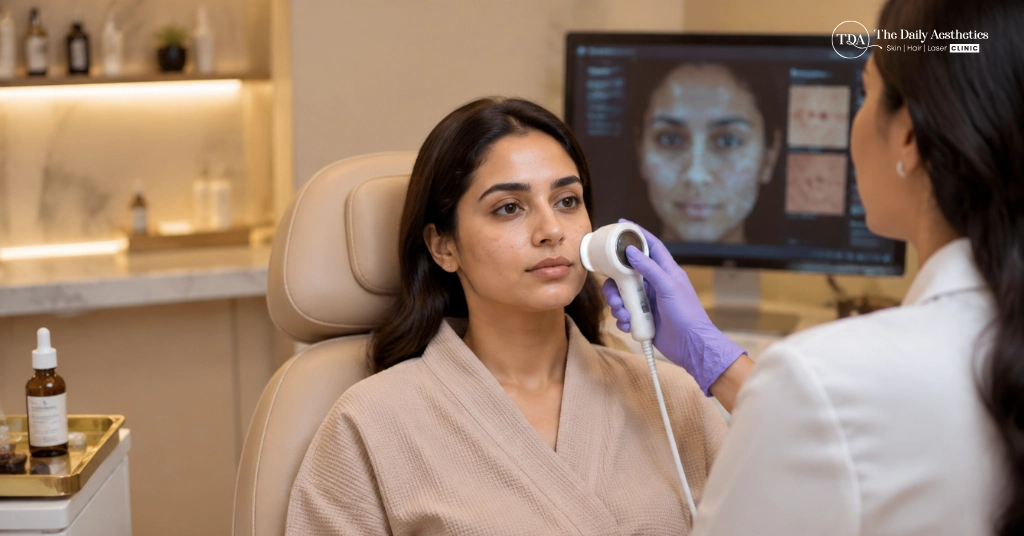
Retinol for Beginners: Benefits, Side Effects & How to Use It Safely
Introduction Retinol has a strange reputation. Some people call it the one ingredient that finally improved their acne marks, texture, and fine lines. Others remember only the peeling, burning, or sudden breakouts they got after starting too fast. Both experiences can be true. Retinol can be helpful, but it is not a casual trend to copy from a reel. It works best when your skin barrier is respected, your skin type is considered, and your routine is kept simple enough to follow. For many people in Pune, retinol confusion becomes worse because the skin is already dealing with sun exposure, pollution, sweat, makeup, gym routines, helmets, and changing weather. One wrong product or too many actives can make the face feel tight, patchy, or darker in irritated areas. This beginner guide explains what retinol does, who may benefit, what side effects are common, how to start safely, what not to mix, and when to speak with a dermatologist or skin specialist before continuing. Key Takeaways What is Retinol and Why Do Beginners Hear So Much About It? Retinol is a type of retinoid, which means it belongs to the vitamin A family of skincare ingredients. The American Academy of Dermatology describes retinoids as useful for mild acne, mild pigmentation irregularities, and mild fine lines when introduced carefully. In simple words, retinol encourages skin renewal. It can help clogged pores clear more efficiently, support smoother texture, and improve the look of early aging over time. It is not an overnight glow product, and it is not suitable for every skin barrier on day one. The Cleveland Clinic notes that retinol can support skin-clearing and anti-aging benefits by helping with elasticity, melanin activity, inflammation, and clogged pores. That is why retinol appears in conversations about acne, pores, dullness, dark spots, fine lines, sun damage, and uneven texture. But the same activity that makes it useful can also make it irritate if you start with too much, too often, or on already sensitive skin. Ingredient term What it usually means Beginner note Retinol Over-the-counter vitamin A derivative used in skincare serums and creams Good beginner category when strength and frequency are kept low Retinoids The larger vitamin A family, including retinol, retinal, adapalene, tretinoin, and others Some are stronger and may need medical guidance Retinal / retinaldehyde A stronger OTC retinoid step closer to retinoic acid May work faster, but can irritate sensitive beginners Adapalene A retinoid often used for acne-prone skin Best discussed if acne is the main concern Tretinoin Prescription-strength retinoic acid used for acne and photoaging concerns Should be used only with professional guidance Note: Product labels can be confusing. The safest choice depends on your skin type, concern, age, routine, and irritation history. Bottom Line: Retinol is not one product. It is part of a larger vitamin A family, and beginners should not jump to the strongest option first. Confused Between Retinol, Retinal, Adapalene, and Prescription Retinoids? The experts at The Daily Aesthetics can assess your skin concerns, tolerance, and goals to help determine which option may be most suitable for your skincare journey. Book a Skin Consultation at TDA What Are the Main Benefits of Retinol for Skin? Retinol may help with acne-prone skin, clogged pores, rough texture, early fine lines, uneven tone, and post-acne marks when used consistently and correctly. It works gradually, so the goal is steady improvement rather than quick peeling or instant brightness. Beginners should connect retinol to a clear goal. Someone using it for blackheads may need a different plan than someone using it for fine lines, pigmentation, or post-acne texture. A simple routine often works better than a crowded shelf. Retinol May Support These Concerns: Acne-prone skin by helping reduce clogged pores over time. Uneven texture by supporting smoother skin cell turnover. Early fine lines by supporting collagen-focused anti-aging routines. Post-acne marks by improving overall renewal and tone gradually. Dullness by helping dead skin shed more evenly. Visible pores by reducing congestion that can make pores look more obvious. For deeper pigmentation, melasma, acne scars, or long-standing marks, retinol alone may not be enough. In those cases, a clinic-led plan may include skin pigmentation care, chemical peels, acne scar treatment, or laser-based options after assessment. Who Should Start Retinol Carefully or Avoid It? Retinol is not suitable for every person at every stage. Beginners should be especially careful if the skin is very sensitive, recently over-exfoliated, sunburned, peeling, eczema-prone, rosacea-prone, pregnant, breastfeeding, or already reacting to multiple skincare products. AAD guidance notes that people with darker skin tones should be especially alert to irritation because inflammation can trigger hyperpigmentation. This matters for many Indian skin tones, where irritation may leave brown marks even after redness settles. If your skin is already stung with basic moisturizer or sunscreen, retinol should wait. First, repair the barrier. A routine that begins with calm, hydrated skin is more likely to tolerate active ingredients later. Use Extra Caution if You Have: Active eczema, rosacea, dermatitis, or frequent facial burning. A damaged skin barrier from scrubs, peels, strong acids, or over-cleansing. Moderate to severe acne, painful cysts, or acne that is scarring. Melasma or pigmentation that worsens with irritation or sun exposure. A planned facial procedure such as waxing, laser, peel, microneedling, or injectable treatment. Pregnancy, breastfeeding, or plans to conceive. Skin situation Retinol approach Safer next step Healthy beginner skin Start low and slow at night Patch test, moisturize, use sunscreen daily Dry or sensitive skin Use lower strength and buffer with moisturizer Try the sandwich method and fewer nights Acne-prone skin May help, but purging and irritation must be monitored Consult if acne is painful, cystic, or scarring Pigmentation-prone skin Useful only if irritation is controlled Prioritize sunscreen and avoid aggressive use Pregnancy or breastfeeding Avoid unless your doctor advises otherwise Ask for pregnancy-safe alternatives Before peels, lasers, or waxing Pause as advised by your provider Tell your clinic you use retinol Note: This is general skincare education, not a prescription. Stop and seek guidance if irritation is strong or persistent. Bottom Line: Retinol is safe when the routine is matched to your skin condition, not copied from someone else. Starting retinol for acne marks, dullness, or early signs of aging but
Retinol for Beginners: Benefits, Side Effects & How to Use It Safely Read More »
Skin Care