
TDA

Skin Care

Original HydraFacial vs Regular Facial: How It Works and Why It Feels Different

Original HydraFacial vs Regular Facial: How It Works and Why It Feels Different 

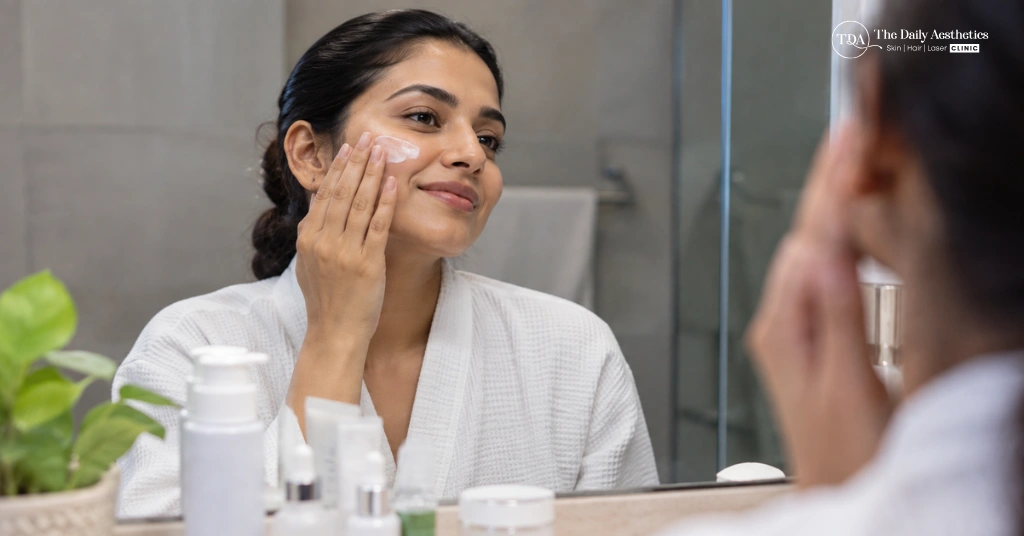
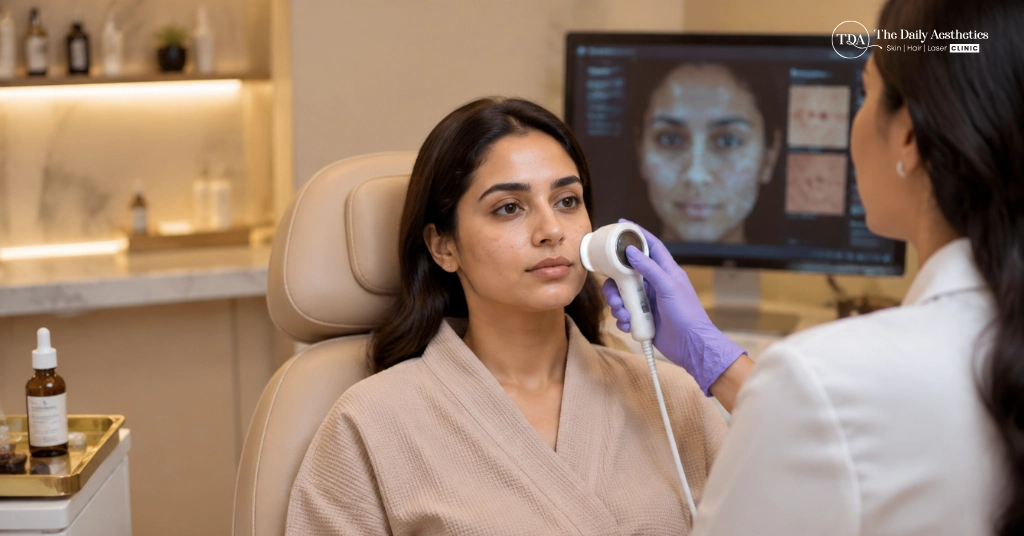
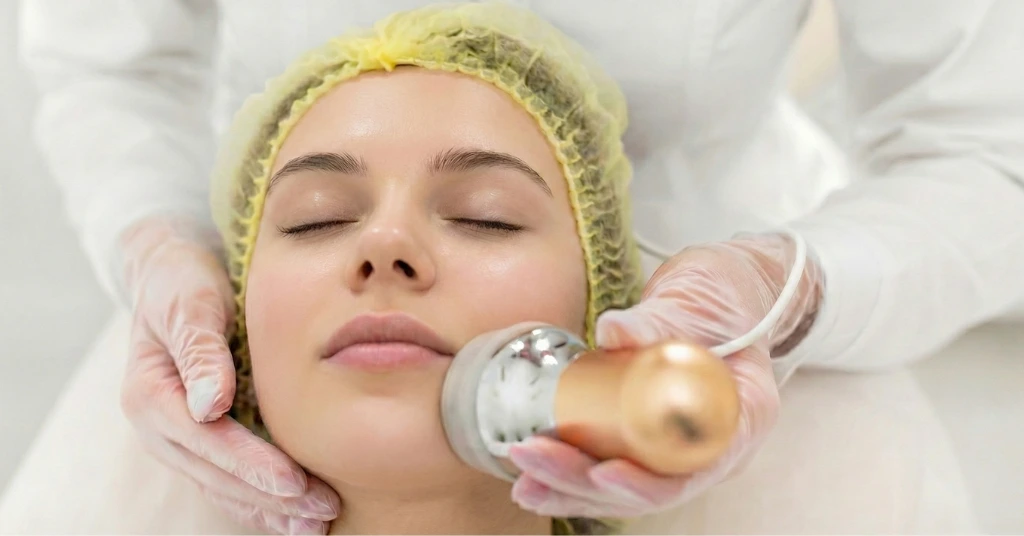
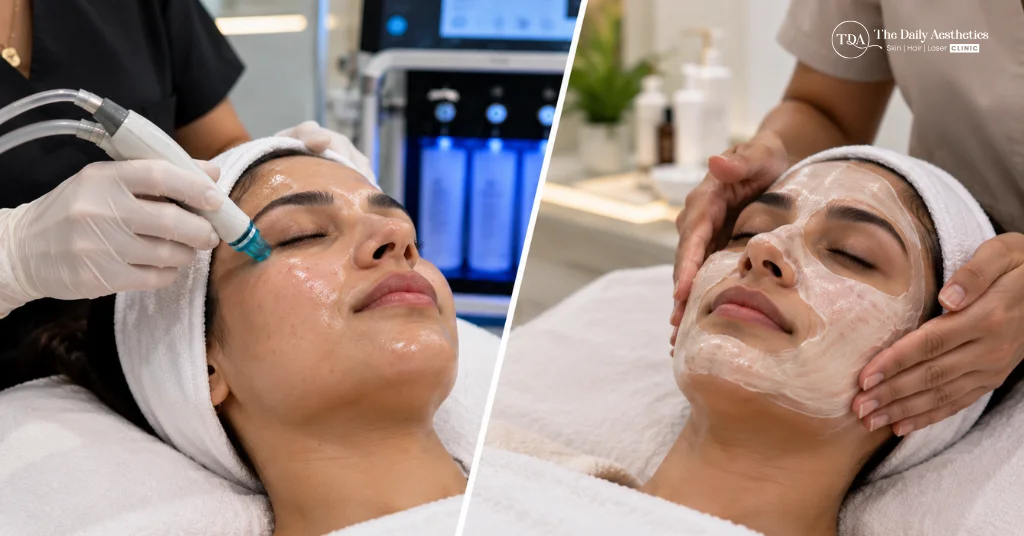
Introduction  You book a facial expecting cleaner, fresher skin. Then someone tells you an “Original HydraFacial” is completely different from a regular facial, even though both use the word facial. The confusion is understandable. From the treatment bed, both can involve cleansing, exfoliation, hydration and a post-treatment glow. The experience underneath those steps, however, is not the same.  A regular facial is a broad category. The products, massage, steam, exfoliation and extraction technique can change from one salon or clinic to another. An Original HydraFacial is a branded, device-based treatment that follows a structured cleanse, exfoliate, extract and hydrate process using the HydraFacial system and its Vortex-Fusion technology.  At The Daily Aesthetics Clinic, patients often ask whether the difference is only marketing or whether the treatment genuinely feels and works differently. The practical answer is that the device, extraction method, fluid delivery and treatment consistency create a noticeably different experience, but that does not mean every skin concern automatically needs HydraFacial.  This guide explains Original HydraFacial vs regular facial without treating either option as a universal winner. You will learn how each treatment works, why HydraFacial feels more like a controlled wet glide than a massage-based facial, which skin goals each option may suit, how to recognise a genuine HydraFacial treatment, and when a skin assessment is more useful than choosing by treatment name alone.   Key Takeaways  Not Sure Which Facial Fits Your Skin? Dullness, congestion, dehydration and sensitivity can look similar but may need different treatment approaches. Start with the concern rather than the trend name. Book a Skin Consultation What Is an Original HydraFacial?  An Original HydraFacial is a branded hydradermabrasion treatment performed with the HydraFacial platform. Instead of relying mainly on hands, scrubs and masks, the treatment uses a specialised handpiece to move solutions across the skin while cleansing, exfoliating, loosening debris, extracting congestion and delivering hydrating solutions in a controlled sequence.  The defining point is not simply that the treatment uses water. The HydraFacial system is built around Vortex-Fusion technology, specialised tips and treatment solutions. That is why the phrase “Original HydraFacial” matters: many generic hydradermabrasion or aqua-facial machines can look similar from a distance but are not the same branded platform.  If you want the full treatment overview, benefits and local clinic information, explore HydraFacial Treatment in Pune. This comparison guide stays focused on how the Original HydraFacial experience differs from a regular facial.  What Is a Regular Facial?  A regular facial is a broad term for hands-on skin care performed in a salon, spa or clinic. There is no single universal protocol. One facial may focus on relaxation and massage, another on blackhead extraction, another on moisturising masks, and another on exfoliation or brightening products.  A typical regular facial may include cleansing, steam, a scrub or enzyme exfoliant, manual extraction, facial massage, a mask, serum, moisturiser and sunscreen. The exact products and intensity depend heavily on the provider, the facial selected and the condition of your skin on that day.  That variability is not automatically a disadvantage. A skilled professional facial can be highly customised and relaxing. It simply means that “regular facial” does not describe one standardised technology in the way HydraFacial describes a specific branded system.  How Does Original HydraFacial Work Step by Step?  Original HydraFacial works through a structured sequence that combines surface cleansing, controlled exfoliation, suction-based extraction and hydration. The exact protocol can vary according to the HydraFacial level, boosters and the skin assessment, but the device-based flow is what separates the experience from a conventional hands-on facial.  Step 1: Cleansing and Surface Preparation  The skin is cleansed and the handpiece is moved across the face in overlapping passes. Rather than a dry scrub, the treatment feels wet and gliding because liquid is moving through the tip while surface debris and excess oil are loosened. Most people notice a light pulling sensation rather than vigorous rubbing.  Step 2: Gentle Exfoliation  A controlled exfoliating solution may be used to help lift compacted dead skin cells and prepare congested pores. The strength and ingredients should be chosen according to skin tolerance. Some people feel mild tingling; others mainly notice the cool movement of the handpiece.  Step 3: Suction-Based Extraction  This is usually the stage that feels most different from a regular facial. The tip creates controlled suction to lift loosened oil and pore debris. Instead of finger pressure around individual blackheads, the handpiece moves continuously across the treatment area. Suction intensity can be adjusted, so the sensation may range from gentle vacuum pressure to a stronger pull in congested areas.  Step 4: Hydration and Finishing Solutions  The final stage focuses on hydration and conditioning. Treatment solutions are delivered through the device onto freshly cleansed skin. Depending on the protocol, additional boosters or finishing steps may be selected. The result is usually a softer, smoother and more hydrated feel immediately after the session, although individual response varies.  Want to Experience the Device-Based Difference? Original HydraFacial combines cleansing, exfoliation, extraction and hydration in one structured treatment. Your skin assessment decides how the protocol should be adjusted. Explore Original HydraFacial Why Does Original HydraFacial Feel Different from a Regular Facial?  The biggest difference is sensory. A regular facial often feels warm, hands-on and massage-led. Original HydraFacial feels more like a cool, fluid treatment with repeated gliding passes and controlled suction. The skin is being treated by a handpiece for much of the session, so the experience is less about massage and more about consistent device contact.  People often describe the differences in four ways:  This does not mean HydraFacial is completely sensation-free. Sensitive areas around the nose can feel stronger during suction, exfoliating solutions may tingle, and reactive skin can become temporarily pink. “Gentle” should mean controlled and appropriate for your skin, not that no one ever experiences sensitivity.  Feature  Original HydraFacial  Regular Facial  Why It Matters  Core Method  Device-based Vortex-Fusion treatment with fluid flow and suction.  Primarily hands-on; protocol varies by facial and provider.  The treatment experience and consistency are different.  Cleansing  Performed

Original HydraFacial vs Regular Facial: How It Works and Why It Feels Different  Read More »

Skin Care
Azelaic Acid vs Tretinoin: Benefits, Side Effects and How to Use Them Safely

Azelaic Acid vs Tretinoin: Benefits, Side Effects and How to Use Them Safely

Introduction  Two skincare ingredients can both be “good for acne” and still be completely different in how they behave on your skin. That is exactly why azelaic acid and tretinoin create so much confusion. One person says azelaic acid finally calmed their breakouts and marks. Another says tretinoin changed their clogged pores and texture. Both experiences can be valid.  The choice becomes harder when you are dealing with more than one concern at once: active acne plus brown post-acne marks, pigmentation plus sensitivity, or early fine lines with a skin barrier that already feels dry. Choosing the stronger-sounding active is not always the smarter approach.  At The Daily Aesthetics Clinic, skincare plans are built around the concern, skin tolerance, current routine and medical history rather than a trending ingredient name. This matters with tretinoin in particular because prescription-strength retinoids can be highly effective but also irritating when introduced too aggressively.  This guide compares azelaic acid vs tretinoin for acne, post-acne marks, pigmentation, texture, redness and early signs of ageing. It also explains common side effects, whether they can be used in the same routine, pregnancy-related cautions, and the safest way to introduce active skincare without turning your routine into a cycle of irritation and recovery. Key Takeaways  Not Sure Which Active Your Skin Needs? Acne, pigmentation, sensitivity and texture can overlap. A skin assessment can help determine whether azelaic acid, tretinoin, another treatment or a simpler routine is the better starting point. Book a Skin Consultation What Is the Main Difference Between Azelaic Acid and Tretinoin?  Azelaic acid is a dicarboxylic acid with anti-inflammatory, pore-normalising and pigment-regulating effects, while tretinoin is a prescription retinoid that changes how skin cells turn over inside the follicle. Both can help acne, but they are not interchangeable and they do not have the same evidence for every skin concern.  Azelaic acid is commonly considered when breakouts are accompanied by redness, sensitivity, rosacea-type bumps or post-inflammatory hyperpigmentation. It can also help reduce the formation of clogged pores, but its biggest practical advantage is that it addresses inflammation and uneven pigment without acting like a strong retinoid.  Tretinoin is retinoic acid, the active form of vitamin A used in prescription topical treatments. It helps prevent microcomedones, supports more normal shedding of cells inside pores and, over time, can improve fine lines and uneven texture. That stronger biological activity also explains why dryness and peeling are more common.  Feature  Azelaic Acid  Tretinoin  Practical Meaning  Treatment type  Dicarboxylic acid; anti-inflammatory and pigment-regulating topical.  Prescription topical retinoid (retinoic acid).  They work through different pathways, so the “better” choice depends on the concern.  Acne  Useful for inflammatory acne, clogged pores and acne-related marks.  Strong evidence for comedonal acne and ongoing acne control.  Both can help acne, but the pattern of acne and tolerance matter.  Pigmentation  Useful for PIH, melasma-related pigmentation and uneven tone in selected plans.  May help uneven pigment through cell turnover and is used within some melasma regimens.  Irritation itself can worsen pigmentation, so tolerance matters.  Fine lines / photoageing  Not the main evidence-backed reason to choose it.  Stronger evidence for fine lines and photoageing with long-term use.  Tretinoin is usually the more relevant discussion for anti-ageing goals.  Redness / rosacea-prone skin  Commonly used for inflammatory rosacea and redness-related bumps.  Can be irritating and is not usually the first choice for rosacea-prone skin.  Sensitive or redness-prone skin often needs a gentler plan.  Irritation potential  Stinging, burning, itching or dryness can occur.  Dryness, peeling, redness, burning and sensitivity are common early on.  Start slowly and protect the skin barrier.  Pregnancy  May be considered by a clinician when appropriate.  Generally avoided during pregnancy.  Pregnancy or trying to conceive should be discussed before starting strong actives.  Note: This comparison is educational. Product strength, formulation, diagnosis, pregnancy status, other medicines and skin barrier condition can change what is appropriate for an individual.  Bottom Line: Azelaic acid is often the gentler inflammation-and-pigment option; tretinoin is usually the stronger cell-turnover option for acne, texture and photoageing.   Choosing Between Acne Control and Pigment Control? If breakouts and post-acne marks are happening together, treatment should address both without over-irritating the skin. Explore Acne Care What Does Azelaic Acid Do for the Skin?  Azelaic acid can help acne, inflammatory redness and uneven pigmentation because it works across several pathways at once. It can reduce inflammation, help normalise keratin build-up around pores and slow excessive pigment activity. This makes it especially useful when the skin concern is not only pimples, but also the marks they leave behind.  People often like azelaic acid because it sits between “gentle skincare” and stronger prescription acne therapy. It is not irritation-free, but it may fit routines where the skin becomes easily red, stings with multiple acids, or develops darker post-inflammatory marks after aggressive treatment.  Azelaic acid may be considered for:  The important limitation is that azelaic acid is not a proven replacement for tretinoin when the main goal is photoageing, fine lines or long-term retinoid-driven texture change. The ingredient should match the problem you are actually trying to solve.  What Does Tretinoin Do for the Skin?  Tretinoin is a prescription retinoid used primarily for acne and, in specific formulations, fine facial wrinkles associated with photoageing. It increases skin cell turnover and reduces the formation of microcomedones, which are the invisible early plugs that later become blackheads, whiteheads and inflamed spots.  This is why tretinoin is often discussed when acne keeps returning despite short-term spot treatments. It is designed to influence the acne process across the treated area rather than only dry out visible pimples.  Over longer periods, tretinoin may also improve uneven texture and fine lines. However, results require consistency, and the early adjustment phase can involve dryness, redness, flaking or temporary worsening of acne.  Tretinoin may be discussed when:  Azelaic Acid vs Tretinoin: Which Is Better for Acne?  Neither ingredient wins for every type of acne. Tretinoin is often the more powerful option for blackheads, whiteheads and comedonal acne because it directly changes follicular cell turnover. Azelaic acid can be

Azelaic Acid vs Tretinoin: Benefits, Side Effects and How to Use Them Safely Read More »

Skin Care
What Are Skin Boosters? Benefits for Hydration, Texture, Elasticity and Skin Quality

What Are Skin Boosters? Benefits for Hydration, Texture, Elasticity and Skin Quality

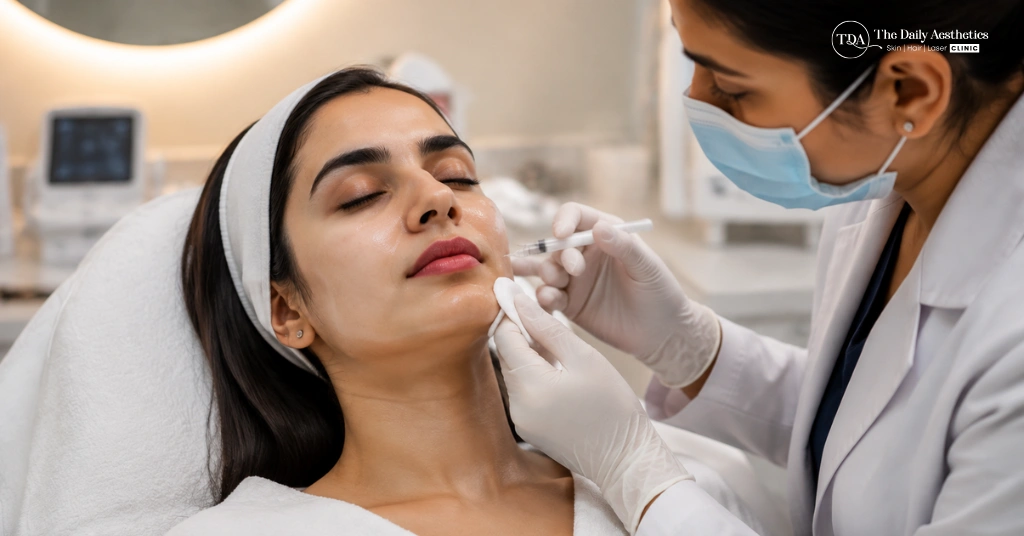
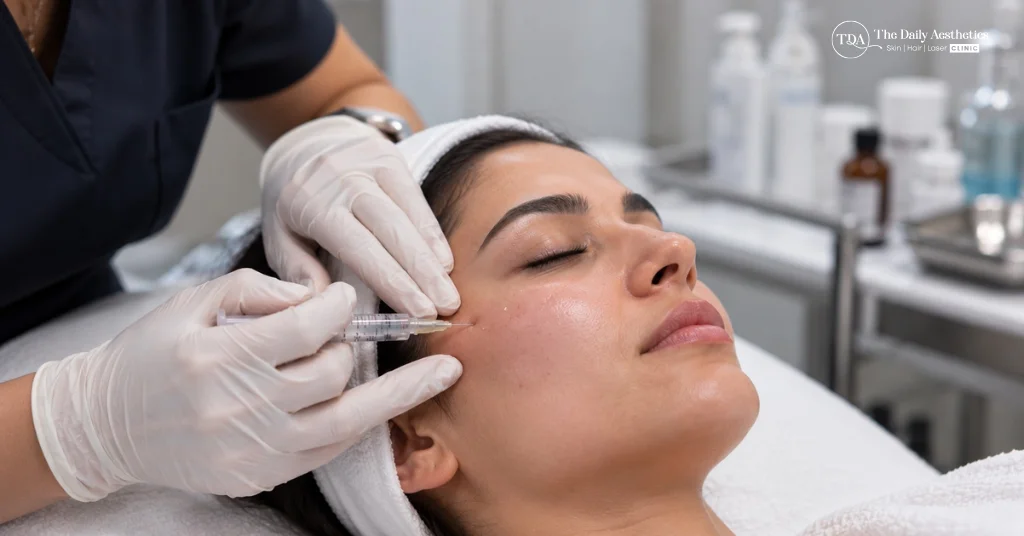
Introduction  Your skin can look tired even when you are not. It can feel tight after moisturiser, look dull under makeup, show fine dehydration lines, or lose that fresh bounce you remember from earlier years.  That is where skin boosters often enter the conversation. They are not the same as facial fillers, and they are not simply “strong facials.” In simple terms, skin boosters are minimally invasive treatments designed to improve skin quality from within, especially hydration, texture, radiance and overall skin feel.  At The Daily Aesthetics Clinic in Pune, patients often ask whether skin boosters will make the face look fuller, whether they help dry skin, and whether they are suitable for early fine lines. The honest answer is that skin boosters are usually chosen for skin quality, not structural facial volume.  This guide explains what skin boosters are, how they may support hydration, texture, elasticity and overall skin quality, and when another treatment may be a better fit. It is written to help you understand the category before you book a consultation or compare treatment names online.   Key Takeaways  Is Your Skin Dehydrated, Dull or Losing Its Smoothness? A professional skin assessment can help identify whether a skin booster or another treatment better matches the concern you are seeing. Book a Skin Consultation What Are Skin Boosters and How Do They Work?  Skin boosters are skin-quality treatments that usually work through small, carefully placed injections within or just below the skin. Their aim is to improve hydration, radiance, texture and overall skin condition rather than change the shape of the face.  The phrase “skin booster” is broad. In many clinics, it may refer to hyaluronic acid-based boosters, bioremodelling injectables such as Profhilo, or regenerative options such as PDRN and Polynucleotides. These are not identical treatments, but they sit under the same wider skin-quality conversation.  Think of the category this way: topical skincare works on the surface, facials help cleanse and refresh the skin, lasers and peels target texture or pigment in specific ways, and skin boosters work inside the skin to support hydration and skin quality. The exact result depends on the formulation and the concern being treated.  People usually consider skin boosters when their skin feels dry from within, looks dull, shows early fine lines, or lacks smoothness despite a regular skincare routine. The goal is typically a healthier, fresher look that still appears natural.  How Do Skin Boosters Improve Skin Hydration?  Hydration is one of the strongest and most commonly discussed benefits of skin boosters, especially hyaluronic acid-based options. Hyaluronic acid attracts and holds water, so when it is placed into the skin in small amounts, it may help improve moisture retention and a fresher-looking surface.  This is different from applying a hydrating serum. A serum can support the outer skin barrier, but it may not address deeper dehydration or skin that looks tired despite good home care. A skin booster is placed beneath the surface, where it can support the skin’s hydration environment more directly.  For patients, better hydration may look like skin that feels less tight, appears more rested, reflects light more evenly and allows makeup to sit more smoothly. It should not be understood as instant “glass skin” or a guaranteed glow. Results vary, and maintenance often matters.  Hydration-focused boosters may be especially relevant for people who describe their skin as dull, dry, tired, crepey or dehydrated but do not want volume in the cheeks, lips or jawline. This is why consultation is important: the treatment goal is skin quality, not facial reshaping.  Can Skin Boosters Improve Rough or Uneven Texture?  Skin boosters may help the appearance of roughness, uneven skin feel and fine dehydration lines when these concerns are linked to poor hydration or reduced skin quality. They are not designed to replace resurfacing treatments when deeper acne scars, significant pores or marked textural damage are the main concern.  Texture is often misunderstood. A person may say their skin feels “bumpy,” “not smooth,” or “not fresh,” but the reason may be dehydration, clogged pores, acne marks, open pores, sun damage or scarring. Each cause needs a different plan.  When texture is mainly linked to dehydration and early skin-quality decline, boosters may be considered. When texture is linked to acne scars, enlarged pores, pigmentation or thick surface buildup, other treatments such as microneedling, peels, lasers or medicated facials may be more suitable.  A good consultation should identify whether the surface needs exfoliation, pigment care, oil control, barrier repair, collagen support or deeper treatment. Choosing a skin booster without this step can lead to underwhelming results because the treatment may not match the real cause. Improve Skin Quality Without Adding Facial Volume Explore treatment options designed around hydration, texture and natural-looking skin quality rather than facial reshaping. Explore Skin Treatment Options Do Skin Boosters Improve Elasticity and Firmness?  Skin boosters may support elasticity and firmness in selected patients, but this benefit should be explained carefully. Hydration and radiance are clearer goals for many hyaluronic acid-based boosters, while elasticity results depend more on the product, treatment protocol, baseline skin quality and individual response.  Elasticity means the skin’s ability to stretch and bounce back. Early loss of elasticity can show as crepey texture, mild laxity, softness around the cheeks or neck, or skin that looks less “springy.” Some skin boosters may help the skin appear more supple, but they cannot lift heavy sagging.  If the concern is mild loss of bounce or early skin thinning, skin boosters may be part of the plan. If the concern is deeper sagging, jowling, heavy folds or significant laxity, treatments such as HIFU, thread lift, fillers, biostimulatory treatments or another approach may be discussed instead.  This is why phrases like “firming” and “lifting” should not be used loosely. A skin booster can improve skin quality, but it is not the same as a lifting procedure.  What Does Better Skin Quality Actually Mean?  Better skin quality usually means the skin looks and feels healthier. It may appear more hydrated, smoother,

What Are Skin Boosters? Benefits for Hydration, Texture, Elasticity and Skin Quality Read More »

Skin Care
Festive Skincare Guide: Garba to Diwali Glow Tips

From Garba Nights To Diwali Lights: Your Festive Skincare Guide

Introduction  Festive season skin has its own kind of pressure. You want your makeup to sit smoothly, your photos to look fresh, and your skin to feel calm through Garba nights, late dinners, travel, lights, sweets, outdoor events, and Diwali celebrations.  The reality is that your skin is doing a lot during this period. Sweat, heavy makeup, lack of sleep, pollution, extra sun exposure, dehydration, frequent cleansing, and last-minute product experiments can all show up as dullness, clogged pores, tanning, breakouts, dryness, or irritation.  This festive skincare guide is designed to help you move from Navratri to Diwali with practical care, not panic. At The Daily Aesthetics Clinic, we often see that the best festive glow comes from simple planning, gentle consistency, and choosing professional treatments only when they genuinely suit your skin.  Use this as a skin calendar for Pune’s festive season. It covers what to do before Garba, after long makeup nights, between Navratri and Diwali, on Diwali day, and after the celebrations when your skin needs recovery rather than more pressure.   Key Takeaways  How Should You Prepare Your Skin Before Navratri Begins?  Prepare your skin before Navratri by keeping your routine simple, consistent, and barrier-friendly. Focus on cleansing, hydration, moisturizing, sunscreen, and only one or two targeted actives if your skin already tolerates them. This is not the right time to start harsh scrubs, strong peels, or multiple new products together.  The goal before the festive rush is not to transform your skin overnight. It is to make your skin calmer, more hydrated, and less reactive so makeup applies smoothly and your skin can handle longer evenings.  A practical pre-Navratri routine can include a gentle cleanser, lightweight moisturizer, broad-spectrum sunscreen in the morning, and a calming night routine that supports the skin barrier. If you already use vitamin C, niacinamide, retinol, or exfoliating acids, keep them steady rather than increasing frequency right before events.  If your skin is acne-prone, pigmented, sensitive, or recently irritated, avoid copying routines from reels or friends. What gives one person a glow can cause another person redness, bumps, or peeling.  Want Festive Glow Without Product Overload? Start with a skin assessment so your routine matches your skin type, sensitivity, and festive calendar. Explore HydraFacial Treatment In Pune What Should You Do Before a Garba Night?  Before a Garba night, prep your skin for sweat, friction, makeup, and long hours. Choose lightweight hydration, non-comedogenic makeup, sunscreen for outdoor events, and a primer or base that suits your skin type. Avoid thick layers if your skin is oily, acne-prone, or easily congested.  Garba is beautiful, but your skin experiences heat, sweat, dust, lights, hair products, jewellery friction, and repeated touching through the evening. The best pre-Garba skincare is not heavy. It is breathable.  Cleanse your face before makeup so sweat and oil are not trapped under layers. Use a moisturizer that settles well and does not pill. If you are applying sunscreen, allow it to absorb before makeup. For oily or combination skin, choose lighter textures and blotting papers instead of adding powder again and again.  For sensitive skin, skip last-minute brightening masks, strong acids, and unfamiliar products. A calm skin barrier will always look better under makeup than irritated skin trying to hide under more concealer.  How Can You Protect Your Skin During Garba Sweat and Makeup?  During Garba, protect your skin by managing sweat gently instead of repeatedly wiping or rubbing the face. Use a clean tissue or soft towel to blot sweat, keep your hands away from acne-prone areas, drink water regularly, and avoid layering more heavy makeup over sweat and oil.  Sweat itself is not the enemy. The problem starts when sweat mixes with heavy makeup, dust, oil, sunscreen residue, hair spray, and repeated touching. This can make pores feel clogged and may trigger small bumps, blackheads, whiteheads, or irritation after a few festive nights.  Keep a small skin-safe kit with blotting paper, a clean tissue, lip balm, and water. Avoid using shared makeup, dirty sponges, or old brushes during the festival rush. These small hygiene habits can make a visible difference, especially for acne-prone skin.  What Should Your Post-Garba Night Routine Look Like?  After Garba, your routine should focus on complete makeup removal, gentle cleansing, hydration, and calming the skin. Do not sleep with makeup, do not scrub aggressively, and do not use strong actives if your skin feels hot, red, dry, or irritated after a long night.  This is the step many people skip because they are tired. But post-Garba cleansing is where you prevent the next morning’s clogged pores, dullness, and makeup-related breakouts.  A practical night routine can include an oil-free makeup remover or cleansing balm if suitable for your skin, followed by a mild cleanser. Then use a simple moisturizer or barrier-supporting product. If you use actives, pause them for the night if your skin feels sensitive or overworked.  Do not try to punish your skin after heavy makeup. Over-cleansing, steaming, scrubbing, and using several actives together can make the barrier weaker and the face more irritated the next day.  Seeing Breakouts After Festive Makeup? If your pores feel congested or your acne flares after heavy makeup, a concern-based facial may help your skin reset safely. Explore Medicated Facial Treatment In Pune What Should You Do Between Navratri and Diwali?  Between Navratri and Diwali, give your skin a recovery window. This is the best time to address dullness, dehydration, mild tanning, clogged pores, rough texture, or makeup fatigue without rushing into aggressive treatments too close to your main Diwali events.  Think of this phase as a repair week. Your skin may look tired because of late nights, outdoor exposure, sweat, pollution, dehydration, and frequent makeup. Instead of chasing instant brightness, aim for a healthier base.  If the main concern is dehydration and dull texture, professional hydration-focused options such as Skin Booster Treatment In Pune may be discussed after consultation. If the concern is surface dullness, congestion, or pre-event glow, a gentle facial plan may be

From Garba Nights To Diwali Lights: Your Festive Skincare Guide Read More »

Skin Care
Cryolipolysis Treatment in Pune: Cost, Benefits & Results

Cryolipolysis Treatment in Pune: Benefits, Cost, Procedure, Results & What to Expect

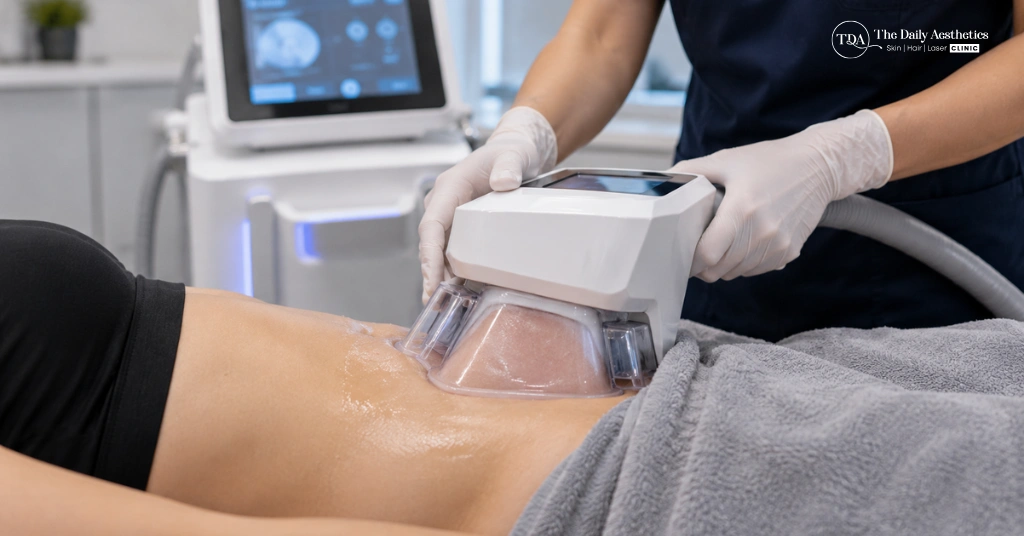
Introduction  Stubborn fat can feel personal. You may be eating carefully, walking regularly, doing your workouts, and still notice the same lower belly fold, love handles, arm fat, thigh bulge, or double chin every time you get dressed.  For many people in Pune, the frustration is not about wanting a completely different body. It is about wanting clothes to sit better, the waistline to feel smoother, and the body to look more balanced without jumping straight to surgery.  Cryolipolysis Treatment in Pune, also known as fat freezing treatment, is designed for targeted fat reduction in selected areas. It uses controlled cooling to affect localized fat cells under the skin, while the body gradually clears the treated cells over the following weeks.  The important thing to understand is that cryolipolysis is not a weight-loss shortcut. It is a body contouring option for people who are close to a stable weight but have pinchable fat pockets that do not respond easily to diet and exercise.  This guide explains how cryolipolysis works, who may be suitable, what areas can be treated, how cost is decided, when results appear, what side effects to know, and what to expect at The Daily Aesthetics Clinic in Pune.  Key Takeaways  What Is Cryolipolysis Treatment in Pune?  Cryolipolysis Treatment in Pune is a non-surgical fat reduction procedure that uses controlled cooling to target selected fat cells beneath the skin. The treated fat cells are gradually processed by the body, so the change appears slowly and is best suited for contouring specific pockets of stubborn fat.  The treatment is often called fat freezing because the device cools the fat layer without making cuts or using general anesthesia. A cooling applicator is placed over a marked area, usually with a protective gel pad, and the tissue is held in place during the session.  At The Daily Aesthetics Clinic, cryolipolysis is part of a wider body contouring approach. The focus is not just reducing inches from one area. The goal is to check your body shape, fat distribution, skin laxity, lifestyle, and expectations before recommending a safe plan.  This is why two people with the same “belly fat” concern may receive different advice. One may be suitable for fat freezing, another may need skin tightening, and a third may need weight management support before any contouring procedure.  How Does Cryolipolysis Work for Fat Reduction?  Cryolipolysis works by exposing selected subcutaneous fat to controlled cold. Fat cells are more sensitive to cold injury than many surrounding tissues, so the treatment can gradually reduce the treated fat layer when performed correctly and on a suitable area. A systematic review found cryolipolysis to be effective for localized fat reduction in reviewed human studies.  Once the fat cells are affected, the body does not remove them instantly. The change happens through a natural clearing process over several weeks. That is why cryolipolysis results are not judged on the same day as treatment.  A helpful way to understand the process is:  The Daily Aesthetics Clinic also offers body contouring options such as HIFU, laser lipolysis, ultrasound cavitation, RF skin tightening, and non-surgical inch loss. In some cases, a combined plan may be more suitable than cryolipolysis alone.  Wondering If Fat Freezing Is Right for Your Body Type? A consultation at The Daily Aesthetics Clinic can help identify whether your concern is stubborn fat, skin laxity, inch loss, or a mixed body contouring concern. Book a Body Contouring Consultation Which Areas Can Cryolipolysis Treat?  Cryolipolysis may be used for localized fat pockets on areas such as the abdomen, flanks, thighs, upper arms, back, bra fat, and double chin when the tissue is suitable. The best area is usually one where there is a clear, pinchable fat bulge rather than loose skin alone.  Visible fat bulges commonly treated with cryolipolysis-based systems include the stomach, love handles, under the chin, thighs, upper arms, back fat, bra fat, and related body contouring zones. The right plan still depends on fat thickness, skin firmness, body shape, and safety screening.  Treatment Area  Common Patient Concern  What Cryolipolysis May Help With  What To Check First  Abdomen / Belly  Lower belly fold or stomach fat  Localized belly fat freezing and smoother contour  Is it subcutaneous fat or deeper visceral fat?  Flanks / Love Handles  Side bulges around the waist  Waistline refinement and side contouring  Can the applicator sit evenly on both sides?  Inner / Outer Thighs  Thigh bulges or rubbing areas  Selected thigh fat reduction and shape balance  Is the concern fat, muscle, or loose skin?  Upper Arms  Arm fullness in fitted clothes  Targeted upper arm fat reduction  Is there enough fat without major skin laxity?  Back / Bra Fat  Bulges near bra line or upper back  Smoother back profile in selected cases  Is the fat pocket clearly pinchable?  Double Chin  Soft fullness under the chin  Submental fat reduction in suitable anatomy  Is it fat, skin laxity, jaw structure, or posture?  Note: This table is educational and cannot replace a body contouring assessment.  Bottom Line: Cryolipolysis works best when the target is a localized fat pocket, not loose skin, muscle bulk, or overall weight gain.  Who Is a Good Candidate for Cryolipolysis Treatment?  A good candidate for cryolipolysis usually has stable body weight, localized fat bulges, realistic expectations, and enough pinchable fat for the applicator. The treatment is not meant for obesity, major weight loss, or replacing healthy nutrition and movement.  Cryolipolysis may be worth discussing if you relate to these concerns:  A consultation is especially important if your concern is post-pregnancy change, weight fluctuation, skin looseness, medical weight loss, hormonal weight change, or mixed fat and laxity. Fat freezing may help part of the picture, but it may not be the only step.  Who Should Avoid Cryolipolysis or Be Extra Cautious?  Cryolipolysis is not suitable for everyone. People with certain cold-related medical conditions, active skin problems over the treatment area, pregnancy, recent surgery, hernia concerns, or unrealistic expectations may need to delay treatment or choose another option.  Treatment should be avoided or

Cryolipolysis Treatment in Pune: Benefits, Cost, Procedure, Results & What to Expect Read More »

Skin Care
Skin Booster Treatment in Pune: Benefits & Cost

Skin Booster Treatment in Pune: Benefits, Types, Procedure, Cost & Results

Introduction  Dry, tired, textured skin can feel confusing because it often does not look like one clear problem. Some people describe it as dullness. Some see fine lines. Some notice open pores, roughness, makeup sitting unevenly, or a glow that disappears no matter how much skincare they use.  Skin booster treatment is designed for this exact middle ground. It is not the same as a facial, and it is not meant to change your face like a filler. It works deeper than topical skincare to improve skin hydration, texture, radiance, and overall skin quality in a gradual, natural-looking way.  In Pune, where sun exposure, pollution, AC-heavy offices, stress, late nights, and active lifestyles can all affect the skin barrier, many patients look for treatments that refresh the skin without surgery or a dramatic change in facial structure.  This guide explains skin booster treatment in Pune in a practical, patient-friendly way. You will understand what it does, who it suits, what types are available, what happens during the procedure, what affects cost, what results look like, and when a consultation at The Daily Aesthetics Clinic may help you choose safely.  Key Takeaways  What is Skin Booster Treatment?  Skin booster treatment is a minimally invasive aesthetic treatment that places hydrating or regenerative ingredients into the skin to improve skin quality from within. A review in Cosmoderma describes skin boosters as dermal injections that can support hydration, collagen, elastin, texture, fine lines, and glow without working like traditional volumizing fillers.  Think of it as an internal skin-quality treatment. A serum sits on the surface. A facial can clean, exfoliate, and hydrate the outer layers. A skin booster is placed more directly into the skin, where it can support hydration and repair signals depending on the product used.  This is why many people describe skin boosters as a treatment for skin that looks tired even when they sleep well, drink water, and follow a basic skincare routine. The aim is not to make the face look different. The aim is to help the skin look fresher, smoother, and more resilient.  Common treatment areas may include the face, under-eye area, neck, hands, acne-marked areas, and sometimes the scalp when regenerative products are used for hair support. Suitability depends on your skin type, concern, medical history, and treatment goals.  Not Sure If Your Skin Needs Hydration or Repair? Speak with the team at The Daily Aesthetics Clinic to understand whether a skin booster, facial, peel, laser, or regenerative treatment suits your skin. Book a Skin Booster Consultation How is a Skin Booster Different From a Dermal Filler?  A skin booster mainly improves skin quality, while a dermal filler usually restores or adds volume. The American Society for Dermatologic Surgery explains that many fillers use hyaluronic acid and can temporarily plump, lift, or smooth specific areas. Skin boosters are used more superficially or diffusely for hydration, radiance, and texture.  This difference matters because many patients do not want their face to look “done.” They only want fresher skin, better bounce, smoother texture, or makeup that sits better. For those goals, a skin booster may feel more natural than a contouring treatment.  However, skin boosters cannot replace fillers when volume loss is the main concern. If cheeks look hollow, the under-eye area has structural shadowing, or the jawline needs support; your practitioner may discuss dermal fillers, HIFU, thread lift, or a combination plan instead.  Treatment  Main goal  Best suited for  What it usually cannot do  Skin booster  Improve hydration, glow, texture, elasticity, and skin quality  Dull, dehydrated, tired-looking, crepey, or mildly textured skin  Add major facial volume or lift heavy sagging  Dermal filler  Restore or enhance volume and contour  Hollows, contour loss, lips, cheeks, jawline, or deep folds  Improve overall skin quality as its main purpose  HydraFacial  Cleanse, exfoliate, extract, and hydrate the surface  Congested, dull, oily, or event-prep skin  Deliver injectable-level dermal hydration  Laser or peel  Target pigment, scars, pores, and damaged surface layers  Pigmentation, acne marks, tan, texture, or scars  Hydrate the dermis like a booster  PRP / regenerative plan  Support repair using growth factors or regenerative ingredients  Selected cases of dull skin, acne marks, or hair/scalp concerns  Act like instant filler or surgery  Note: Treatment choice should be based on skin assessment, not on trend names or package offers.  Bottom Line: Skin boosters are best understood as skin-quality treatments, not face-shaping treatments.  What Are the Main Benefits of Skin Booster Treatment?  Skin booster treatment can help people who want healthier-looking skin without a dramatic cosmetic change. The most common benefits include improved hydration, smoother texture, better glow, softer fine lines, improved elasticity, and support for tired or dull skin.  The emotional reason people choose this treatment is often simple: they want their skin to look like it has recovered. Not frozen, not filled, not filtered – just fresher and more comfortable in real life.  Patients commonly explore skin boosters for:  What Types of Skin Boosters Are Available in Pune?  The most discussed skin boosters include hyaluronic acid boosters, PDRN, polynucleotide treatments, Salmon DNA therapy, PRP, GFC, and combination skin-repair plans. Not every type is right for every person, and not every clinic uses the same products or protocols.  At The Daily Aesthetics Clinic, treatment planning may include regenerative options such as PDRN treatment, polynucleotide treatment, and Salmon DNA treatment when these are suitable after skin assessment.  Here is the practical way to understand the main categories:  Skin booster type  How it is commonly positioned  Best-fit concerns  Important note  Hyaluronic acid boosters  Microinjection-based hydration support for smoother, softer-looking skin  Dryness, fine lines, dullness, loss of bounce  Product choice and availability vary by clinic and indication  PDRN / Salmon DNA  Regenerative support using DNA-derived fragments to encourage repair signals  Dullness, fine lines, post-acne marks, under-eye tiredness, skin repair  Requires allergy and suitability screening, especially for fish-derived products  Polynucleotide boosters  Regenerative skin-quality treatment that supports collagen, elastin, and hydration pathways  Texture, elasticity, radiance, early aging, acne-marked skin  Usually works gradually over a series of sessions  PRP / GFC support  Uses patient-derived growth factors to support healing and repair  Selected skin rejuvenation or hair/scalp support cases  Results depend on patient factors and protocol quality  Combination

Skin Booster Treatment in Pune: Benefits, Types, Procedure, Cost & Results Read More »

Skin Care
Retinol for Beginners Benefits, Side Effects & How to Use It Safely

Retinol for Beginners: Benefits, Side Effects & How to Use It Safely

Introduction Retinol has a strange reputation. Some people call it the one ingredient that finally improved their acne marks, texture, and fine lines. Others remember only the peeling, burning, or sudden breakouts they got after starting too fast.  Both experiences can be true. Retinol can be helpful, but it is not a casual trend to copy from a reel. It works best when your skin barrier is respected, your skin type is considered, and your routine is kept simple enough to follow.  For many people in Pune, retinol confusion becomes worse because the skin is already dealing with sun exposure, pollution, sweat, makeup, gym routines, helmets, and changing weather. One wrong product or too many actives can make the face feel tight, patchy, or darker in irritated areas.  This beginner guide explains what retinol does, who may benefit, what side effects are common, how to start safely, what not to mix, and when to speak with a dermatologist or skin specialist before continuing.  Key Takeaways  What is Retinol and Why Do Beginners Hear So Much About It? Retinol is a type of retinoid, which means it belongs to the vitamin A family of skincare ingredients. The American Academy of Dermatology describes retinoids as useful for mild acne, mild pigmentation irregularities, and mild fine lines when introduced carefully.  In simple words, retinol encourages skin renewal. It can help clogged pores clear more efficiently, support smoother texture, and improve the look of early aging over time. It is not an overnight glow product, and it is not suitable for every skin barrier on day one.  The Cleveland Clinic notes that retinol can support skin-clearing and anti-aging benefits by helping with elasticity, melanin activity, inflammation, and clogged pores.  That is why retinol appears in conversations about acne, pores, dullness, dark spots, fine lines, sun damage, and uneven texture. But the same activity that makes it useful can also make it irritate if you start with too much, too often, or on already sensitive skin.  Ingredient term  What it usually means  Beginner note  Retinol  Over-the-counter vitamin A derivative used in skincare serums and creams  Good beginner category when strength and frequency are kept low  Retinoids  The larger vitamin A family, including retinol, retinal, adapalene, tretinoin, and others  Some are stronger and may need medical guidance  Retinal / retinaldehyde  A stronger OTC retinoid step closer to retinoic acid  May work faster, but can irritate sensitive beginners  Adapalene  A retinoid often used for acne-prone skin  Best discussed if acne is the main concern  Tretinoin  Prescription-strength retinoic acid used for acne and photoaging concerns  Should be used only with professional guidance  Note: Product labels can be confusing. The safest choice depends on your skin type, concern, age, routine, and irritation history.  Bottom Line: Retinol is not one product. It is part of a larger vitamin A family, and beginners should not jump to the strongest option first.  Confused Between Retinol, Retinal, Adapalene, and Prescription Retinoids? The experts at The Daily Aesthetics can assess your skin concerns, tolerance, and goals to help determine which option may be most suitable for your skincare journey. Book a Skin Consultation at TDA What Are the Main Benefits of Retinol for Skin? Retinol may help with acne-prone skin, clogged pores, rough texture, early fine lines, uneven tone, and post-acne marks when used consistently and correctly. It works gradually, so the goal is steady improvement rather than quick peeling or instant brightness.  Beginners should connect retinol to a clear goal. Someone using it for blackheads may need a different plan than someone using it for fine lines, pigmentation, or post-acne texture. A simple routine often works better than a crowded shelf.  Retinol May Support These Concerns: Acne-prone skin by helping reduce clogged pores over time. Uneven texture by supporting smoother skin cell turnover. Early fine lines by supporting collagen-focused anti-aging routines. Post-acne marks by improving overall renewal and tone gradually. Dullness by helping dead skin shed more evenly. Visible pores by reducing congestion that can make pores look more obvious. For deeper pigmentation, melasma, acne scars, or long-standing marks, retinol alone may not be enough. In those cases, a clinic-led plan may include skin pigmentation care, chemical peels, acne scar treatment, or laser-based options after assessment.  Who Should Start Retinol Carefully or Avoid It? Retinol is not suitable for every person at every stage. Beginners should be especially careful if the skin is very sensitive, recently over-exfoliated, sunburned, peeling, eczema-prone, rosacea-prone, pregnant, breastfeeding, or already reacting to multiple skincare products.  AAD guidance notes that people with darker skin tones should be especially alert to irritation because inflammation can trigger hyperpigmentation. This matters for many Indian skin tones, where irritation may leave brown marks even after redness settles.  If your skin is already stung with basic moisturizer or sunscreen, retinol should wait. First, repair the barrier. A routine that begins with calm, hydrated skin is more likely to tolerate active ingredients later.  Use Extra Caution if You Have: Active eczema, rosacea, dermatitis, or frequent facial burning. A damaged skin barrier from scrubs, peels, strong acids, or over-cleansing. Moderate to severe acne, painful cysts, or acne that is scarring. Melasma or pigmentation that worsens with irritation or sun exposure. A planned facial procedure such as waxing, laser, peel, microneedling, or injectable treatment. Pregnancy, breastfeeding, or plans to conceive. Skin situation  Retinol approach  Safer next step  Healthy beginner skin  Start low and slow at night  Patch test, moisturize, use sunscreen daily  Dry or sensitive skin  Use lower strength and buffer with moisturizer  Try the sandwich method and fewer nights  Acne-prone skin  May help, but purging and irritation must be monitored  Consult if acne is painful, cystic, or scarring  Pigmentation-prone skin  Useful only if irritation is controlled  Prioritize sunscreen and avoid aggressive use  Pregnancy or breastfeeding  Avoid unless your doctor advises otherwise  Ask for pregnancy-safe alternatives  Before peels, lasers, or waxing  Pause as advised by your provider  Tell your clinic you use retinol  Note: This is general skincare education, not a prescription. Stop and seek guidance if irritation is strong or persistent.  Bottom Line: Retinol is safe when the routine is matched to your skin condition, not copied from someone else.  Starting retinol for acne marks, dullness, or early signs of aging but

Retinol for Beginners: Benefits, Side Effects & How to Use It Safely Read More »

Skin Care
Why Celebrities Choose These 5 Aesthetic Treatments

Why Celebrities Choose These 5 Aesthetic Treatments

You wake up, look in the mirror, and spot a red bump on your face.

Your first thought?

“Great, another pimple.”

But then you start wondering – is this actually a pimple, or is it acne?

And wait, aren’t they the same thing anyway?

Why Celebrities Choose These 5 Aesthetic Treatments Read More »

Aesthetic Treatments, Skin Care, Skin Clinic, Skin Clinic in Kalyani Nagar, Skin Specialist in Pune
What is Retinol Benefits, Uses, and Science-Backed Results for Skin Care

What is Retinol? Benefits, Uses, and Science-Backed Results for Skin Care

You wake up, look in the mirror, and spot a red bump on your face.

Your first thought?

“Great, another pimple.”

But then you start wondering – is this actually a pimple, or is it acne?

And wait, aren’t they the same thing anyway?

What is Retinol? Benefits, Uses, and Science-Backed Results for Skin Care Read More »

Skin Care
Call WhatsApp
Scroll to Top