
TDA

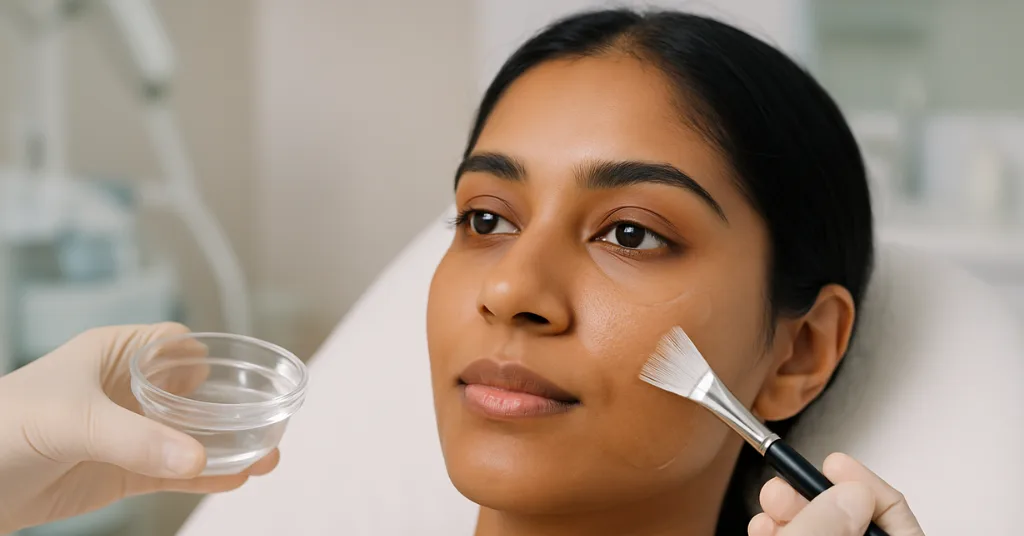
Chemical Peel Treatment

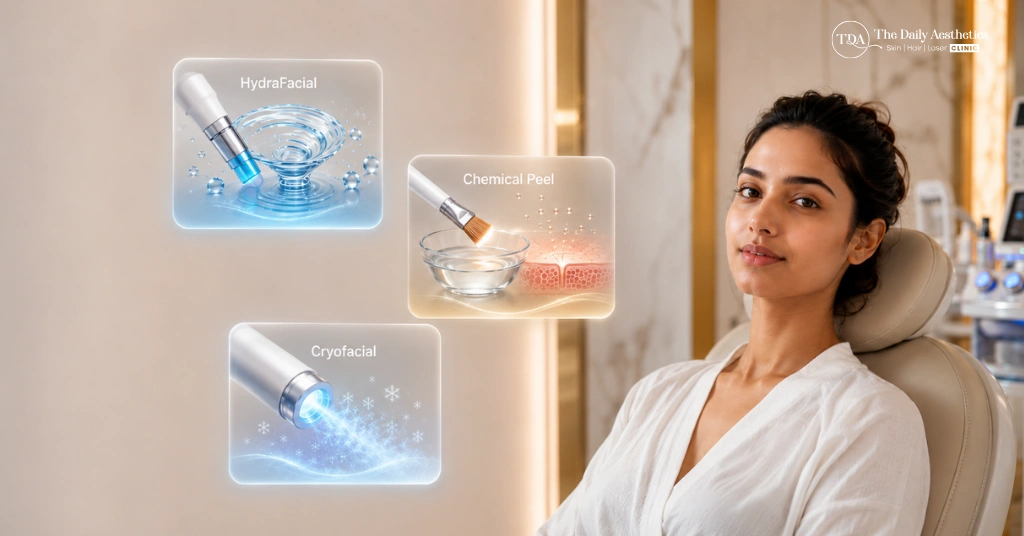
HydraFacial vs Chemical Peel vs Cryofacial Which Skin Rejuvenation Treatment Is Right for You

HydraFacial vs Chemical Peel vs Cryofacial: Which Skin Rejuvenation Treatment Is Right for You?

Introduction Most people walk into a skin clinic asking for the treatment they saw a celebrity get on Instagram.   The honest answer is usually a different treatment entirely, or a smaller version of the same one, or sometimes just better sunscreen and a month of consistent use.  Skin rejuvenation is not one product. It covers hydra-dermabrasion, chemical exfoliation, cold therapy, lasers, and microneedling.   Each works on a different layer of the skin, targets a different concern, and costs a different amount of time, money, and downtime.  At The Daily Aesthetics, we run three clinics across Pune, in Kharadi, Baner, and Kalyani Nagar, and the first thing we do in every consultation is match the treatment to the concern.   Dr. Arshi Rahul and the team see roughly the same three questions on repeat: what does a HydraFacial actually do, do chemical peels really work for pigmentation, and is a cryofacial worth the hype. See our HydraFacial protocol here.  This guide breaks down HydraFacial, chemical peel, and cryofacial side by side.   You’ll know what each treatment does at a biological level, who it’s best suited to, what it costs in Pune, how long you’ll be red or peeling, and how to decide which one your skin needs right now.  Key Takeaways  What “Skin Rejuvenation” Actually Means  Skin rejuvenation is the umbrella term for any treatment that improves how your skin looks and functions, without surgery.   That includes reducing pigmentation, softening fine lines, clearing congestion, boosting hydration, tightening pores, and evening out tone.  The global non-invasive aesthetic treatment market was valued at USD 82.73 billion in 2024 and is forecast by Straits Research to reach USD 299.09 billion by 2033. Facial procedures sit at the center of that growth.  Where the three treatments differ is in mechanism. HydraFacial exfoliates and infuses.   Chemical peels chemically ablate. Cryofacials cool and constrict. Different tools, different jobs.  HydraFacial: What It Is and Who It’s For  HydraFacial is a hydra-dermabrasion treatment.   That means it combines mechanical exfoliation (through vortex suction) with topical solutions that cleanse, extract debris from pores, and infuse serums like hyaluronic acid, peptides, and antioxidants into the skin.  A standard session takes 30 to 45 minutes. There is no numbing, no needles, no peeling afterwards, and no downtime. Most patients go straight back to work, sometimes with makeup on.  What the clinical evidence says  The most robust study on HydraFacial is a 2022 peer-reviewed trial published in The Journal of Clinical and Aesthetic Dermatology.   Twenty adults with mild to moderate active acne received six clarifying HydraFacial sessions over 12 weeks. All participants reported improvement in acne severity, and confidence scores rose from 40% after the first session to 100% by the final one.  That’s a small sample, but it’s the first prospective clinical study of its kind on this device, and the results held across varied skin tones.  Who HydraFacial is best for  Who it isn’t for  HydraFacial won’t reverse deep acne scarring, dense melasma, deep wrinkles, or advanced photoaging. For those, you need a peel, a laser, or microneedling, not a facial.  Chemical Peel: What It Is and Who It’s For  Chemical peels use acid solutions to controlled-exfoliate the skin.   The acid dissolves the bonds between dead skin cells, letting them shed and revealing fresher skin underneath.   The deeper the peel penetrates, the more dramatic the result and the longer the recovery.  Per the NCBI StatPearls chapter on chemical peels, peels are classified by depth: very light and light peels (10 to 30% TCA, low-strength AHAs, Jessner’s solution), medium peels (35% TCA with Jessner’s or 70% glycolic acid), and deep peels (TCA above 50%, or phenol-croton oil combinations).  The main acids and what they treat  The Fitzpatrick scale question  If you have Fitzpatrick skin type IV, V, or VI (medium brown to deeply pigmented), which covers a large share of Indian patients, deeper peels carry a higher risk of post-inflammatory hyperpigmentation.   A 2018 review in Clinical, Cosmetic and Investigational Dermatology recommends avoiding deep peels in Fitzpatrick IV to VI and emphasizing pre-peel priming with agents like hydroquinone or retinoids.  That doesn’t mean peels don’t work on brown skin. They do. The choice just shifts to superficial peels done in a series, done under proper dermatologist supervision, with pre-priming.  At The Daily Aesthetics, our clinical chemical peel protocol maps the acid and strength to your Fitzpatrick type first, before we discuss the concern.   That single decision determines whether you get a lasting result or a pigmentation flare.  Who chemical peels are best for  Safety notes  The FDA has publicly warned against at-home chemical peels, citing serious chemical burns, discoloration, and scarring from unsupervised use of TCA, glycolic, salicylic, and lactic acid at concentrations too high for home application.   The American Academy of Dermatology’s official chemical peel guidance echoes this: peels belong in the hands of a licensed, trained provider. Cryofacial: What It Is and Who It’s For  A cryofacial (sometimes marketed as “frotox”) uses vaporized liquid nitrogen delivered from a handheld wand, cooling the face for 2 to 3 minutes.   The cold constricts blood vessels, then triggers a rebound flush of oxygen-rich blood when the skin returns to normal temperature.  The mechanism is well-documented in cold therapy generally. Cryotherapy has been used in dermatology since the 1800s for treating warts, actinic keratoses, and skin tumours, per the NCBI StatPearls chapter on cryotherapy in dermatology.   The cosmetic cryofacial version uses much shorter exposure times and controlled vapour rather than direct liquid nitrogen contact, so tissue destruction isn’t the goal.  What a cryofacial does  What it doesn’t do  There is limited peer-reviewed clinical data specific to the cosmetic cryofacial (as opposed to medical cryotherapy for lesions).   Claims about collagen production, wrinkle reversal, and deep skin rejuvenation are largely mechanism-based rather than trial-backed. Results are also short-lived, typically 24 to 72 hours.  Who cryofacial suits  Who it doesn’t suit  If your goal is durable improvement in pigmentation, texture, or acne scarring, a cryofacial alone will disappoint. Use it for what it does well, not as a replacement for treatments that reach deeper into the skin.  HydraFacial vs Chemical Peel vs Cryofacial: Side-by-Side Comparison  Factor  HydraFacial  Chemical Peel  Cryofacial  Mechanism  Vortex hydra-dermabrasion plus serum infusion  Acid-based controlled exfoliation  Vaporized liquid nitrogen (cold vasoconstriction)  Session time  30 to 45 minutes  20 to 60 minutes  10 to 15 minutes  Downtime  None  1 day (light) to 14 days or longer (deep)  None  Discomfort  None, described as
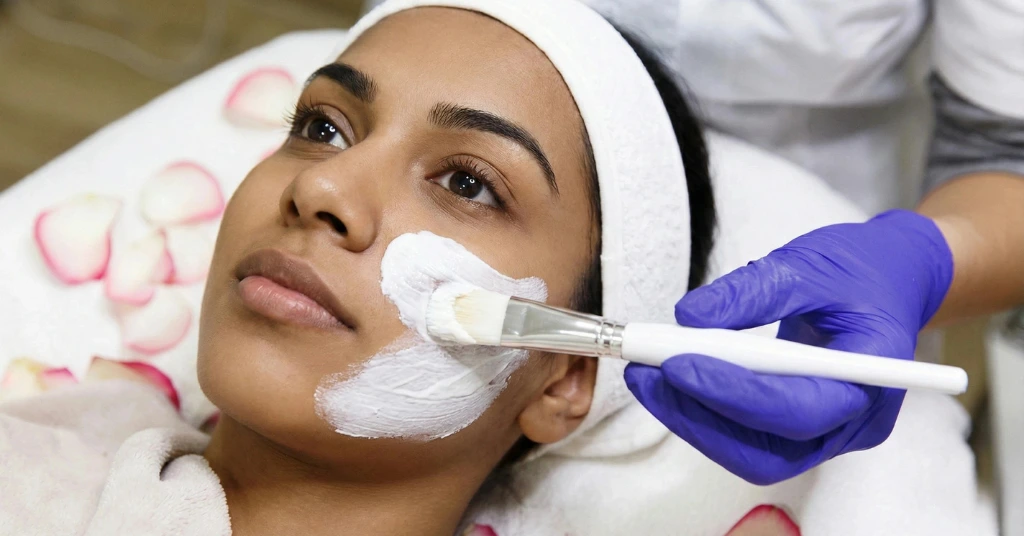
HydraFacial vs Chemical Peel vs Cryofacial: Which Skin Rejuvenation Treatment Is Right for You? Read More »

Hydrafacial Treatment, Chemical Peel Treatment, Cryofacial
Chemical Peel Treatment in Pune

Chemical Peel Treatment in Pune: What It Costs, How It Works, Benefits & Results 

You wake up, look in the mirror, and spot a red bump on your face.

Your first thought?

“Great, another pimple.”

But then you start wondering – is this actually a pimple, or is it acne?

And wait, aren’t they the same thing anyway?

Chemical Peel Treatment in Pune: What It Costs, How It Works, Benefits & Results  Read More »

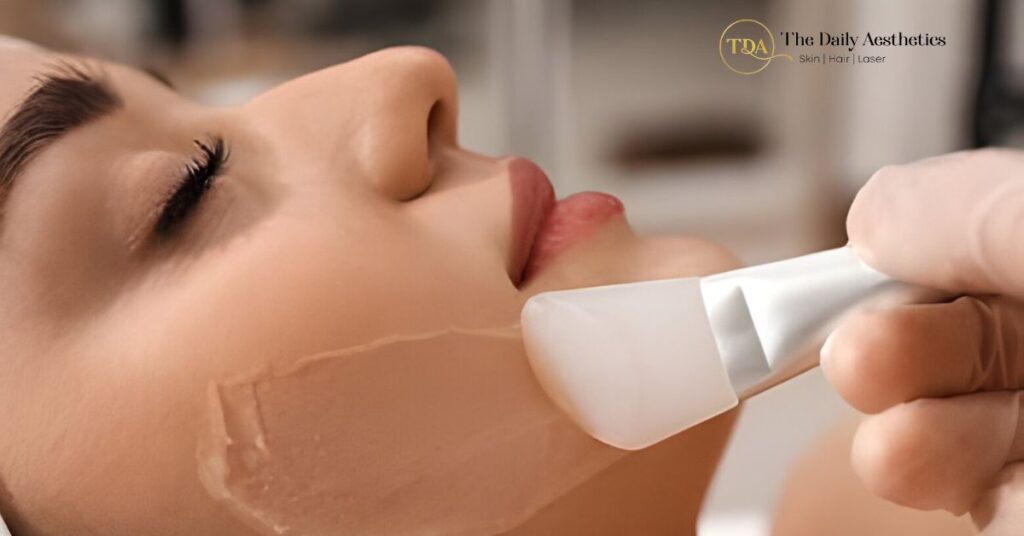
Chemical Peel Treatment
Complete Guide to Chemical Peel Treatment in Pune

Complete Guide to Chemical Peel Treatment in Pune

You wake up, look in the mirror, and spot a red bump on your face.

Your first thought?

“Great, another pimple.”

But then you start wondering – is this actually a pimple, or is it acne?

And wait, aren’t they the same thing anyway?

Complete Guide to Chemical Peel Treatment in Pune Read More »

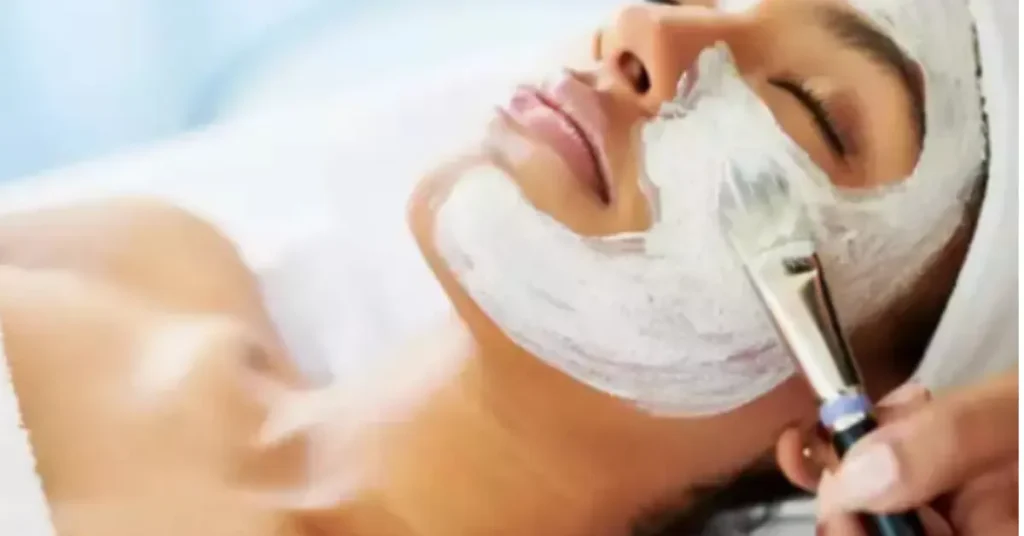
Chemical Peel Treatment
female skin specialist near me

Chemical Peel Treatment in Pune 

A CHEMICAL PEEL or MEDICATED PEEL FOR EVERY INDICATION. Pune’s best skin specialist at Skin Story Clinic is offering the best peel treatments specially designed as per your skin needs. To get a flawless, spotless, wrinkles-free free, and clear complexion that is just a step away from a unique skin treatment that’s hidden under your skin.  We know Skin is the largest organ of our body, formed of millions of cells. Out of this, 1000 new cells replace old cells along with dead skin cells every day. Due to certain environmental factors and lifestyles, we are living, this process slows down and results in the collection of layers of dead cells on your skin surface, giving you uneven skin tone, a darker look, and dull skin, so get consulted for more details on treatment by best dermatologist in Pune.  WHAT ARE CHEMICAL PEELS? Chemical peels are nothing but Medicated peels used to get a smoother clear and glowing skin, that essentially makes skin resurfacing and works as exfoliation agents done by our expert only. All you need is to search for the best skin specialist near me and get the look you always thought of.  Basically, chemical peels help in removing the dead layers of outer skin which is dull, dry, tired, and blemished with wrinkled skin to give you fresh and younger skin. It also boosts the collagen level in the skin. Skin Story Clinic uses safe, best quality and dermatological-approved medicated peels for treatment. INDICATIONS OF CHEMICAL / MEDICATED PEELS Chemical peels work wonders and give you efficient and effective result with improved skin conditions that include:  Fine lines and wrinkles Sun-damaged skin Age spots  Uneven pigmentation Acne & Clogged Pores  Shallow acne scars Freckling  Why peel treatment?  Peel treatments are used to improve the appearance, look, or feel of the Skin. During this procedure, medicated solutions will be applied to the area being treated, which causes the skin to exfoliate and eventually  peel off. Once the treatment is done, the new skin beneath is often smoother and appears less wrinkled.  This is a custom Heading Element What are the different types of peels?  Several types of peels are available in market nowadays with different settings depending on your skin needs. Generally, peels are compound of acids like glycolic acid, lactic acid, TCA and many more that are good for your skin, a suitable combination of peels is suggested by doctors so consult best skin specialist near me or best dermatologist before taking any treatments.  + What does the procedure involve?  + Is it painful?  + How many sessions are required?  + How much does it cost?  + What results can I expect?  The Daily Aesthetics Clinic – Redefining Skin & Hair Treatments in Pune The Daily Aesthetics Clinic is a trusted dermatology and aesthetic center in Pune, offering advanced treatments for acne, pigmentation, hair loss, laser hair removal, Hydrafacials, hair transplants, and personalized skincare. Under the guidance of Dr. Arshi Rahul, the clinic combines medical expertise with FDA-approved technology to deliver customized treatment plans that focus on restoring skin health, enhancing radiance, and ensuring every patient feels confident and cared for. With the trust of over 3,500 patients and a 4.9★ rating, The Daily Aesthetics Clinic is known for delivering effective, safe, and personalized care in a calm, welcoming setting. We serve clients across Pune through our three conveniently located clinics in Baner, Kharadi, and Kalyani Nagar. Instagram Facebook Linkedin Dr. Arshi Rahul Aesthetic Physician & Skin Specialist | 11+ years of experience Expert Dermo-Cosmetologist & Trichologist (Gold Coast Training Academy, Australia) | Certified in Laser, Botox, Fillers & Thread Lifting | Over 10 Years of Advanced Aesthetic Expertise Read Full Bio

Chemical Peel Treatment in Pune  Read More »

Chemical Peel Treatment
skin specialist in kharadi

All You Need To Know About Chemical Peel

What exactly are chemical peels? Why are chemical peels so popular?  Chemical peels are different types of solutions with various chemical agents. They clear out dead skin cells from your skin and also exfoliate all the weathered layers of damaged skin cells. This leaves the skin looking dewy and fresh! When applied correctly, by the instructions of a dermatologist, skin peels can help better your skin in many ways What do such chemical peels do to your skin? Many beauty influencers and “Instagram girlies” reveal that chemical peels are their secret weapon to achieve glowy, dewy skin. Now, let’s dive deeper into learning about what a chemical peel can do to your skin! 1. It brightens and lifts up pigmented areas of the skin Chemical peels are made using strong components of exfoliates and acids that affect the discoloration of the skin. It helps in reducing dark spots. It helps the skin get back it’s natural tone after its usage. 2. It improves the complexion of the skin Chemical peels destroy and pull all the flaky, dry and damaged skin cells and helps with the skin texture. After all the debris is out, it leaves the skin anew. 3. It helps prevent acne and clarifies the skin Chemical peels usually are conformed of exfoliating acids like BHA and AHA that are the best acting agent for acne-prone skin. These acids penetrate deeper into the skin and work to unclog pores leaving the skin fresh, out of all the dirt. 4. It softens and smoothens rough skin. Our skin has a dry layer on top that is formed by dead skin cells. By using Chemical peels, the skin is refreshed and helps any moisturizer seep in better and advances its effects on it. So, do you want to attain your healthier looking skin too? Let’s get you knowing about all the different types of chemical peels, their benefits and how we can incorporate them into the routine! We all know, healthy skin takes a good amount of care and chemical peels are said to be effective in the long run. It gives us a brighter complexion! Different types of Chemical Peels 1. Light Peels This type of chemical peel focuses on the outermost layer of the skin, also called the Stratum Corneum. Light peels incorporate only mild acids in their solution. Thus, such peels are ideal for sensitive skin and beginner users of chemical peels. They’re also an amazing way to refresh the skin, light peels take just a short span for its usage, making it time-friendly for all you busy-bees! 2. Medium Peels Medium peels, just like its name, focus their work on the middle layer of the skin. They are a lot more effective on the skin for removing dead and damaged skin cells in comparison to light peels. These peels have a usually lower pH to help it seep deep into the skin, thus, they are kept from the recommendation for first-time peel users. After usage, one may expect peeling for around 3 days to almost a week, so it’s highly advisable to not remain from exposure of the sun. 3. Deep Peels Deep peels are the most intense, as they penetrate through the deepest layer of our skin. They focus on treating serious skin problems. These are used in processes that are only done by skin care experts or dermatologists and professionals. The effect of these peels lasts for more than 7 days, they’re the most effective ones! Here’s How Can We Pick the Right Chemical Peel for Our Skin! There are so many options in the market to pick your chemical peels from, but what is the most preferable for our skin type? This question can always be difficult as we do not know what’s best, however, certain peels are meant for certain skin types, tolerance levels and concerns. Let’s look at what’s best for you! 1.Glycolic Peel These are medium peels. Their main target is to clear out hyperpigmentation. They also help with acne scars. They focus on the PIR for people who have some acid tolerance level. Many people also opt for this peel to treat sun damage on skin. 2. Lactic Peel People who usually have dry skin type, or sensitive skin are advised to use this peel. It’s gentle and the best one out there for skin problems like hyperpigmentation and light acne scars. 3. Salicylic Peel Salicylic peels are best to fight against clogged pores and acne. It is a medium peel. It seeps deep into the skin to fight away all the bacteria that causes acne. Dermatologists often recommend face washes with salicylic acid to people with acne thus, a peel also works wonders! 4. Mandelic Peel If your skin has zero acid tolerance level then this chemical peel is the one for you! Mandelic peels work on fine lines and wrinkles. They are a few of the gentlest peels in the market. 5. TCA Peel TCA chemical peels, acronym for Trichloroacetic peel is the most intense one. They help treat dark spots, discolouration, uneven skin tone and even freckles. After usage, one might live through discomfort as the treatment is extremely strong, thus only used by professionals. Aftercare for this peel is definitely suggested, and it’s the most crucial. Here are Some After-care tips to Make Your Skin Happy Regardless of whichever chemical peel treatment you’ve used, aftercare is a must! Here are a few tips to help your skin. 1. Repair your skin barrier After exfoliation, the upper layer of the skin is removed, thus it is important to help build it back again and recover it. The skin’s healing process is enhanced when one uses fewer products rather than many. Try incorporating more skin-protecting products. Look for ingredients like ceramides, as they help in repairing the moisture of the skin, being the perfect choice for repair. 2. Make sunscreen your best friend Our skin is the most sensitive after chemical treatments. Thus, it is more prone to sun damage. Using sunscreens with SPF

All You Need To Know About Chemical Peel Read More »

Chemical Peel Treatment
Call
Scroll to Top