


Introduction
You book a facial expecting cleaner, fresher skin. Then someone tells you an “Original HydraFacial” is completely different from a regular facial, even though both use the word facial. The confusion is understandable. From the treatment bed, both can involve cleansing, exfoliation, hydration and a post-treatment glow. The experience underneath those steps, however, is not the same.
A regular facial is a broad category. The products, massage, steam, exfoliation and extraction technique can change from one salon or clinic to another. An Original HydraFacial is a branded, device-based treatment that follows a structured cleanse, exfoliate, extract and hydrate process using the HydraFacial system and its Vortex-Fusion technology.
At The Daily Aesthetics Clinic, patients often ask whether the difference is only marketing or whether the treatment genuinely feels and works differently. The practical answer is that the device, extraction method, fluid delivery and treatment consistency create a noticeably different experience, but that does not mean every skin concern automatically needs HydraFacial.
This guide explains Original HydraFacial vs regular facial without treating either option as a universal winner. You will learn how each treatment works, why HydraFacial feels more like a controlled wet glide than a massage-based facial, which skin goals each option may suit, how to recognise a genuine HydraFacial treatment, and when a skin assessment is more useful than choosing by treatment name alone.
Key Takeaways
- Original HydraFacial is a branded treatment: It uses a dedicated HydraFacial system and patented Vortex-Fusion technology rather than simply describing any facial that uses water or suction.
- A regular facial is not one fixed protocol: It may include cleansing, steam, scrub or enzyme exfoliation, massage, manual extraction, masks and moisturiser depending on the provider.
- The extraction step feels different: HydraFacial uses controlled suction and fluid flow, while a regular facial may rely on manual extraction or may skip extraction entirely.
- Hydration is built into the HydraFacial sequence: Solutions are delivered through the handpiece as the skin is treated, instead of relying only on a finishing mask or moisturiser.
- Neither option is automatically better for everyone: A regular facial may suit relaxation and basic maintenance, while HydraFacial may be considered when consistent cleansing, congestion care and hydration are priorities.
- “Hydra facial” and “HydraFacial” are not always the same thing: Ask which device and protocol are actually being used if authenticity matters to you.
- Skin condition still comes first: Active irritation, open skin, severe inflammation or recent procedures may change whether either facial is appropriate.
Not Sure Which Facial Fits Your Skin?
Dullness, congestion, dehydration and sensitivity can look similar but may need different treatment approaches. Start with the concern rather than the trend name.
Book a Skin ConsultationWhat Is an Original HydraFacial?
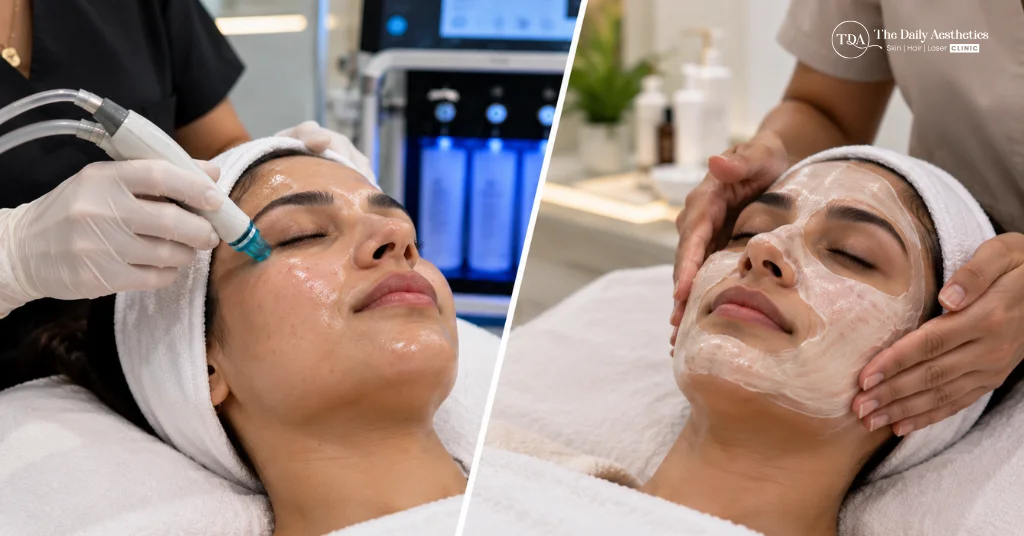
An Original HydraFacial is a branded hydradermabrasion treatment performed with the HydraFacial platform. Instead of relying mainly on hands, scrubs and masks, the treatment uses a specialised handpiece to move solutions across the skin while cleansing, exfoliating, loosening debris, extracting congestion and delivering hydrating solutions in a controlled sequence.
The defining point is not simply that the treatment uses water. The HydraFacial system is built around Vortex-Fusion technology, specialised tips and treatment solutions. That is why the phrase “Original HydraFacial” matters: many generic hydradermabrasion or aqua-facial machines can look similar from a distance but are not the same branded platform.
If you want the full treatment overview, benefits and local clinic information, explore HydraFacial Treatment in Pune. This comparison guide stays focused on how the Original HydraFacial experience differs from a regular facial.
What Is a Regular Facial?
A regular facial is a broad term for hands-on skin care performed in a salon, spa or clinic. There is no single universal protocol. One facial may focus on relaxation and massage, another on blackhead extraction, another on moisturising masks, and another on exfoliation or brightening products.
A typical regular facial may include cleansing, steam, a scrub or enzyme exfoliant, manual extraction, facial massage, a mask, serum, moisturiser and sunscreen. The exact products and intensity depend heavily on the provider, the facial selected and the condition of your skin on that day.
That variability is not automatically a disadvantage. A skilled professional facial can be highly customised and relaxing. It simply means that “regular facial” does not describe one standardised technology in the way HydraFacial describes a specific branded system.
How Does Original HydraFacial Work Step by Step?
Original HydraFacial works through a structured sequence that combines surface cleansing, controlled exfoliation, suction-based extraction and hydration. The exact protocol can vary according to the HydraFacial level, boosters and the skin assessment, but the device-based flow is what separates the experience from a conventional hands-on facial.
Step 1: Cleansing and Surface Preparation
The skin is cleansed and the handpiece is moved across the face in overlapping passes. Rather than a dry scrub, the treatment feels wet and gliding because liquid is moving through the tip while surface debris and excess oil are loosened. Most people notice a light pulling sensation rather than vigorous rubbing.
Step 2: Gentle Exfoliation
A controlled exfoliating solution may be used to help lift compacted dead skin cells and prepare congested pores. The strength and ingredients should be chosen according to skin tolerance. Some people feel mild tingling; others mainly notice the cool movement of the handpiece.
Step 3: Suction-Based Extraction
This is usually the stage that feels most different from a regular facial. The tip creates controlled suction to lift loosened oil and pore debris. Instead of finger pressure around individual blackheads, the handpiece moves continuously across the treatment area. Suction intensity can be adjusted, so the sensation may range from gentle vacuum pressure to a stronger pull in congested areas.
Step 4: Hydration and Finishing Solutions
The final stage focuses on hydration and conditioning. Treatment solutions are delivered through the device onto freshly cleansed skin. Depending on the protocol, additional boosters or finishing steps may be selected. The result is usually a softer, smoother and more hydrated feel immediately after the session, although individual response varies.
Want to Experience the Device-Based Difference?
Original HydraFacial combines cleansing, exfoliation, extraction and hydration in one structured treatment. Your skin assessment decides how the protocol should be adjusted.
Explore Original HydraFacialWhy Does Original HydraFacial Feel Different from a Regular Facial?
The biggest difference is sensory. A regular facial often feels warm, hands-on and massage-led. Original HydraFacial feels more like a cool, fluid treatment with repeated gliding passes and controlled suction. The skin is being treated by a handpiece for much of the session, so the experience is less about massage and more about consistent device contact.
People often describe the differences in four ways:
- Less rubbing, more glide: The treatment tip moves with fluid, so exfoliation does not rely on a grainy physical scrub.
- Less squeezing, more suction: Congestion is addressed with controlled vacuum extraction rather than repeated finger pressure.
- Hydration happens during the treatment: The device delivers solutions as part of the sequence instead of saving all hydration for a final mask.
- The sensation stays more consistent: Device settings, tips and passes create a repeatable process, while manual facials can feel very different depending on technique.
This does not mean HydraFacial is completely sensation-free. Sensitive areas around the nose can feel stronger during suction, exfoliating solutions may tingle, and reactive skin can become temporarily pink. “Gentle” should mean controlled and appropriate for your skin, not that no one ever experiences sensitivity.
| Feature | Original HydraFacial | Regular Facial | Why It Matters |
| Core Method | Device-based Vortex-Fusion treatment with fluid flow and suction. | Primarily hands-on; protocol varies by facial and provider. | The treatment experience and consistency are different. |
| Cleansing | Performed through a structured device sequence plus skin preparation. | Cleanser and manual techniques are usually used. | Both cleanse, but the method differs. |
| Exfoliation | Controlled tip-based and solution-assisted exfoliation. | May use scrub, enzyme, mask or another exfoliant. | Regular facials vary widely in exfoliation intensity. |
| Extraction | Controlled suction through the treatment tip. | Often manual extraction, tools or no extraction. | This is one of the clearest sensory differences. |
| Hydration | Hydrating solutions are delivered as part of the device sequence. | Usually applied topically through serums, creams or masks. | Hydration is integrated differently. |
| Massage | Usually not the main feature of the core treatment. | Often an important part of the experience. | Regular facials may feel more relaxing and massage-led. |
| Customisation | Can vary by suction, solutions, boosters and treatment goal. | Can vary by products, massage, masks, extraction and therapist technique. | Both can be customised, but in different ways. |
| Downtime | Often minimal, but temporary redness or sensitivity can occur. | Usually minimal; irritation depends on extraction and products used. | Neither should be assumed to be risk-free for every skin type. |
Note: “Regular facial” covers many different protocols, so the exact comparison depends on what products and techniques your provider uses.
Bottom Line: Original HydraFacial is a specific device-led treatment; a regular facial is a flexible, mostly manual category. The better option depends on what you want the session to achieve.
Looking for More Than a Basic Refresh?
If congestion, dehydration or uneven texture is the main concern, compare a device-led HydraFacial with a customised professional facial before choosing.
Explore Medicated Facial OptionsIs Original HydraFacial Better Than a Regular Facial?
Original HydraFacial is not automatically better than every regular facial. It is better understood as a different tool. If your priority is structured pore cleansing, suction-based extraction and hydration with a consistent device protocol, HydraFacial may fit that goal well. If you mainly want massage, relaxation and simple surface care, a regular facial may be completely appropriate.
The problem begins when people expect one treatment to do a job it was not designed to do. Neither HydraFacial nor a basic facial should be presented as a cure for active acne, deep acne scars, melasma, significant laxity or medical skin disease. Those concerns may need a different treatment plan altogether.
A practical decision is to ask: what do I want to improve today?
- Congested pores and blackheads: A suction-based extraction treatment may be useful when the skin is suitable.
- Dehydrated, tired-looking skin: HydraFacial may be considered when cleansing and hydration are the main goals.
- Relaxation and facial massage: A traditional or customised facial may provide the experience you actually want.
- Sensitive or reactive skin: Either option should be adjusted carefully; a skin assessment matters more than the treatment label.
- Active acne, pigmentation or persistent skin concerns: Professional assessment should come before booking a facial because another treatment may be more appropriate.
What Does “Original” Mean When Clinics Advertise HydraFacial?
HydraFacial is a brand name, not a generic name for every water-based facial machine. Treatments advertised as “hydra facial,” “aqua facial” or “hydro facial” may use other devices and protocols. They may still be professional treatments, but they should not automatically be assumed to be the branded HydraFacial system.
If authenticity matters to you, ask practical questions before booking:
- Which device is being used? Ask for the exact system name rather than accepting “HydraFacial type” as an answer.
- Is it the HydraFacial MD platform? A genuine provider should be able to explain the device and treatment protocol clearly.
- Which tips and solutions are being used? The provider should be able to explain the treatment steps rather than only promise a glow.
- How will the treatment be customised? Suction, exfoliation and boosters should be matched to the skin rather than delivered identically to everyone.
- Who is assessing your skin? If you have active acne, sensitivity, rosacea, recent procedures or a history of reactions, assessment matters before treatment.
The Daily Aesthetics Clinic uses the professional HydraFacial MD system with Vortex-Fusion technology across its Pune clinics. This gives patients looking specifically for an Original HydraFacial a clear distinction from generic hydradermabrasion or aqua-facial treatments.
Which Skin Concerns Can Original HydraFacial Help With?
HydraFacial is most useful as a skin-quality and maintenance treatment rather than as a one-treatment solution for every concern. Its strongest practical roles are cleansing, superficial exfoliation, pore decongestion and hydration. Those effects can make skin look fresher, smoother and more radiant after treatment.
It may be considered for:
- Dull or tired-looking skin: Removing surface build-up and adding hydration can improve how light reflects from the skin.
- Mild pore congestion: Suction can help clear loosened oil and debris when the skin is suitable for extraction.
- Dehydrated skin: Hydrating solutions are built into the treatment sequence.
- Uneven surface texture: Gentle exfoliation may make the skin feel smoother temporarily.
- Pre-event skin preparation: Many people choose it when they want fresh-looking skin without planning significant recovery time.
It should not be oversold for deeper acne scarring, advanced pigmentation, active inflammatory acne, structural volume loss or significant skin laxity. If those are your main concerns, a consultation can prevent you from repeatedly booking a facial that cannot realistically address the underlying problem.
Who Should Be Cautious or Delay a HydraFacial?
A facial can feel routine, but it is still a skin procedure. The treatment may need to be adjusted, postponed or replaced when the skin barrier is compromised or when another condition needs medical attention first.
Speak with a skin professional before treatment if you have:
- Open wounds, active infection, weeping skin or a fresh sunburn.
- Severe inflammatory acne, painful cysts or widespread irritation.
- A recent chemical peel, laser, microneedling or other procedure that has not fully healed.
- Very reactive rosacea, eczema or dermatitis in an active flare.
- A history of sensitivity to acids or treatment solutions.
- Pregnancy or breastfeeding, because specific acids, boosters or add-on ingredients may need to be avoided or changed.
The right response is not always “no HydraFacial.” Sometimes it is simply “not today,” “use a gentler protocol,” or “treat the active skin problem first.”
Unsure Whether Your Skin Is Ready for a Facial?
If your skin is irritated, acne-prone or recently treated, an assessment can help decide whether HydraFacial, a gentler facial or another plan is safer.
Consult a Skin SpecialistWhat Results and Downtime Should You Expect?
Many people notice that their skin feels smoother and more hydrated immediately after HydraFacial. The complexion may look brighter because surface build-up has been removed and the skin has been freshly hydrated. These immediate effects are real, but they should not be confused with permanent correction of pores, wrinkles, pigmentation or acne scars.
A regular facial can also create a visible short-term glow, especially when the main issue is surface dryness or dullness. The difference is that the result depends more on the specific facial protocol, products and extraction method.
Downtime is usually limited for both, but “no downtime” should not be treated as a promise. Temporary pinkness, tightness, mild tenderness or sensitivity can occur, especially after extraction or exfoliation. If your skin is reactive or you are booking before a major event, leave enough time to see how your skin responds rather than trying a new treatment at the last minute.
| Skin Goal | Original HydraFacial May Fit When… | Regular Facial May Fit When… | Consider Another Plan When… |
| Hydration | You want device-led cleansing plus hydration in one structured session. | You want a moisturising mask, massage and basic surface care. | Dryness is caused by eczema, dermatitis or a damaged barrier. |
| Congestion | You have mild blackheads or pore build-up suitable for suction extraction. | You need only light manual extraction or surface cleansing. | You have inflamed cystic acne or painful lesions. |
| Event-Ready Glow | You want a polished, hydrated look with generally low recovery needs. | You want a relaxing refresh and know your skin tolerates the facial well. | You are trying a new aggressive treatment immediately before an event. |
| Texture | You want superficial smoothing and hydration. | You want mild exfoliation and massage-based care. | You have deeper scars, persistent pigmentation or structural texture changes. |
| Sensitive Skin | The protocol can be customised and your skin is stable. | A gentle facial with minimal actives is selected. | You have an active flare, open skin or significant irritation. |
Bottom Line: Choose based on the skin concern and the treatment method, not on which option sounds more premium.
How Often Should You Get an Original HydraFacial?
There is no single schedule that everyone needs. Frequency depends on your skin goals, sensitivity, congestion, home routine, other procedures and how your skin responds after treatment. Some people use HydraFacial occasionally before events; others include it in a longer maintenance plan.
More frequent treatment is not automatically better. If your skin becomes persistently red, tight, flaky or sensitive, the plan may be too aggressive or the interval may be too short. A good maintenance schedule should keep the skin comfortable rather than constantly recovering from treatment.
How Should You Care for Your Skin After a HydraFacial?
Post-treatment care should be simple. The skin has just been cleansed and exfoliated, so this is not the moment to layer every active ingredient you own. Your provider may tailor instructions based on the acids, boosters and add-ons used during the session.
- Use sunscreen consistently: Freshly exfoliated skin still needs daily UV protection, especially in Pune’s strong sun.
- Keep cleansing gentle: Avoid harsh scrubs and aggressive cleansing brushes immediately after treatment.
- Pause irritating actives if advised: Retinoids, strong acids and exfoliating products may need a short break.
- Do not pick or squeeze: Let any mild redness or sensitivity settle without manipulating the skin.
- Follow product-specific instructions: The aftercare can change depending on the booster, peel solution or additional treatment used.
Where Can You Get an Original HydraFacial in Pune?
The Daily Aesthetics Clinic offers HydraFacial MD treatments across three Pune locations using the professional HydraFacial MD platform with Vortex-Fusion technology. Treatment planning is adjusted according to skin type, sensitivity, congestion and individual goals.
- Kalyani Nagar: Plot 17, Lane No. 7, next to Hotel Sudharshan, opposite Lunkad Sky Lounge, Kalyani Nagar, Pune, Maharashtra 411006. Phone: +91 96738 58066.
- Kharadi: Shop No. 120, Gera Imperial, Rajaram Patil Nagar, Vittal Nagar, Kharadi, Pune, Maharashtra 411014. Phone: +91 97685 55421.
- Baner: Shop No. 11, A-wing, SR. No. 32, Sterling Tower, Off Pancard Club Road, Baner, Pune, Maharashtra 411045. Phone: +91 91585 80123.
If you are not sure whether your skin needs Original HydraFacial, a medicated facial, a peel or a completely different treatment, choosing the clinic by convenience alone is less useful than starting with a proper skin assessment.
Looking for Original HydraFacial in Pune?
Visit The Daily Aesthetics Clinic in Kalyani Nagar, Kharadi or Baner for a consultation-led treatment plan using the professional HydraFacial MD system.
Find Your Nearest Pune ClinicWhy Choose The Daily Aesthetics Clinic for HydraFacial?
The Daily Aesthetics Clinic combines Original HydraFacial technology with skin assessment and concern-based treatment planning across Kalyani Nagar, Kharadi and Baner. Instead of treating every facial as a standard “glow package,” the aim is to decide whether HydraFacial is actually the right tool for your skin at that visit.
The clinic brings together the professional HydraFacial MD system, consultation-led care, three Pune locations, over 11 years of trusted expertise and 25,000+ happy patients. More importantly, patients are given clear explanations of what the treatment can and cannot realistically do.
For someone comparing HydraFacial vs a regular facial, that clarity is useful. You should know what device is being used, why the protocol fits your skin, which steps are included, what sensations to expect and whether another treatment would better match your concern.
Conclusion
Original HydraFacial and a regular facial are not simply premium and basic versions of the same treatment. They are different experiences. HydraFacial uses a structured device-led sequence with fluid movement, controlled suction and integrated hydration. A regular facial is more manual, more variable and often more focused on massage, masks and surface care.
The right choice depends on your actual goal. If you want structured pore cleansing and hydration, Original HydraFacial may be worth considering. If you want relaxation and simple maintenance, a regular facial may be enough. If you have acne, pigmentation, dermatitis, scarring or another persistent concern, the better decision may be to step outside the facial category completely.
At The Daily Aesthetics Clinic, the starting point is a skin assessment so the treatment matches your skin rather than a popular name. When you understand what is actually happening during the session, the difference between Original HydraFacial and a regular facial becomes much easier to judge.
Frequently Asked Questions
1. What Is the Main Difference Between Original HydraFacial and a Regular Facial?
Original HydraFacial is a branded device-based treatment that uses Vortex-Fusion technology for cleansing, exfoliation, suction extraction and hydration. A regular facial is a broader, mostly manual category that may include steam, massage, scrubs, extraction and masks depending on the provider.
2. How Can I Tell If a HydraFacial Is Original?
Ask for the exact device name and whether the clinic uses the HydraFacial MD platform. A genuine provider should be able to explain the device, treatment steps, tips, solutions and how the protocol will be customised for your skin.
3. Does Original HydraFacial Hurt?
Most people describe the treatment as controlled suction with a wet, gliding sensation rather than pain. Sensitive areas may feel stronger, exfoliating solutions can tingle and temporary pinkness can occur, so intensity should be adjusted to your skin.
4. Is HydraFacial Better for Blackheads Than a Regular Facial?
HydraFacial uses suction-based extraction, which may be useful for mild pore congestion and blackheads when the skin is suitable. A regular facial may use manual extraction, but the result depends heavily on technique and the condition of the skin.
5. Can Sensitive or Acne-Prone Skin Have a HydraFacial?
Some sensitive or acne-prone skin can tolerate a customised HydraFacial, but active inflammation, open lesions, infection or a damaged skin barrier may require a different plan or a delay. Assessment matters more than the skin-type label.
6. How Often Should You Get a HydraFacial?
There is no universal schedule. Frequency should be based on your skin goals, sensitivity, home routine, other procedures and how your skin responds rather than automatically booking the same interval for everyone.
7. Can I Get a HydraFacial Before an Event?
HydraFacial is commonly chosen for pre-event skin preparation because recovery is often limited. If it is your first session or your skin is reactive, it is safer to leave enough time before an important event in case temporary redness or sensitivity occurs.
8. Is a Regular Facial Still Worth It If HydraFacial Is Available?
Yes. A regular facial can still be useful for relaxation, massage, basic cleansing and simple maintenance when the protocol suits your skin. The best option depends on the goal, not on which treatment sounds more advanced.