

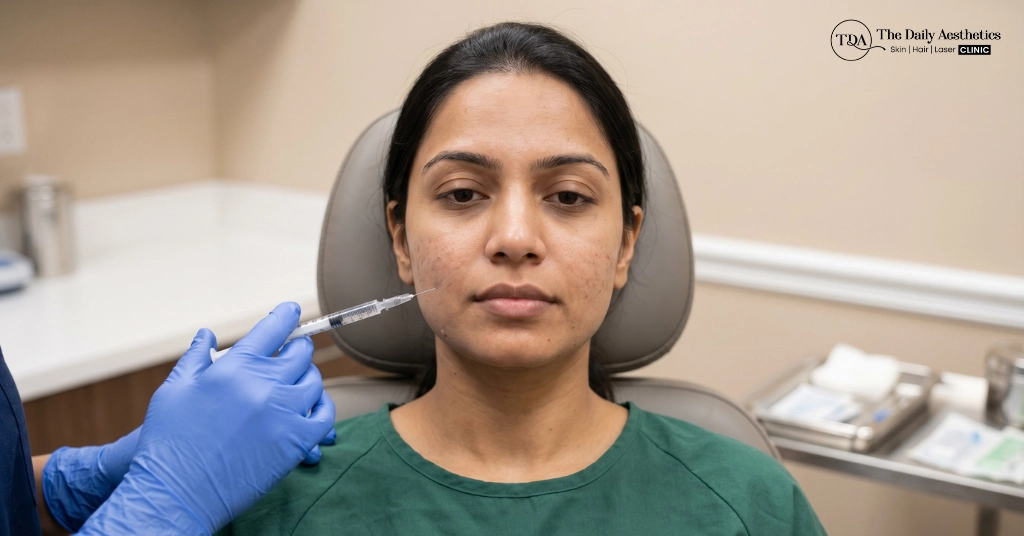
What Is PDRN Therapy? Benefits, Science & How It Works
Introduction Picture this: your skin, right now, is trying to repair itself. Every hour. Every day. It builds new collagen, sheds old cells, and fights oxidative damage from the inside out. For most of your twenties, it does this effortlessly. Then, somewhere around your late twenties and early thirties, that internal repair engine starts to sputter. Creams and serums can support the process – but they cannot replicate it. That is where PDRN therapy changes the conversation entirely. Short for Polydeoxyribonucleotide, PDRN is a scientifically validated skin regeneration treatment that works at the DNA level, supplying your skin cells with the exact building blocks they need to accelerate their own natural healing and collagen production. Originally developed in Italy in the 1990s for post-surgical wound care, PDRN therapy has since been adopted by medical aesthetics clinics across South Korea, Europe, and now India – where it is fast becoming one of the most sought-after injectable treatments for patients who want genuine, medically backed results without surgery or significant downtime. At The Daily Aesthetics, Pune’s trusted aesthetic clinic with over a decade of clinical experience, PDRN therapy is part of a growing suite of science-first treatments designed to deliver visible, lasting skin transformation. This guide covers everything you need to know – the science, the real-world benefits, what research says, and exactly what to expect when you walk in for your first session. Key Takeaways What Is PDRN? The Salmon DNA Skin Treatment Explained PDRN – Polydeoxyribonucleotide – is a biologically active compound made from highly purified, fragmented DNA chains extracted from salmon sperm cells (specifically, Oncorhynchus mykiss). The extraction process involves multiple stages of sterilization and purification to remove all proteins, pathogens, and cellular debris, leaving behind only the short DNA fragments that the human body can recognize and use as cellular raw material. This is not a cosmetic ingredient. PDRN is a pharmaceutical-grade compound with a documented pharmacological mechanism – meaning it does not just sit on the surface of your skin. It is injected into the dermis, where it interacts with specific cell receptors to trigger measurable biological responses. Why Salmon DNA? The Biocompatibility Factor The use of salmon DNA is not arbitrary. Salmon sperm DNA shares an exceptionally high structural similarity with human DNA – research estimates this at approximately 97% – which means the immune system does not flag it as a foreign invader. Instead, skin cells absorb the fragmented nucleotides and use them directly through what scientists call the salvage synthesis pathway, recycling them to build new DNA for cell replication and repair. PDRN was first commercialized in Italy under the brand Placentex and spent its first decade in clinical use as a wound-healing agent for post-surgical tissue repair, diabetic ulcers, and burn recovery. The transition into aesthetic medicine happened naturally – once clinicians observed that PDRN didn’t just repair damaged tissue but actively improved the quality of healthy tissue around it. Today, it is one of the most widely studied injectable skin treatments in academic dermatology literature, with a growing body of published research across European and Asian clinical journals. How Does PDRN Therapy Work? PDRN works through two simultaneous biological pathways, and understanding both helps you see why it produces results that surface-level treatments simply cannot match. The A2A Receptor Pathway: The Science in Plain English The most significant mechanism involves the A2A adenosine receptor – a receptor found on the surface of fibroblasts (your skin’s collagen-producing cells), keratinocytes (the cells that form the outer skin layer), and endothelial cells (which line blood vessels). When PDRN binds to this receptor, it sets off a cascade of cellular activity that has been confirmed in multiple peer-reviewed studies, including research published in journals such as the Journal of Photochemistry and Photobiology. Clinical research shows A2A receptor activation by PDRN increases type I collagen synthesis in fibroblasts, reduces levels of the inflammatory cytokine TNF-α, and stimulates angiogenesis – the formation of new blood vessels – improving the nutrient and oxygen supply to treated tissue. What this means in practical terms: your skin does not just get a hydration boost. It gets a biological signal to rebuild. Collagen levels increase. Elastin production improves. Inflammation – one of the primary drivers of visible aging – is measurably reduced. And the improved blood supply means treated skin is better nourished on an ongoing basis. The Salvage Pathway: Cellular Fuel for Repair The second mechanism is more direct. The fragmented DNA nucleotides in PDRN are absorbed by local cells and enter the salvage synthesis pathway – essentially, your cells recycle these raw materials to produce new DNA needed for healthy cell division and tissue turnover. This accelerates the skin’s natural renewal cycle, which typically slows with age, sun damage, and environmental stress. Think of it this way: if your skin’s repair process is a construction site, PDRN delivers both the instruction manual (A2A signaling) and the building materials (nucleotides). Most treatments deliver one or the other. PDRN delivers both simultaneously – which is why its regenerative effect on the skin tends to outperform traditional skin boosters in clinical comparisons. Curious about what PDRN therapy could do for your skin? Our expert team at The Daily Aesthetics, Pune provides personalized skin assessments to help you understand exactly which treatments will work for your specific concerns. Book Your Consultation What Are the Benefits of PDRN Therapy? The clinical evidence behind PDRN therapy spans over two decades. Here are the five most consistently documented benefits, with the research context that backs them up. 1. Deep Skin Repair and Scar Reduction PDRN’s wound-healing origins are its most clinically validated capability. A 2014 study published in the Journal of Cosmetic Dermatology demonstrated that intradermal PDRN injections significantly accelerated dermal repair and collagen remodeling in patients with atrophic (depressed) acne scars, with histological evidence of new collagen fiber deposition at the treated sites. For patients with post-acne scarring or textural irregularities, PDRN therapy – often used in combination with laser skin resurfacing – addresses the underlying dermal damage rather than just smoothing the surface. This makes the results more durable and more structurally meaningful than topical solutions alone. 2. Anti-Aging: More Collagen, Fewer Fine Lines Collagen loss is the central biological story of aging skin. From our mid-twenties, the body produces approximately 1% less collagen per year – a slow decline that
What Is PDRN Therapy? Benefits, Science & How It Works Read More »
PDRN Treatment