

Table of Contents
ToggleIntroduction
What if your skin could repair itself faster, look healthier, and glow naturally without surgery or harsh treatments?
That idea is no longer futuristic. It is happening right now with exosome therapy.
If you have been researching advanced skincare treatments, you have probably seen the word “exosomes” everywhere. Clinics promote them. Dermatologists talk about them. Regenerative medicine experts call them the future of aesthetics.
But what are exosomes really? And how can they help your skin repair itself naturally?
In simple terms, exosomes are tiny messengers that help your cells communicate and heal. They play a powerful role in tissue repair, collagen production, and reducing inflammation. When applied in aesthetic treatments, they support your skin’s natural ability to regenerate.
Unlike treatments that only work on the surface, exosomes work at the cellular level. That means they do not just temporarily improve how your skin looks. They help improve how your skin functions.
According to research published by the National Institutes of Health, exosomes are involved in cell-to-cell communication and tissue repair processes.
That scientific foundation is why exosome therapy is gaining so much attention in modern skincare.
In this guide, you’ll learn exactly what exosomes are, how they work inside your skin, and why they are becoming one of the most talked-about innovations in regenerative aesthetics.
What Are Exosomes?
You have probably heard exosomes described as revolutionary. But before you decide whether they are right for your skin, you need a clear and simple understanding of what they actually are.
Exosomes are tiny particles released by cells that act as messengers between other cells.
They are microscopic extracellular vesicles that carry important biological information. Inside each exosome are proteins, growth factors, lipids, and genetic material that help regulate how cells behave.
In simple terms, exosomes deliver instructions.
They tell other cells when to repair, when to produce collagen, when to reduce inflammation, and when to regenerate damaged tissue.
According to research, exosomes play a critical role in cell-to-cell communication and tissue healing.
When applied in aesthetic treatments, exosomes enhance your skin’s natural repair process instead of forcing artificial change.
That is what makes them different from many traditional cosmetic procedures.
Where Do Exosomes Come From?
Exosomes are naturally produced by nearly every cell in your body.
However, the exosomes used in professional skincare treatments are typically derived from mesenchymal stem cells in controlled laboratory environments.
Here is what that means for you:
- They are purified and processed under strict conditions
- They do not contain live stem cells
- They are filtered for safety and sterility
- They are designed specifically for regenerative applications
This is important because some people confuse exosome therapy with stem cell injections. They are not the same thing.
Exosome treatments use the signaling components that stem cells release, not the cells themselves.
This approach provides regenerative benefits while reducing risks associated with live cell therapies.
How Exosomes Work in the Body
Your skin constantly communicates at the cellular level.
When you experience damage from aging, sun exposure, acne, or procedures like microneedling, your cells send signals to trigger repair.
Exosomes amplify and improve that signaling process.
Here is what happens during an exosome-based skin treatment:
- A treatment like microneedling creates controlled micro-injuries in the skin.
- Exosomes are applied to the treated area.
- They penetrate through microchannels into deeper skin layers.
- Skin cells receive regenerative signals.
- Fibroblasts increase collagen and elastin production.
- Inflammation decreases and healing accelerates.
Instead of overwhelming your skin, exosomes support what your body already knows how to do.
This is why they are often described as regenerative skincare rather than corrective skincare.
Now that you understand what exosomes are and how they function, the next question becomes even more important.
How exactly do they help your skin repair naturally?
Let’s explore that next.
How Exosomes Help Skin Repair Naturally
Now that you understand what exosomes are, let’s talk about what really matters to you.
How do they actually improve your skin?
Exosomes work by enhancing your skin’s natural healing and regeneration processes. Instead of covering up problems, they help your cells function better from within. Over time, that leads to smoother texture, improved firmness, reduced redness, and healthier-looking skin.
Here is how that happens.
1. Boosting Collagen and Elastin Production
Collagen is the structural protein that keeps your skin firm and smooth. Elastin allows your skin to stretch and snap back into place.
As you age, collagen production slows down. That is when you start noticing fine lines, wrinkles, and skin laxity.
Exosomes help stimulate fibroblasts, which are the cells responsible for producing collagen and elastin. When fibroblasts receive regenerative signals from exosomes, they increase their activity.
What this means for you:
- Skin becomes firmer over time
- Fine lines soften gradually
- Texture improves
- Skin looks more youthful without looking overdone
Unlike fillers, which add volume immediately, exosomes help your skin rebuild its own structural support.
The improvement happens progressively and naturally.
2. Accelerating Wound Healing
Your skin is constantly repairing itself. Every time you experience sun exposure, acne breakouts, or undergo treatments like microneedling or laser therapy, your skin enters a healing phase.
Exosomes enhance that healing response.
They promote:
- Faster tissue repair
- Improved skin barrier recovery
- Reduced downtime after procedures
This is why exosomes are often paired with microneedling or laser treatments. They help your skin recover faster and respond better to the procedure.
If you have ever experienced redness or prolonged healing after aesthetic treatments, exosomes may help shorten that recovery window.
3. Reducing Inflammation and Redness
Inflammation plays a major role in many skin concerns.
Conditions like acne, rosacea, and post-procedure irritation all involve inflammatory responses. Chronic inflammation can also accelerate skin aging.
Exosomes contain anti-inflammatory signaling molecules that help calm overactive skin responses.
For you, that can mean:
- Reduced redness
- Calmer post-treatment skin
- Improved comfort
- Support for acne-prone or sensitive skin
By regulating inflammatory pathways, exosomes help create a healthier skin environment overall.
4. Improving Skin Texture and Tone
Uneven texture and pigmentation are common concerns.
Whether caused by acne scarring, sun damage, or aging, these issues often stem from disrupted cellular function.
Exosomes help encourage balanced cellular turnover and improved tissue remodeling.
Over time, you may notice:
- Smoother surface texture
- More even tone
- Softer acne scars
- Healthier overall glow
It is important to set realistic expectations. Exosomes are not an overnight miracle. They work gradually by supporting natural regeneration. Results typically improve over several weeks as collagen production increases.
That is what makes this treatment appealing if you prefer subtle, progressive improvements rather than dramatic changes.
Exosomes vs Stem Cells vs PRP
If you have been researching regenerative treatments, you have probably come across PRP and stem cell therapy.
At first glance, they may seem similar to exosomes. They all focus on healing and regeneration.
But they are not the same.
Understanding the differences helps you make a more informed decision about what is right for your skin.
What Is PRP?
PRP stands for Platelet-Rich Plasma. It is created using your own blood.
Here is how it works:
- A small amount of your blood is drawn.
- It is placed in a centrifuge to separate the platelets.
- The concentrated platelets are injected or applied to your skin.
Platelets contain growth factors that help stimulate healing and collagen production.
PRP has been used in dermatology for years and is often combined with microneedling. Because it uses your own blood, it is considered biocompatible.
However, PRP results can vary from person to person. The quality depends on your age, health, and platelet concentration. If your platelets are less active, results may be less dramatic.
Stem Cell Therapy Explained
Stem cell therapy involves using live stem cells that have the potential to develop into different types of cells in the body.
In regenerative medicine, stem cells are studied for their ability to repair damaged tissue.
According to the U.S. Food and Drug Administration, stem cell therapies are still heavily regulated and many uses remain under investigation.
In aesthetic medicine, true stem cell injections are not widely approved for cosmetic use. There are also regulatory and ethical considerations involved.
It is important to know that many treatments marketed as stem cell therapy may be using stem cell-derived components, not live stem cells.
Why Exosomes Are Different
Exosomes are not live cells.
They are the signaling messengers released by cells, including stem cells. This gives them several unique advantages.
Here is how they compare:
- They contain growth factors and regenerative signals
- They do not contain living stem cells
- They are purified and standardized
- They can be more consistent than PRP
- They typically involve minimal downtime
Because exosomes are cell-free, they avoid many of the regulatory complexities associated with stem cell therapy.
They also offer more predictable quality compared to PRP, since they are laboratory-prepared rather than dependent on your individual biology.
Here is a simplified comparison to make it clearer:
| Feature | Exosomes | PRP | Stem Cells |
| Contains live cells | No | No | Yes |
| Source | Lab-derived | Your blood | Donor or lab-derived |
| Consistency | High | Variable | Variable |
| Regulation complexity | Moderate | Low | High |
| Downtime | Minimal | Minimal | Varies |
If you are looking for a regenerative treatment that enhances healing without involving live cell therapy, exosomes may feel like a balanced option.
They combine the science of cellular communication with the convenience of non-surgical treatment.
Exosome Treatments for the Face
Now that you understand how exosomes work and how they compare to PRP and stem cells, let’s talk about how you would actually receive this treatment.
Exosomes are not typically injected on their own like fillers or neurotoxins. Instead, they are most often applied during or immediately after procedures that create microchannels in your skin.
This allows the exosomes to penetrate deeper layers where they can deliver regenerative signals more effectively.
Here are the most common ways exosomes are used in facial treatments.
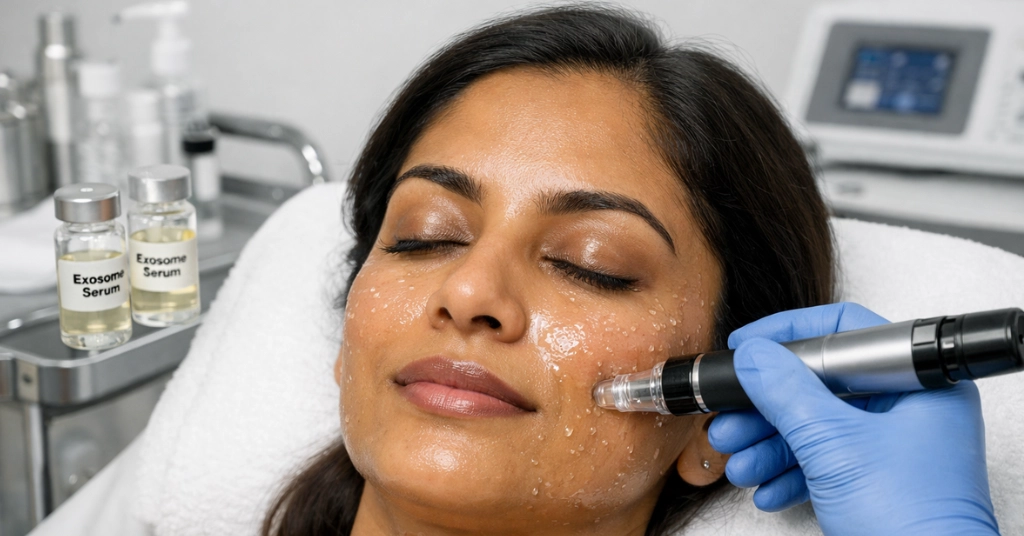
Exosome Microneedling
Microneedling is one of the most popular ways to deliver exosomes into the skin.
During microneedling:
- A device with tiny needles creates controlled micro-injuries in your skin.
- These microchannels stimulate collagen production.
- Exosomes are applied immediately after to enhance healing and regeneration.
The combination works synergistically. Microneedling triggers your skin’s repair response. Exosomes amplify that response.
For you, that can mean:
- Faster recovery
- Reduced redness
- Enhanced collagen stimulation
- Improved texture and tone
Downtime is typically mild. You may experience redness similar to a mild sunburn for one to three days. Many people return to normal activities quickly.
Results develop gradually over several weeks as collagen production increases.
Exosome Facials
An exosome facial is a non-invasive treatment that applies exosomes topically, sometimes combined with light resurfacing or gentle exfoliation.
This option is ideal if you want:
- A boost in skin hydration
- Improved glow
- Mild rejuvenation
- Little to no downtime
While results may be more subtle compared to microneedling, exosome facials can support overall skin health and enhance your skincare routine.
If you are new to regenerative treatments, this can be a gentle starting point.
Who Is a Good Candidate for Exosome Skin Therapy?
One of the most common questions you may have is simple.
Is this treatment right for you?
The good news is that exosome skin therapy is versatile. Because it supports your skin’s natural repair process, it can benefit a wide range of skin types and concerns.
That said, the best results happen when the treatment aligns with your specific goals.
Here is how to know if you might be a strong candidate.
You Are Noticing Early Signs of Aging
If you are starting to see:
- Fine lines
- Mild skin laxity
- Dullness
- Loss of firmness
Exosomes can help stimulate collagen production before deeper wrinkles develop.
This makes them a great option if you prefer preventative or early-intervention treatments rather than corrective procedures later.
You Have Acne Scars or Uneven Texture
If past breakouts have left you with textured skin or shallow scarring, exosomes combined with microneedling can support tissue remodeling.
By enhancing collagen stimulation and regulating inflammation, they help improve skin smoothness gradually over time.
Keep in mind that deeper scars may require multiple sessions or combination treatments.
You Want Faster Recovery After Procedures
If you regularly get:
- Microneedling
- Laser resurfacing
- Radiofrequency treatments
Adding exosomes may help reduce redness and support faster healing.
If you tend to experience prolonged downtime, this combination may be especially beneficial.
You Have Sensitive or Inflammation-Prone Skin
Because exosomes help regulate inflammatory pathways, they may support skin that is prone to redness or irritation.
If you struggle with reactive skin, calming and regenerative therapies may be a better long-term approach than aggressive resurfacing alone.
However, it is still important to consult a licensed provider to determine whether your condition is appropriate for this treatment.
You Prefer Natural-Looking Results
If you want improvement without dramatic or artificial changes, exosomes align well with that goal.
Results build gradually as your skin produces more collagen and repairs itself. You look refreshed, not altered.
That subtle progression is appealing if you want friends and family to notice that your skin looks better, but not immediately guess why.
Are Exosome Treatments Safe?
Whenever you consider a new aesthetic treatment, safety should be your first priority.
Exosomes may sound advanced, but that does not mean you should skip asking important questions. You deserve to understand how they are regulated, what research says, and what side effects you might experience.
Let’s break it down clearly.
Clinical Research Overview
Exosomes have been studied extensively in regenerative medicine.
Researchers have examined their role in wound healing, tissue repair, and immune regulation.
Exosomes play a key role in intercellular communication and regenerative signaling.
In dermatology, studies are ongoing. Early findings suggest that exosome-based therapies may enhance collagen production and accelerate post-procedure healing.
However, it is important to understand that aesthetic applications are still evolving. While promising, long-term large-scale clinical trials are still developing.
That does not mean treatments are unsafe. It means you should choose a provider who uses reputable, well-documented products.
Side Effects
Exosome therapy is generally well tolerated, especially when used topically with microneedling or laser treatments.
Common temporary side effects may include:
- Mild redness
- Swelling
- Sensitivity
- Warmth in the treated area
These symptoms are usually related to the accompanying procedure, such as microneedling, rather than the exosomes themselves.
Serious complications are rare when treatments are performed by licensed professionals using sterile, high-quality products.
As with any skin treatment, individual responses vary.
FDA Status Explained
This is where confusion often happens.
Exosome products used in aesthetics are not currently FDA-approved as standalone drugs for cosmetic indications. However, that does not automatically mean they are illegal or unsafe.
The U.S. Food and Drug Administration regulates human cells, tissues, and cellular products.
Many exosome products used in clinics are marketed as biologic or cosmetic support products rather than injectable drugs.
This is why it is critical to work with a reputable medical provider who understands regulatory guidelines and uses properly sourced materials.
If a clinic cannot clearly explain where their exosomes come from, that is a red flag.
What Results Can You Expect?
Before starting any treatment, you want to know one thing.
Will it actually work for you?
Exosome therapy is not an instant transformation like fillers or Botox. It works gradually by supporting your skin’s natural repair process. That means patience is part of the journey.
But when results appear, they tend to look natural and long lasting.
Here is what you can realistically expect.
The First Week
In the first few days after treatment, especially if combined with microneedling, you may notice:
- Mild redness
- Slight swelling
- A feeling of tightness
As your skin begins healing, you might see an early glow. This is partly due to increased circulation and improved hydration.
However, true regenerative changes are happening beneath the surface.
Weeks Two to Four
This is when collagen production begins increasing more noticeably.
You may start seeing:
- Smoother texture
- Softer fine lines
- Improved tone
- Reduced redness
If you are treating acne scars or uneven texture, changes may still be subtle at this stage.
Remember, collagen remodeling takes time.
One to Three Months
This is when most people notice more visible improvements.
By this stage, you may see:
- Firmer skin
- Better elasticity
- More even tone
- Reduced appearance of shallow scars
- A healthier overall glow
Because exosomes stimulate your own collagen production, improvements continue as your skin rebuilds from within.
Conclusion
Exosome therapy represents a powerful shift in how you approach skin rejuvenation.
Instead of masking surface concerns, it works at the cellular level. It supports collagen production, accelerates healing, reduces inflammation, and helps your skin repair itself naturally.
If you are looking for subtle, progressive, and science-backed improvement, exosomes offer a compelling option. They fit especially well if you prefer regenerative treatments with minimal downtime and natural-looking results.
The most important step is choosing the right provider and receiving a personalized treatment plan based on your skin’s needs.
If you are ready to explore whether exosome therapy is right for you, the team at The Daily Aesthetics can guide you through your options and design a customized approach tailored to your goals.
Contact The Daily Aesthetics today to schedule your consultation and take the next step toward healthier, stronger, and more radiant skin.
Frequently Asked Questions (FAQs)
1. What exactly do exosomes do for skin?
Exosomes act as messengers between cells. When applied during treatments like microneedling, they deliver growth factors and regenerative signals that stimulate collagen production, reduce inflammation, and support tissue repair. Over time, this helps improve skin texture, firmness, and overall tone in a natural way.
2. Are exosomes better than PRP?
Exosomes and PRP both support regeneration, but they work differently. PRP uses your own platelets, and results can vary depending on your biology. Exosomes are lab-prepared and standardized, which may provide more consistent signaling. Whether one is better depends on your skin goals and your provider’s recommendation.
3. How long do exosome results last?
Results typically develop over several weeks and can last several months. Because exosomes stimulate your own collagen production, improvements may continue as your skin remodels. Maintenance treatments once or twice a year are often recommended to sustain results.
4. Are exosome facials worth it?
If you want minimal downtime and a subtle boost in skin quality, exosome facials may be worth considering. They can improve hydration, glow, and overall skin health. However, deeper concerns like scarring or significant collagen loss may require combination treatments for more noticeable results.
5. Can exosomes treat acne scars?
Exosomes can support collagen remodeling, which may help improve the appearance of shallow acne scars. They are often combined with microneedling for better penetration and results. Deeper scars may require multiple sessions or additional procedures.
The Daily Aesthetics Clinic – Redefining Skin & Hair Treatments in Pune
The Daily Aesthetics Clinic is a trusted dermatology and aesthetic center in Pune, offering advanced treatments for acne, pigmentation, hair loss, laser hair removal, Hydrafacials, hair transplants, and personalized skincare.
Under the guidance of Dr. Arshi Rahul, the clinic combines medical expertise with FDA-approved technology to deliver customized treatment plans that focus on restoring skin health, enhancing radiance, and ensuring every patient feels confident and cared for.
With the trust of over 3,500 patients and a 4.9★ rating, The Daily Aesthetics Clinic is known for delivering effective, safe, and personalized care in a calm, welcoming setting.
We serve clients across Pune through our three conveniently located clinics in Baner, Kharadi, and Kalyani Nagar.
Read More:
- Best HydraFacial Treatment in Pune: Kharadi, Baner & Kalyani Nagar – The Daily Aesthetics Clinic
- Hydrafacial Treatment Price in India
- Hydrafacial Price in Pune – What You Get for Your Money at The Daily Aesthetics Clinic
- Understanding Hydrafacial Treatment: Complete Guide to Process, Benefits, and Costs

Dr. Arshi Rahul
Aesthetic Physician & Skin Specialist | 11+ years of experience
Expert Dermo-Cosmetologist & Trichologist (Gold Coast Training Academy, Australia) | Certified in Laser, Botox, Fillers & Thread Lifting | Over 10 Years of Advanced Aesthetic Expertise