

Introduction
White flakes on your shoulders can feel embarrassing, especially when you are wearing dark clothes, sitting in a meeting, going out with friends, or getting ready for an important event. The itching can be just as frustrating because it keeps pulling your attention back to your scalp.
The difficult part is that dandruff and dry scalp can look almost the same at first. Both can cause flakes, itching and discomfort, but they do not always need the same care. In fact, using the wrong shampoo or home remedy can sometimes make the scalp feel worse.
At The Daily Aesthetics Clinic in Pune, scalp concerns are approached by first understanding what is actually causing the flakes. Some people need oil and fungal-control support, while others need barrier repair, product changes, or assessment for another scalp condition.
This guide explains the difference between dandruff and dry scalp in simple language. It also explains what the flakes may look like, why your scalp may feel itchy or oily, what you can try at home, and when professional dandruff or scalp treatment may be the safer next step.
Key Takeaways
- Flakes Are Not Always Dandruff: White flakes can come from dandruff, dry scalp, product irritation, seborrheic dermatitis, psoriasis, eczema, or fungal scalp conditions.
- Dandruff Often Feels Oily: Dandruff is commonly linked with oil imbalance and may cause larger white or yellowish flakes that return repeatedly.
- Dry Scalp Often Feels Tight: Dry scalp usually happens when the scalp barrier loses moisture, making the skin feel tight, rough, sensitive or powdery.
- Treatment Direction Is Different: Dandruff may need anti-dandruff or medicated scalp care, while simple dryness often needs gentler cleansing and moisture-barrier support.
- Itching Can Happen In Both: Scalp itching alone does not prove dandruff because dryness, irritation, allergies and other scalp conditions can also itch.
- Product Overuse Can Backfire: Strong shampoos, frequent washing, hot water, hair color, gels, sprays and oils can sometimes worsen scalp irritation.
- Persistent Symptoms Need Assessment: Flakes that do not improve, keep coming back, spread beyond the scalp, or occur with redness, pain or hair fall should be checked.
- Pune Patients Have Local Options: The Daily Aesthetics Clinic offers scalp assessment and dandruff treatment support across Kalyani Nagar, Kharadi and Baner.
What Is the Main Difference Between Dandruff and Dry Scalp?
The main difference is the cause. Dandruff is usually linked with faster skin-cell shedding, oil imbalance and yeast-related scalp activity, while dry scalp is linked with moisture loss and barrier dryness. Both can create flakes, but their texture, scalp feel and treatment direction are usually different.
This is why many people stay stuck in a cycle of switching shampoos. A person with dandruff may not improve with only oils or moisturising products. A person with dry scalp may feel more irritated if they overuse harsh anti-dandruff shampoos without knowing the real cause.
| Feature | Dandruff | Dry Scalp |
| Flake Appearance | Often larger, white, grey or yellowish flakes that may stick to hair or scalp. | Usually smaller, dry, powdery white flakes that shed more easily. |
| Scalp Feel | Can feel oily, itchy, greasy, inflamed or coated with buildup. | Can feel tight, dry, sensitive, rough or uncomfortable after washing. |
| Common Trigger Pattern | May worsen with oiliness, sweat, stress, irregular washing or seborrheic tendency. | May worsen with hot water, harsh shampoo, low humidity, winter dryness or product irritation. |
| Usual Treatment Direction | Anti-dandruff care, scalp balancing, antifungal support or professional scalp treatment may be needed. | Gentle shampoo, less irritation, hydration support and barrier-friendly scalp care may help. |
| When to Get Checked | Recurring flakes, severe itching, redness, thick scales or poor response to shampoo. | Persistent dryness, burning, cracking, sensitivity or flaking that does not settle after routine changes. |
Note: This comparison is a guide only. A scalp assessment is needed when symptoms are persistent, painful, spreading, or confusing.
Bottom Line: The right care starts with identifying whether the scalp is oily and reactive, dry and depleted, or affected by another condition.
Not Sure Whether It Is Dandruff or Dry Scalp?
A scalp consultation can help identify whether your flakes are linked to dandruff, dryness, product irritation, or a different scalp concern.
Book a Scalp AssessmentWhat Does Dandruff Look and Feel Like?
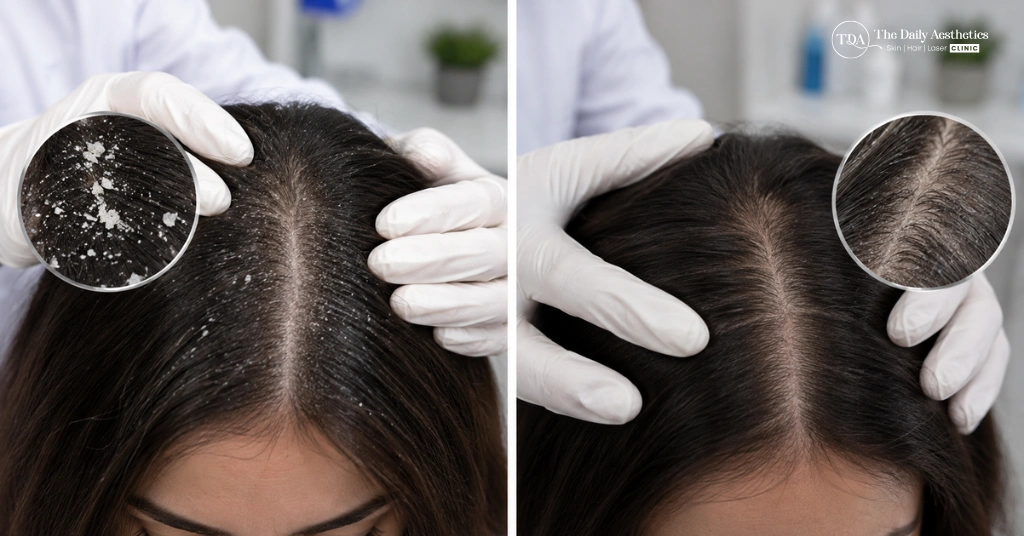
Dandruff commonly appears as visible white, grey or yellowish flakes on the scalp, hair or clothing. The scalp may also feel itchy, oily, irritated or coated. In many people, dandruff comes and goes instead of disappearing permanently after one wash or one product change.
A key clue is oiliness. If your scalp gets greasy quickly but still flakes, dandruff or seborrheic-type scalp activity may be more likely than simple dryness. The flakes may also feel slightly sticky or heavier compared with fine dry-skin flakes.
Common dandruff signs may include:
- Visible Flakes: white, grey or yellowish flakes in the hair, on the scalp or on clothing.
- Scalp Itching: a repeated urge to scratch, especially after sweating or delayed washing.
- Oily Scalp Feel: greasy roots with flakes that keep returning after shampooing.
- Buildup Around the Scalp: sticky scaling or patches near the hairline, ears or eyebrows.
- Recurring Pattern: improvement for a few days followed by repeated flare-ups.
Dandruff is not a sign of poor hygiene, and it is not something to feel ashamed of. It is a common scalp concern, but recurring symptoms should be handled properly instead of being hidden under caps, dry shampoo or repeated oiling.
What Does Dry Scalp Look and Feel Like?
Dry scalp usually feels tight, rough, sensitive or uncomfortable, especially after shampooing, hot showers, swimming, hair coloring, weather changes or frequent product use. The flakes are often smaller and powdery because the skin is shedding from dryness rather than oil-heavy buildup.
A dry scalp can happen even if the hair itself is oily. Sometimes the scalp barrier is irritated or dehydrated, while the oil glands continue producing sebum. This is one reason self-diagnosis becomes confusing.
Common dry scalp triggers may include:
- Hot Water: frequent hot showers can strip the scalp and increase tightness.
- Harsh Shampoos: strong cleansers, fragrance or frequent washing can irritate sensitive scalp skin.
- Weather Changes: cooler, drier weather or indoor air-conditioning may worsen dryness.
- Hair Products: gels, sprays, dyes or leave-on products can cause irritation or buildup.
- Over-Treatment: too many active products, scrubs or dandruff shampoos can make a dry scalp feel worse.
If dryness is the main issue, the goal is not to attack the scalp with stronger products. The goal is to calm irritation, reduce stripping, and rebuild comfort without creating extra buildup.
Can You Have Dandruff and Dry Scalp at the Same Time?
Yes, some people can have overlapping scalp symptoms. A scalp may be oily in some areas, dry in others, irritated by products, or inflamed from repeated scratching. This mixed pattern is common when people keep changing shampoos, oils and home remedies without identifying the cause.
For example, a person may start with dandruff and then use strong shampoos too often. The flakes may reduce for a while, but the scalp may become dry, tight and sensitive. Another person may start with dryness and then apply heavy oils that worsen buildup and itching.
| Your Scalp Pattern | What It May Suggest | What to Do Next |
| Oily Roots Plus Greasy Flakes | Dandruff or seborrheic tendency may be involved. | Avoid heavy oiling and consider targeted dandruff care or assessment. |
| Tight Scalp Plus Powdery Flakes | Dryness, irritation or barrier disruption may be more likely. | Switch to gentle care and reduce harsh washing habits. |
| Itching After Hair Color Or New Product | Contact irritation or sensitivity may be possible. | Stop the suspected product and get checked if redness or burning continues. |
| Thick Scales Or Patches | Psoriasis, seborrheic dermatitis or another scalp condition may need evaluation. | Do not scrape aggressively; book a scalp assessment. |
| Flakes With Hair Fall Or Soreness | Inflammation, scratching or another condition may be affecting scalp comfort. | Seek professional guidance instead of trying repeated home remedies. |
Note: Scalp symptoms can overlap. This table should not be used as a diagnosis.
Bottom Line: Mixed scalp concerns need a plan that treats the cause without over-drying or overloading the scalp.
Tried Many Shampoos But Still Confused?
The Daily Aesthetics Clinic can help assess whether your scalp needs dandruff control, dry scalp care, or a more specific treatment plan.
Understand Your Scalp TypeWhy Is Your Scalp Itchy, Flaky or Oily?
An itchy, flaky or oily scalp can happen for several reasons. Dandruff, dry scalp, sweat, product buildup, hair-care irritation, stress, weather changes and seborrheic dermatitis can all create overlapping symptoms. The pattern matters more than the flake alone.
In Pune, heat, sweat, pollution, frequent helmet use, gym routines, hair styling, hard water concerns and regular product layering can make scalp symptoms feel more stubborn. Some people wash more often because they feel oily, while others avoid washing because they fear more flakes. Both extremes can create problems.
Watch these patterns before your consultation:
- When It Flares: after sweating, after washing, during winter, after hair color, or during stress.
- Where It Appears: crown, hairline, behind the ears, eyebrows, beard area, or only one patch.
- How Flakes Feel: greasy and sticky, dry and powdery, thick and scaly, or crusted.
- What You Have Tried: oils, medicated shampoos, regular shampoos, scrubs, home remedies or salon treatments.
- What Makes It Worse: heat styling, helmets, product buildup, tight hairstyles, sweating, or scratching.
This small observation list makes your consultation more useful because it helps the provider understand your real scalp behavior, not just how it looks on one appointment day.
Which Conditions Can Look Like Dandruff?
Several scalp conditions can look like dandruff because they also cause flakes, itching, redness or scaling. This is why stubborn or unusual flakes should not be treated blindly. Seborrheic dermatitis, scalp psoriasis, eczema, contact dermatitis and fungal scalp infection can all need different care.
A flaky scalp can sometimes be linked with seborrheic dermatitis, which may create white flaking or yellowish, oily, sticky dandruff-like scales. Other conditions may need different diagnosis and treatment, especially when symptoms spread beyond the scalp or become painful.
| Possible Condition | Clues You May Notice | Why Assessment Matters |
| Seborrheic Dermatitis | Greasy flakes, yellowish scale, itching, redness, and possible involvement of eyebrows, ears or chest. | It may need targeted scalp and skin management, not only cosmetic shampooing. |
| Scalp Psoriasis | Thicker plaques, silvery scale, soreness, and patches that may extend beyond the hairline. | Aggressive scrubbing can worsen irritation and does not treat the underlying condition. |
| Eczema Or Dry Dermatitis | Very itchy, dry, red or irritated areas that may also appear elsewhere on the body. | Barrier repair and trigger control may be needed instead of stronger dandruff shampoos. |
| Contact Dermatitis | Burning, redness, itching or flaking after hair color, fragrance, gel, spray or shampoo change. | Identifying the trigger is often more important than adding more products. |
| Fungal Scalp Infection | Patchy scaling, broken hairs, tenderness, swelling or hair-loss patches. | This needs medical review because topical dandruff care may not be enough. |
Note: These are possible lookalikes, not a diagnosis. Persistent or worsening symptoms should be professionally assessed.
Bottom Line: If the scalp is red, painful, swollen, crusted, patchy or losing hair, do not treat it as simple dandruff.
What Can You Try at Home Before Professional Treatment?
Mild flakes can sometimes improve with consistent, gentle home care. The key is to match your approach to the likely cause. Dandruff usually needs scalp-focused anti-dandruff care, while dry scalp often needs gentler cleansing, less heat and fewer irritating products.
For dandruff, many over-the-counter products use anti-dandruff shampoo ingredients such as ketoconazole, selenium sulfide, salicylic acid, zinc pyrithione or coal tar. These should be used according to label directions and scalp tolerance, not randomly mixed every day.
For dry scalp, focus on reducing irritation first. Switch to a gentle shampoo, avoid very hot water, reduce harsh scrubs, pause suspected styling products, and avoid scratching. Heavy oiling may feel soothing for some people, but it can worsen greasy dandruff in others.
| If It Looks Like… | Try This First | Avoid This Mistake |
| Mild Dandruff | Use an anti-dandruff shampoo consistently as directed and wash according to scalp oiliness. | Changing products every few days before one routine has had time to work. |
| Dry Scalp | Use a gentle shampoo, lukewarm water and fewer irritating products. | Using strong anti-dandruff shampoo too often when the scalp is already tight. |
| Product Buildup | Reduce leave-on styling products and cleanse the scalp properly. | Layering more oils or serums without removing buildup. |
| Sensitive Scalp | Pause fragrance-heavy or recently added products and keep care simple. | Trying multiple home remedies at once, making the trigger harder to identify. |
| Recurring Flakes | Track flare-ups, product use, wash routine and itching pattern. | Ignoring repeated flare-ups until itching causes scratches or sores. |
Note: Home care is suitable only for mild symptoms. Pain, swelling, severe redness, bleeding, pus, patchy hair loss or persistent flakes need assessment.
Bottom Line: The safest home routine is consistent, gentle and based on the scalp pattern, not social-media advice.
Need Help After Home Care Has Failed?
If flakes keep returning despite shampoos or gentle scalp care, professional assessment can help identify the reason instead of guessing again.
Explore Dandruff Treatment in PuneWhen Should You Get Professional Dandruff or Scalp Treatment?
You should consider professional treatment when flakes are persistent, severe, painful, spreading, recurring, or linked with redness, swelling, sores, thick scales, patchy hair loss or intense itching. A scalp check helps separate simple dandruff from dry scalp, irritation or another condition that needs different care.
If symptoms continue after several weeks of appropriate care, if the scalp becomes very itchy, red or swollen, or if flakes appear on the face or other body areas, it is safer to get persistent scalp symptoms evaluated instead of repeatedly changing products.
Professional assessment becomes more important when:
- Flakes Do Not Improve: you have used anti-dandruff care consistently but the flakes keep coming back.
- Itching Is Disturbing Sleep Or Work: repeated scratching may irritate the scalp further.
- The Scalp Looks Red Or Swollen: inflammation may need more than routine shampooing.
- Flaking Spreads Beyond the Scalp: eyebrows, ears, beard area or chest involvement may suggest a wider skin pattern.
- There Is Hair Fall Or Patchiness: shedding, breakage or bald patches should not be ignored.
- Products Burn Or Sting: sensitivity, allergy or barrier damage may be involved.
This is where a dedicated scalp-focused consultation becomes useful. The goal is not to sell the strongest product. The goal is to identify what the scalp actually needs.
What Happens During a Scalp Consultation at The Daily Aesthetics Clinic?
A scalp consultation should look at your flakes, itching, oiliness, dryness, wash routine, styling products, hair color use, stress pattern, medical history and any signs of inflammation. This helps decide whether the concern is dandruff, dry scalp, irritation or another scalp condition.
At The Daily Aesthetics Clinic, dandruff and scalp concerns may be assessed through a discussion of symptoms and scalp examination. Depending on suitability, the plan may include scalp detoxification, medical scalp peels, pH-balancing medi-washes, high-frequency scalp therapy, soothing scalp support, home-care guidance or referral when another condition needs medical care.
A good consultation should answer these questions clearly:
- What Type of Flaking Do I Have? Your provider should explain whether the pattern looks oily, dry, mixed or suspicious for another condition.
- What Should I Stop Using? Many scalp problems improve only when irritating or unsuitable products are paused.
- Do I Need Treatment or Routine Changes? Not every flaky scalp needs an advanced procedure.
- How Long Should I Wait for Improvement? A realistic timeline prevents disappointment and overuse of products.
- What Should I Do If It Comes Back? Recurring dandruff often needs maintenance planning, not one-time panic care.
Want a Scalp Plan That Matches Your Symptoms?
Visit The Daily Aesthetics Clinic in Pune for a scalp assessment and clear guidance on dandruff, dry scalp and recurring flakes.
Book Your Pune Scalp ConsultationHow Is Dandruff Treatment Different From Dry Scalp Treatment?
Dandruff treatment usually focuses on reducing flakes, managing oil balance, controlling scalp buildup and calming irritation. Dry scalp care usually focuses on reducing harsh cleansing, restoring comfort, supporting the scalp barrier and removing product triggers. The two approaches can overlap, but they should not be treated as identical.
When dandruff is persistent, The Daily Aesthetics Clinic may recommend professional scalp-care support after assessment. When the issue is mainly dryness or irritation, the priority may be product correction, gentle cleansing and barrier-friendly care instead of aggressive treatment.
| Concern | Primary Goal | Possible Care Direction |
| Dandruff With Oily Scalp | Reduce flakes, oil imbalance, buildup and itching. | Anti-dandruff care, scalp cleansing, medi-washes or clinical scalp treatment may be discussed. |
| Dry Scalp With Tightness | Reduce dryness, sensitivity and barrier irritation. | Gentle shampoo, less hot water, simplified routine and moisture-barrier support may help. |
| Recurring Dandruff | Control flare-ups and prevent repeated cycles. | A maintenance plan and professional dandruff treatment may be useful. |
| Scalp Irritation From Products | Identify and remove the trigger. | Pause suspected products and assess for contact dermatitis if symptoms persist. |
| Flakes With Hair Fall | Check whether inflammation, scratching or another condition is affecting hair. | Scalp and hair evaluation may be needed before choosing treatment. |
Note: Treatment should be personalized after examining the scalp and understanding the history of symptoms.
Bottom Line: Dandruff care should not over-dry the scalp, and dry scalp care should not feed oily buildup.
Can Dandruff or Dry Scalp Cause Hair Fall?
Dandruff or dry scalp does not always cause permanent hair loss, but ongoing itching, scratching, inflammation, scaling or scalp irritation can increase breakage, shedding or temporary thinning in some people. Patchy hair loss, painful scalp or broken hairs should be checked promptly.
The scalp is the environment where hair grows. When that environment is constantly itchy, inflamed, coated with buildup or irritated by harsh products, hair quality and comfort can be affected. This does not mean every dandruff case is dangerous, but it does mean persistent symptoms deserve proper attention.
If scalp flaking appears with shedding or thinning, a broader hair treatment in Pune consultation may help evaluate scalp health, hair fall pattern and whether separate hair support is needed.
Why Choose The Daily Aesthetics Clinic for Dandruff and Scalp Treatment in Pune?
The Daily Aesthetics Clinic offers scalp, skin, hair and aesthetic care across Kalyani Nagar, Kharadi and Baner. For dandruff and recurring scalp flakes, the clinic focuses on identifying the cause before planning treatment, so patients are not left guessing between dandruff shampoo, dry scalp care and repeated home remedies.
With over 11 years of trusted expertise and 25,000+ happy patients, The Daily Aesthetics Clinic combines consultation-led planning with advanced scalp-care options and personalized home guidance. The aim is a calmer, healthier scalp that feels easier to manage in daily life.
Patients can visit the nearest Pune clinic:
- Kalyani Nagar: Plot 17, Lane No. 7, next to Hotel Sudharshan, opposite Lunkad Sky Lounge, Kalyani Nagar, Pune, Maharashtra 411006. Phone: +91 96738 58066.
- Kharadi: Shop No. 120, Gera Imperial, Rajaram Patil Nagar, Vittal Nagar, Kharadi, Pune, Maharashtra 411014. Phone: +91 97685 55421.
- Baner: Shop No. 11, A-wing, SR. No. 32, Sterling Tower, Off Pancard Club Road, Baner, Pune, Maharashtra 411045. Phone: +91 91585 80123.
Conclusion
Dandruff and dry scalp can both create flakes, itching and scalp discomfort, but they are not always the same problem. Dandruff is often linked with oiliness, buildup and recurring flakes, while dry scalp is more often linked with moisture loss, tightness and irritation.
The safest next step is to stop guessing when symptoms keep coming back. Look at the flake type, scalp feel, oiliness, product history and warning signs. If home care is not helping, a scalp assessment can help you choose care that fits the real cause.
At The Daily Aesthetics Clinic, the goal is to help you understand your scalp clearly and choose treatment only when it is genuinely suitable. You do not have to keep hiding flakes or switching products without direction.
Ready to Stop Guessing About Your Flaky Scalp?
Speak with The Daily Aesthetics Clinic team in Pune and understand whether your concern is dandruff, dry scalp, irritation or something else.
Contact The Daily Aesthetics ClinicFrequently Asked Questions
1. How Do I Know If I Have Dandruff or Dry Scalp?
Dandruff often causes larger white, grey or yellowish flakes with itching and oiliness, while dry scalp usually feels tight and produces smaller, powdery flakes. The signs can overlap, so persistent or confusing symptoms should be assessed instead of self-treated for months.
2. Is Dandruff the Same as Dry Scalp?
No, dandruff and dry scalp are not always the same. Dandruff is commonly linked with faster shedding, oil imbalance and yeast-related scalp activity, while dry scalp is linked with moisture loss and irritation.
3. Why Is My Scalp Oily But Still Flaky?
An oily but flaky scalp can happen when excess sebum mixes with dead skin cells and creates sticky flakes. This pattern is more suggestive of dandruff or seborrheic-type scalp activity than simple dryness.
4. Can Dry Scalp Cause Flakes Like Dandruff?
Yes, dry scalp can create small white flakes because the skin barrier is dry or irritated. The flakes may look similar to dandruff, but the treatment direction may be different.
5. Why Is My Dandruff Not Going Away With Shampoo?
Dandruff may not improve if the shampoo is not suited to your scalp, is used incorrectly, is stopped too early, or if another condition such as seborrheic dermatitis, psoriasis, eczema or product irritation is involved. A scalp assessment can help identify the reason.
6. When Should I See a Dermatologist or Scalp Specialist for Dandruff?
Seek professional advice if flakes last despite consistent care, if itching is severe, if the scalp is red, swollen, painful or crusted, or if flaking appears on the face, ears, eyebrows or body. Hair fall patches or broken hairs should also be checked.
7. Can Dandruff Cause Hair Fall?
Mild dandruff usually does not cause permanent hair loss. However, repeated scratching, inflammation, soreness or thick scaling can contribute to shedding or breakage in some people, so persistent scalp symptoms should not be ignored.
8. Is Anti-Dandruff Shampoo Good for Dry Scalp?
Not always. Anti-dandruff shampoo can help when dandruff is present, but overusing strong formulas on a truly dry or irritated scalp may worsen tightness and sensitivity. The right choice depends on the cause of your flakes.
The Daily Aesthetics Clinic – Redefining Skin & Hair Treatments in Pune
The Daily Aesthetics Clinic is a trusted dermatology and aesthetic center in Pune, offering advanced treatments for acne, pigmentation, hair loss, laser hair removal, Hydrafacials, hair transplants, and personalized skincare.
Under the guidance of Dr. Arshi Rahul, the clinic combines medical expertise with FDA-approved technology to deliver customized treatment plans that focus on restoring skin health, enhancing radiance, and ensuring every patient feels confident and cared for.
With the trust of over 3,500 patients and a 4.9★ rating, The Daily Aesthetics Clinic is known for delivering effective, safe, and personalized care in a calm, welcoming setting.
We serve clients across Pune through our three conveniently located clinics in Baner, Kharadi, and Kalyani Nagar.
Read More:
- Exosome Hair Therapy in Pune: Benefits, Procedure, Cost, Results & How It Works
- Male Pattern Baldness Causes, Stages and Available Treatments
- Understanding Genetic Hair Loss: Complete Guide with Solutions