

TDA

PRP Treatment

Dark Circles Treatment: Fillers vs PRP vs Laser

Dark Circles Treatment: Fillers vs PRP vs Laser – Which One Do You Actually Need?

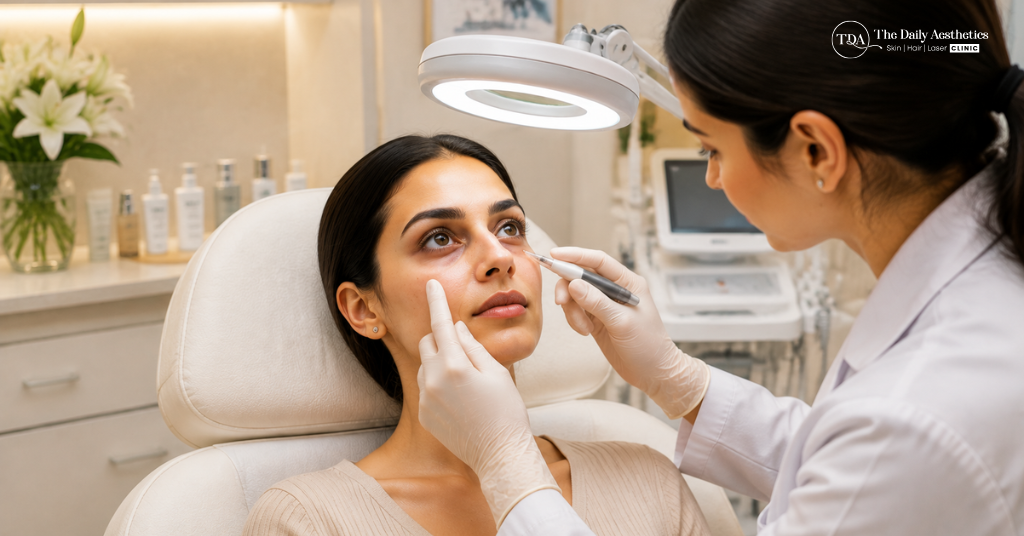
Introduction  Dark circles can feel unfair. You may sleep properly, drink water, use eye creams, and still hear, “You look tired.” For many people, concern is not just the shadow under the eyes. It is the way it changes the whole face, especially in photos, video calls, weddings, interviews, and everyday conversations.  The confusing part is that dark circles do not have one single cause. Some are caused by hollow tear troughs. Some are caused by pigmentation. Some come from thin skin, visible vessels, allergies, puffiness, genetics, or a mix of several factors.  That is why the real question is not “Which treatment is best?” The better question is: what type of dark circle do you have? Fillers, PRP, and laser treatment work in different ways, and choosing the wrong one can lead to disappointment, unnecessary expense, or avoidable risk.  This guide compares fillers vs PRP vs laser for dark circles in a practical, medically responsible way. It also explains when to consider a consultation at The Daily Aesthetics Clinic in Pune so your under-eye treatment is based on diagnosis, not trend-based guesswork.  Key Takeaways  What is the Real Difference Between Dark Circles, Hollows and Under-eye Bags?  Dark circles are darker-looking areas below the eyes, while hollows are structural dips that create shadows, and under-eye bags are puffiness or swelling. Some under-eye darkness can improve with self-care, while options such as lasers, peels, fillers, PRP, or surgery may be discussed when home care is not enough.  This difference is important because people often call everything “dark circles.” A brown patch, a bluish tone, a hollow groove, and a puffy bag can look similar in the mirror, but they respond to very different treatments.  A person with hollow tear troughs may need volume support. A person with brown pigmentation may need pigment control. A person with thin under-eye skin may need collagen and skin-quality support. A person with true under-eye bags may need a different evaluation altogether.  Before choosing filler, PRP, or laser, your first step should be identifying the visible pattern. This is where a proper under-eye assessment becomes valuable.  Concern type  How it may look  Common reason  Treatment direction  Hollow / structural dark circles  A dip or groove under the eye that creates a shadow  Tear trough anatomy, volume loss, bone structure, aging  Fillers may be discussed if anatomy is suitable  Pigmented dark circles  Brown, tan, grey-brown or darker patches under the eyes  Melanin, sun exposure, genetics, rubbing, post-inflammatory changes  Laser, peels, topical care or combination plans may help  Vascular / thin-skin circles  Blue, purple or reddish tones that look worse when skin is thin  Visible vessels, skin thinning, poor sleep, allergies, circulation factors  PRP, skin boosters, topical care or cautious laser may be considered  Under-eye bags  Puffiness or bulging under the lower eyelid  Fluid retention, allergies, fat pad protrusion, aging  Lifestyle, allergy care, selected energy treatments or surgical referral may be needed  Mixed dark circles  Hollowing plus brown pigment, thin skin, or puffiness  Multiple overlapping causes  Combination plan in the right sequence  Note: This table is a guide, not a diagnosis. A skin and facial assessment is needed before treatment selection.  Bottom Line: Dark circle treatment works best when the concern is classified before the treatment is chosen.  Not Sure What Type of Dark Circle You Have? A consultation at The Daily Aesthetics Clinic can help identify whether your under-eye concern is pigmentation, hollowness, thin skin, puffiness, or a mixed pattern. Book an Under-Eye Assessment Why Do Dark Circles Happen Even When You Sleep Well?  Dark circles can persist despite good sleep because they may be linked to genetics, aging, pigmentation, thin skin, allergies, volume loss, sun exposure, or facial anatomy. Sleep can make existing darkness look worse, but it is not always the root cause.  Several factors can contribute to dark under-eye areas, including eczema, melasma, sun exposure, alcohol overuse, smoking, and underlying health or skin conditions that need proper care.  This is why “sleep more” advice can feel frustrating. It may help if fatigue is a major factor, but it will not correct a tear through hollow, inherited pigmentation, chronic allergy rubbing, or skin thinning.  Common triggers that may worsen under-eye darkness include:  Fillers vs PRP vs Laser: Which One Treats Which Type of Dark Circle?  Fillers usually suit hollow or shadow-based dark circles; PRP usually suits thin or crepey skin quality concerns, and laser usually suits pigmentation or texture-related darkness. If your dark circles are mixed, you may need staged combination treatment instead of choosing only one option.  The simplest way to remember it is this: filler supports shape, PRP supports skin quality, and laser supports pigment and texture. But the eye area is too delicate for self-selection, so this rule should be used only as a starting point for discussion.  Treatment  Best for  How it works  Typical result pattern  Key caution  Under-eye fillers  Tear trough hollows and shadowing from volume loss  Hyaluronic acid filler adds support where the lower eyelid meets the cheek  Often visible earlier because the shadow is physically softened  Not ideal for major puffiness, poor lymphatic drainage, or unsuitable anatomy  PRP  Thin, dull, crepey, tired-looking skin and some texture concerns  Platelets from your own blood are prepared and delivered to support repair signals  Gradual improvement over weeks and sessions  Evidence for aesthetic use is still evolving, so expectations should stay realistic  Laser  Pigmented dark circles, texture, fine lines, and selected vascular or collagen concerns  Laser energy targets pigment or stimulates collagen depending on the device and settings  Progressive change over a series of sessions  Indian skin tones need careful settings to reduce pigmentation risk  Combination plan  Mixed hollows plus pigment, thin skin, or puffiness  Treats layers in sequence instead of forcing one method  More balanced, natural-looking improvement when planned well  Requires patience, staging, and clear aftercare  Note: Exact treatment selection depends on anatomy, skin tone, medical history, allergies, previous procedures, and expectations.  Bottom Line: The best treatment is not the strongest treatment; it is the one that matches the visible cause.  When Do Under-eye Fillers Make Sense for Dark Circles?  Under-eye fillers may make sense when the dark circle is mainly a hollow shadow, not true brown pigmentation. Hyaluronic acid filler may be used where the under-eye area and

Dark Circles Treatment: Fillers vs PRP vs Laser – Which One Do You Actually Need? Read More »

Dark Circles
Best PRP Treatment in Kharadi, Pune - Everything You Need to Know

Best PRP Treatment in Kharadi, Pune – Everything You Need to Know

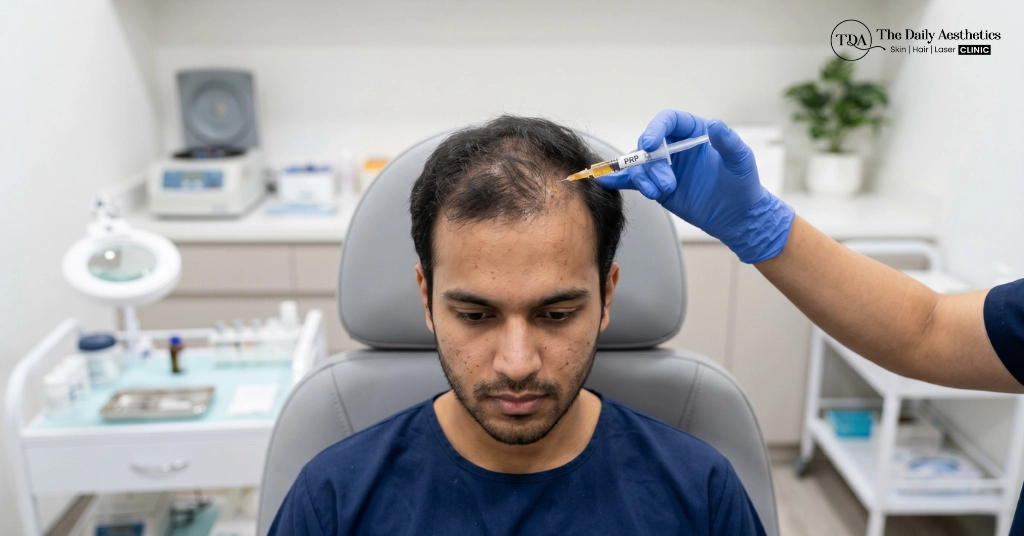
Introduction Hair thinning, patchiness, or skin that has lost its quality over time – these are not problems you have to accept. And if you’ve been searching for a treatment that works with your body rather than around it, PRP therapy is worth understanding properly. At The Daily Aesthetics Kharadi, PRP (Platelet-Rich Plasma) therapy is one of the most consistently requested treatments – for good reason. It uses your own blood to deliver a concentrated surge of growth factors exactly where your scalp or skin needs to rebuild.  Kharadi has over 22 skin and hair clinics listed on Practo alone, and the quality gap between them is significant. Whether you are dealing with pattern baldness, postpartum shedding, acne scarring, or simply skin that has slowed in its ability to repair itself, this guide covers everything you need to know about PRP treatment in Kharadi – how it works, how many sessions you need, what it costs, and how to choose a clinic you can trust.  Key Takeaways  What Is PRP Treatment?  PRP stands for Platelet-Rich Plasma – a concentration of your own blood platelets that is prepared in-clinic and injected into the scalp or skin to trigger a biological repair response. Platelets are the component of your blood responsible for healing. When concentrated to 3 to 5 times their normal level and placed precisely into thinning or damaged tissue, they release a cascade of growth factors that signal surrounding cells to regenerate.  These growth factors include PDGF (Platelet-Derived Growth Factor), VEGF (Vascular Endothelial Growth Factor), TGF-β, and IGF – each stimulating a specific response: new blood vessel formation, collagen production, cell proliferation, and follicle reactivation. This is not a synthetic compound or a foreign substance. It is entirely derived from your own biology, which is why PRP sits among the safest injectable treatments available in clinical aesthetics today.  At The Daily Aesthetics, PRP is used for both hair restoration and facial skin rejuvenation, with the protocol – injection depth, concentration, and session frequency – customized per patient based on their specific condition and clinical assessment. You can review the full clinical detail of TDA’s approach on the PRP Hair Loss Treatment page.  What Does PRP Treat – Hair, Skin, or Both?  PRP therapy has two well-established applications in aesthetic medicine – hair restoration and skin rejuvenation – and they share the same preparation method but differ in injection technique and target depth. For hair loss, PRP is injected at follicle level in the scalp to reactivate dormant follicles and improve the nutrient supply to the hair root. For skin, it is placed in the dermis to stimulate collagen, improve texture, and accelerate cell renewal.  The table below shows the full range of conditions PRP addresses and what patients can realistically expect from each application:  Application  Condition Treated  How PRP Helps  Expected Timeline  PRP for Hair Loss  Androgenetic alopecia (male/female pattern), alopecia areata, early-stage thinning  Growth factors reactivate dormant follicles, improve scalp blood supply, extend the anagen (growth) phase  Reduced shedding by session 3; visible regrowth by session 4-6  PRP Facial  Fine lines, dull skin, skin laxity, uneven texture  Stimulates collagen and elastin; improves firmness, tone, and hydration  Visible improvement from session 2-3  PRP for Acne Scars  Atrophic (depressed) scars, post-inflammatory marks  Collagen induction fills and smooths scar tissue from below  Progressive improvement over 4-6 sessions  PRP for Under-Eyes  Dark circles, tear trough hollowing, fine periorbital lines  Tissue thickening and collagen rebuilding beneath the eye  Gradual improvement over 3-4 sessions  PRP + GFC  Moderate to advanced hair loss needing stronger stimulation  GFC is an advanced PRP variant with higher growth factor density per session  Often faster visible results than standard PRP alone  Results vary between individuals based on severity of the condition, overall health, and treatment consistency. Your clinician confirms the right application during your consultation.  How Does PRP Treatment Work? The Step-by-Step Process  A PRP session follows a precise five-step clinical process from blood draw to injection, typically completed within 45 to 60 minutes. There is no general anesthesia involved, and patients leave the clinic immediately after treatment. Here is exactly what happens:  After the session, your clinician provides aftercare guidance. Most patients return to normal daily activities on the same day. Ready to start your PRP treatment in Kharadi? Our expert team at The Daily Aesthetics is available for consultations at our Kharadi branch. Contact Us Now Who Is a Good Candidate for PRP in Kharadi?  PRP delivers its strongest results when hair follicles are still present in the scalp but have become dormant – not yet permanently lost. For skin, it works best where the underlying dermis retains some capacity to respond to collagen stimulation. This makes patient selection an important part of the process, and why a consultation always precedes treatment at The Daily Aesthetics.  You are likely a strong candidate if you are experiencing:  PRP is generally not recommended for patients with platelet dysfunction disorders, active skin infections in the treatment area, those on anticoagulant therapy, patients undergoing active cancer treatment, or during pregnancy and breastfeeding.  Research finding: A 2021 meta-analysis published in the Journal of the American Academy of Dermatology found PRP produced a statistically significant increase in total hair count per cm² in patients with androgenetic alopecia – with the greatest response in patients who began treatment within 5 years of first noticing thinning.  How Many PRP Sessions Do You Need?  The number of sessions required depends on the condition being treated and how far it has progressed. For hair loss, most patients start to see reduced shedding by session 2 to 3, with visible new growth emerging between sessions 4 and 6. For skin rejuvenation, texture and hydration improvements are often noticeable earlier – from sessions 2 to 3. The table below outlines general clinical protocols by concern:  Condition  Initial Sessions  Interval  Results Visible By  Maintenance  Male Pattern Baldness (early)  4 sessions  3-4 weeks  Session 3-4  Every 4-6 months  Male Pattern Baldness (moderate)  6 sessions  3-4 weeks  Session 4-5  Every 3-4 months  Female Hair Thinning  4-5 sessions  2-3 weeks  Session 3-4  Every 4-6 months  Alopecia Areata  5-6 sessions  2-3 weeks  Session 4-6  Every 3-4 months  Postpartum Hair Loss  3-4 sessions  3-4 weeks  Session 2-3  As needed  PRP Facial (Skin Rejuvenation)  3-4 sessions  4 weeks  Session 2-3  Every 6 months  PRP for Acne Scars  4-6 sessions  3-4 weeks  Session 3-5  Every 4-6

Best PRP Treatment in Kharadi, Pune – Everything You Need to Know Read More »

PRP Hair Loss Treatment
Call WhatsApp
Scroll to Top