
Laser Tattoo Removal: How Many Sessions Do You Need and What Affects Results?
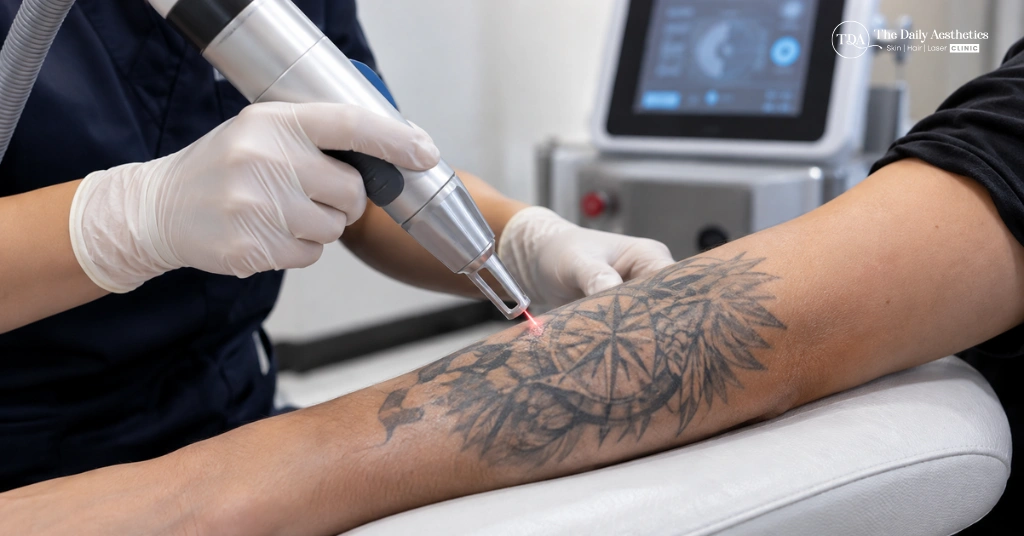
Introduction A tattoo can carry a story. Sometimes that story still feels right, and sometimes it no longer matches who you are, where you work, how you dress, or what you want to see in the mirror every day. For some people, tattoo removal is practical. A visible tattoo may affect job applications, uniforms, family events, or professional confidence. For others, it is deeply personal. It may be connected to an old phase, an old relationship, a spelling mistake, a faded design, or a memory they are ready to move away from. Laser tattoo removal is not a one-session eraser. At The Daily Aesthetics Clinic in Pune, the right question is not only “Can this tattoo be removed?” It is “How many sessions might my tattoo need, and what can affect the result?” Most tattoos fade gradually because the laser breaks ink into tiny particles and the body clears those particles over time. This is why tattoo color, ink density, tattoo age, tattoo location, skin type, aftercare, and session spacing can all change the timeline. This guide explains laser tattoo removal sessions in a practical, realistic way. It is written for people in Pune who want to understand the process before booking a consultation, not people looking for unrealistic promises or quick fixes. Key Takeaways How Many Laser Tattoo Removal Sessions Do You Need? Many people need around 5 to 10 laser tattoo removal sessions, but this is only a broad starting estimate. Some small, older, black tattoos may fade in fewer sessions, while large, colorful, dense, layered or professional tattoos may need more sessions and a longer timeline before meaningful fading is visible. The reason is simple: every tattoo sits differently in the skin. Two people may both have a wrist tattoo, but one may have light black amateur ink and the other may have a dense cover-up with red, green and blue pigment. Their session count will not be the same. A good provider should never promise complete removal after seeing only a photo. A photo can show the design, but it may not reveal ink depth, scarring, skin sensitivity, previous laser work, or how your skin heals. If you are comparing options in Pune, it is better to start with a proper Tattoo Removal Treatment in Pune assessment so the plan is based on your tattoo, your skin type, and your expectations. Trying to Estimate Your Tattoo Removal Sessions? A tattoo assessment can help you understand whether your tattoo may need a shorter, moderate, or longer treatment plan before you begin. Book a Tattoo Removal Assessment Why Does Laser Tattoo Removal Need Multiple Sessions? Laser tattoo removal needs multiple sessions because the laser does not pull ink out of the skin in one sitting. Laser light energy breaks tattoo ink into smaller particles, and the body gradually clears those particles between sessions. Each sitting targets only part of the pigment load. This is why patience matters. A tattoo may look frosted or lighter immediately after treatment, but the real fading process continues as the treated area heals. Some sessions may create obvious fading. Others may create slower, more subtle change. Spacing sessions too close together does not automatically speed up removal. In many cases, it can irritate the skin, increase downtime, or reduce the benefit of the body’s natural clearing process. The most realistic approach is a staged plan: assess the tattoo, treat conservatively, allow healing, review fading, adjust settings, and continue only when the skin is ready. What Happens During a Laser Tattoo Removal Session? A laser tattoo removal session usually includes tattoo assessment, skin preparation, eye protection, laser treatment, cooling, dressing and aftercare instructions. The actual laser time may be short, but planning and aftercare are important because the skin still needs to heal properly after each session. At The Daily Aesthetics Clinic, the tattoo removal journey is typically planned around the tattoo’s size, color, depth, skin tone, comfort level, and fading goal. Some patients want full removal, while others want fading before a cover-up tattoo. The sensation is often described as a quick snapping or hot prickling feeling. Discomfort varies by area, tattoo density, individual sensitivity, and whether numbing support is used. Stage What Happens Why It Matters Tattoo Assessment The provider checks size, color, location, ink density, skin tone and previous scarring. This helps estimate sessions and choose safer laser settings. Skin Preparation The area is cleaned and comfort measures may be used when appropriate. Clean preparation lowers avoidable irritation risk. Eye Protection Protective eyewear is used during the laser session. Laser safety is essential for every session. Laser Treatment Controlled pulses target tattoo pigment without treating the whole skin surface aggressively. Precision supports fading while protecting surrounding skin. Cooling And Aftercare The treated skin is cooled, dressed and guided through aftercare. Healing between sessions affects the final result. Note: The exact sequence may vary depending on tattoo area, skin condition, comfort needs and provider assessment. Bottom Line: A good tattoo removal session is not just laser time; it includes assessment, safety planning and aftercare. Which Tattoo Colors Are Easiest and Hardest to Remove? Black and dark blue tattoos often respond better because darker pigments absorb laser energy more effectively. Colored tattoos can be more complex because different pigments respond to different wavelengths, and tattoo color and skin type both influence laser selection and treatment response. This is one of the biggest reasons session count varies. A small black tattoo may fade predictably, while a colorful tattoo with green, yellow, white, orange or mixed ink may need more patience and may not clear evenly. White and skin-colored inks can be especially unpredictable because they may darken or change shade after laser exposure. Cosmetic tattoos and permanent makeup also need careful evaluation because pigments can behave differently from standard tattoo ink. Tattoo Color Usual Response Pattern What To Ask Before Treatment Black Or Dark Blue Often responds more predictably than lighter colors. How many sessions may be realistic for this ink density? Red
Laser Tattoo Removal: How Many Sessions Do You Need and What Affects Results? Read More »
Laser Treatment, Skin Laser Treatment