

TDA

Skin Hydration

Original HydraFacial vs Regular Facial: How It Works and Why It Feels Different

Original HydraFacial vs Regular Facial: How It Works and Why It Feels Different 

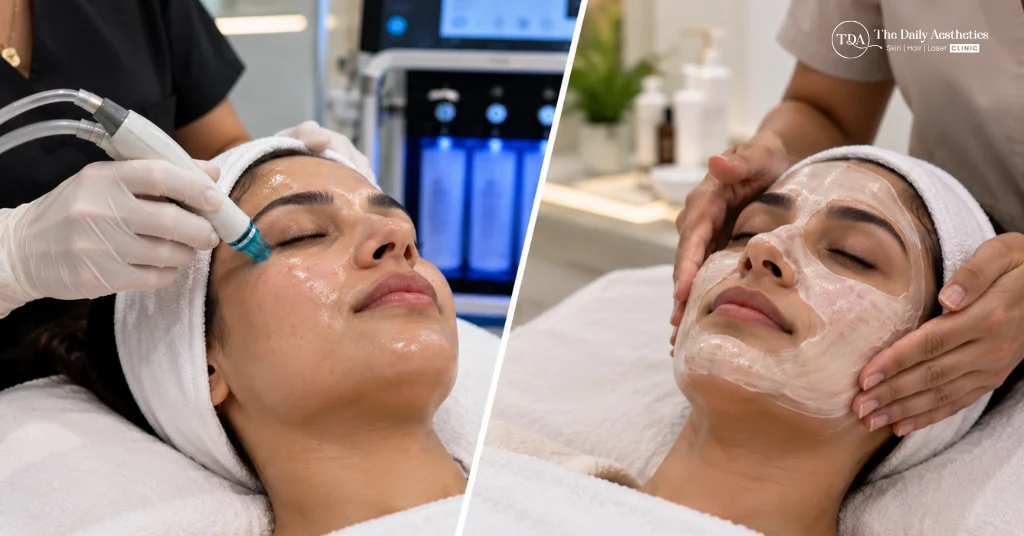
Introduction  You book a facial expecting cleaner, fresher skin. Then someone tells you an “Original HydraFacial” is completely different from a regular facial, even though both use the word facial. The confusion is understandable. From the treatment bed, both can involve cleansing, exfoliation, hydration and a post-treatment glow. The experience underneath those steps, however, is not the same.  A regular facial is a broad category. The products, massage, steam, exfoliation and extraction technique can change from one salon or clinic to another. An Original HydraFacial is a branded, device-based treatment that follows a structured cleanse, exfoliate, extract and hydrate process using the HydraFacial system and its Vortex-Fusion technology.  At The Daily Aesthetics Clinic, patients often ask whether the difference is only marketing or whether the treatment genuinely feels and works differently. The practical answer is that the device, extraction method, fluid delivery and treatment consistency create a noticeably different experience, but that does not mean every skin concern automatically needs HydraFacial.  This guide explains Original HydraFacial vs regular facial without treating either option as a universal winner. You will learn how each treatment works, why HydraFacial feels more like a controlled wet glide than a massage-based facial, which skin goals each option may suit, how to recognise a genuine HydraFacial treatment, and when a skin assessment is more useful than choosing by treatment name alone.   Key Takeaways  Not Sure Which Facial Fits Your Skin? Dullness, congestion, dehydration and sensitivity can look similar but may need different treatment approaches. Start with the concern rather than the trend name. Book a Skin Consultation What Is an Original HydraFacial?  An Original HydraFacial is a branded hydradermabrasion treatment performed with the HydraFacial platform. Instead of relying mainly on hands, scrubs and masks, the treatment uses a specialised handpiece to move solutions across the skin while cleansing, exfoliating, loosening debris, extracting congestion and delivering hydrating solutions in a controlled sequence.  The defining point is not simply that the treatment uses water. The HydraFacial system is built around Vortex-Fusion technology, specialised tips and treatment solutions. That is why the phrase “Original HydraFacial” matters: many generic hydradermabrasion or aqua-facial machines can look similar from a distance but are not the same branded platform.  If you want the full treatment overview, benefits and local clinic information, explore HydraFacial Treatment in Pune. This comparison guide stays focused on how the Original HydraFacial experience differs from a regular facial.  What Is a Regular Facial?  A regular facial is a broad term for hands-on skin care performed in a salon, spa or clinic. There is no single universal protocol. One facial may focus on relaxation and massage, another on blackhead extraction, another on moisturising masks, and another on exfoliation or brightening products.  A typical regular facial may include cleansing, steam, a scrub or enzyme exfoliant, manual extraction, facial massage, a mask, serum, moisturiser and sunscreen. The exact products and intensity depend heavily on the provider, the facial selected and the condition of your skin on that day.  That variability is not automatically a disadvantage. A skilled professional facial can be highly customised and relaxing. It simply means that “regular facial” does not describe one standardised technology in the way HydraFacial describes a specific branded system.  How Does Original HydraFacial Work Step by Step?  Original HydraFacial works through a structured sequence that combines surface cleansing, controlled exfoliation, suction-based extraction and hydration. The exact protocol can vary according to the HydraFacial level, boosters and the skin assessment, but the device-based flow is what separates the experience from a conventional hands-on facial.  Step 1: Cleansing and Surface Preparation  The skin is cleansed and the handpiece is moved across the face in overlapping passes. Rather than a dry scrub, the treatment feels wet and gliding because liquid is moving through the tip while surface debris and excess oil are loosened. Most people notice a light pulling sensation rather than vigorous rubbing.  Step 2: Gentle Exfoliation  A controlled exfoliating solution may be used to help lift compacted dead skin cells and prepare congested pores. The strength and ingredients should be chosen according to skin tolerance. Some people feel mild tingling; others mainly notice the cool movement of the handpiece.  Step 3: Suction-Based Extraction  This is usually the stage that feels most different from a regular facial. The tip creates controlled suction to lift loosened oil and pore debris. Instead of finger pressure around individual blackheads, the handpiece moves continuously across the treatment area. Suction intensity can be adjusted, so the sensation may range from gentle vacuum pressure to a stronger pull in congested areas.  Step 4: Hydration and Finishing Solutions  The final stage focuses on hydration and conditioning. Treatment solutions are delivered through the device onto freshly cleansed skin. Depending on the protocol, additional boosters or finishing steps may be selected. The result is usually a softer, smoother and more hydrated feel immediately after the session, although individual response varies.  Want to Experience the Device-Based Difference? Original HydraFacial combines cleansing, exfoliation, extraction and hydration in one structured treatment. Your skin assessment decides how the protocol should be adjusted. Explore Original HydraFacial Why Does Original HydraFacial Feel Different from a Regular Facial?  The biggest difference is sensory. A regular facial often feels warm, hands-on and massage-led. Original HydraFacial feels more like a cool, fluid treatment with repeated gliding passes and controlled suction. The skin is being treated by a handpiece for much of the session, so the experience is less about massage and more about consistent device contact.  People often describe the differences in four ways:  This does not mean HydraFacial is completely sensation-free. Sensitive areas around the nose can feel stronger during suction, exfoliating solutions may tingle, and reactive skin can become temporarily pink. “Gentle” should mean controlled and appropriate for your skin, not that no one ever experiences sensitivity.  Feature  Original HydraFacial  Regular Facial  Why It Matters  Core Method  Device-based Vortex-Fusion treatment with fluid flow and suction.  Primarily hands-on; protocol varies by facial and provider.  The treatment experience and consistency are different.  Cleansing  Performed

Original HydraFacial vs Regular Facial: How It Works and Why It Feels Different  Read More »

Skin Care
What Are Skin Boosters? Benefits for Hydration, Texture, Elasticity and Skin Quality

What Are Skin Boosters? Benefits for Hydration, Texture, Elasticity and Skin Quality

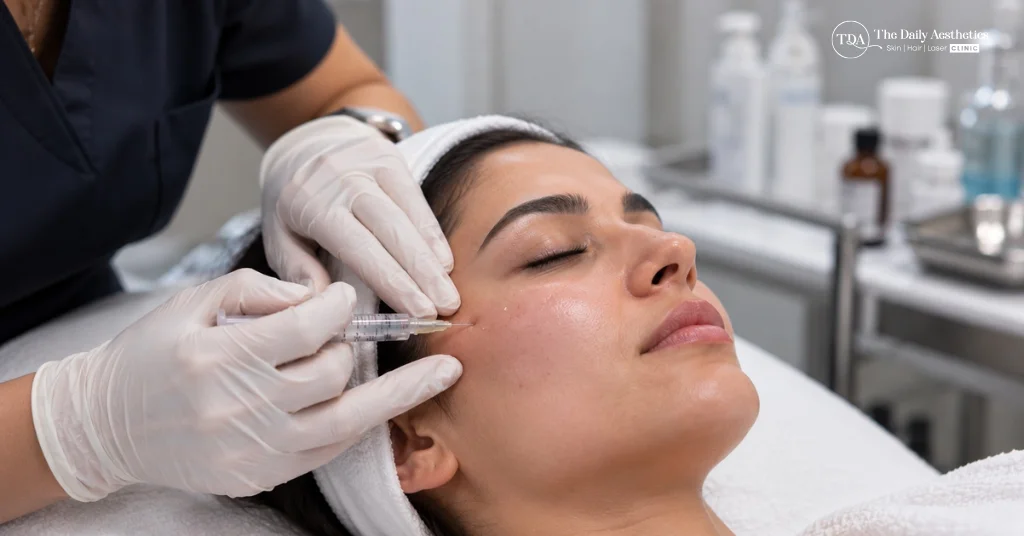
Introduction  Your skin can look tired even when you are not. It can feel tight after moisturiser, look dull under makeup, show fine dehydration lines, or lose that fresh bounce you remember from earlier years.  That is where skin boosters often enter the conversation. They are not the same as facial fillers, and they are not simply “strong facials.” In simple terms, skin boosters are minimally invasive treatments designed to improve skin quality from within, especially hydration, texture, radiance and overall skin feel.  At The Daily Aesthetics Clinic in Pune, patients often ask whether skin boosters will make the face look fuller, whether they help dry skin, and whether they are suitable for early fine lines. The honest answer is that skin boosters are usually chosen for skin quality, not structural facial volume.  This guide explains what skin boosters are, how they may support hydration, texture, elasticity and overall skin quality, and when another treatment may be a better fit. It is written to help you understand the category before you book a consultation or compare treatment names online.   Key Takeaways  Is Your Skin Dehydrated, Dull or Losing Its Smoothness? A professional skin assessment can help identify whether a skin booster or another treatment better matches the concern you are seeing. Book a Skin Consultation What Are Skin Boosters and How Do They Work?  Skin boosters are skin-quality treatments that usually work through small, carefully placed injections within or just below the skin. Their aim is to improve hydration, radiance, texture and overall skin condition rather than change the shape of the face.  The phrase “skin booster” is broad. In many clinics, it may refer to hyaluronic acid-based boosters, bioremodelling injectables such as Profhilo, or regenerative options such as PDRN and Polynucleotides. These are not identical treatments, but they sit under the same wider skin-quality conversation.  Think of the category this way: topical skincare works on the surface, facials help cleanse and refresh the skin, lasers and peels target texture or pigment in specific ways, and skin boosters work inside the skin to support hydration and skin quality. The exact result depends on the formulation and the concern being treated.  People usually consider skin boosters when their skin feels dry from within, looks dull, shows early fine lines, or lacks smoothness despite a regular skincare routine. The goal is typically a healthier, fresher look that still appears natural.  How Do Skin Boosters Improve Skin Hydration?  Hydration is one of the strongest and most commonly discussed benefits of skin boosters, especially hyaluronic acid-based options. Hyaluronic acid attracts and holds water, so when it is placed into the skin in small amounts, it may help improve moisture retention and a fresher-looking surface.  This is different from applying a hydrating serum. A serum can support the outer skin barrier, but it may not address deeper dehydration or skin that looks tired despite good home care. A skin booster is placed beneath the surface, where it can support the skin’s hydration environment more directly.  For patients, better hydration may look like skin that feels less tight, appears more rested, reflects light more evenly and allows makeup to sit more smoothly. It should not be understood as instant “glass skin” or a guaranteed glow. Results vary, and maintenance often matters.  Hydration-focused boosters may be especially relevant for people who describe their skin as dull, dry, tired, crepey or dehydrated but do not want volume in the cheeks, lips or jawline. This is why consultation is important: the treatment goal is skin quality, not facial reshaping.  Can Skin Boosters Improve Rough or Uneven Texture?  Skin boosters may help the appearance of roughness, uneven skin feel and fine dehydration lines when these concerns are linked to poor hydration or reduced skin quality. They are not designed to replace resurfacing treatments when deeper acne scars, significant pores or marked textural damage are the main concern.  Texture is often misunderstood. A person may say their skin feels “bumpy,” “not smooth,” or “not fresh,” but the reason may be dehydration, clogged pores, acne marks, open pores, sun damage or scarring. Each cause needs a different plan.  When texture is mainly linked to dehydration and early skin-quality decline, boosters may be considered. When texture is linked to acne scars, enlarged pores, pigmentation or thick surface buildup, other treatments such as microneedling, peels, lasers or medicated facials may be more suitable.  A good consultation should identify whether the surface needs exfoliation, pigment care, oil control, barrier repair, collagen support or deeper treatment. Choosing a skin booster without this step can lead to underwhelming results because the treatment may not match the real cause. Improve Skin Quality Without Adding Facial Volume Explore treatment options designed around hydration, texture and natural-looking skin quality rather than facial reshaping. Explore Skin Treatment Options Do Skin Boosters Improve Elasticity and Firmness?  Skin boosters may support elasticity and firmness in selected patients, but this benefit should be explained carefully. Hydration and radiance are clearer goals for many hyaluronic acid-based boosters, while elasticity results depend more on the product, treatment protocol, baseline skin quality and individual response.  Elasticity means the skin’s ability to stretch and bounce back. Early loss of elasticity can show as crepey texture, mild laxity, softness around the cheeks or neck, or skin that looks less “springy.” Some skin boosters may help the skin appear more supple, but they cannot lift heavy sagging.  If the concern is mild loss of bounce or early skin thinning, skin boosters may be part of the plan. If the concern is deeper sagging, jowling, heavy folds or significant laxity, treatments such as HIFU, thread lift, fillers, biostimulatory treatments or another approach may be discussed instead.  This is why phrases like “firming” and “lifting” should not be used loosely. A skin booster can improve skin quality, but it is not the same as a lifting procedure.  What Does Better Skin Quality Actually Mean?  Better skin quality usually means the skin looks and feels healthier. It may appear more hydrated, smoother,

What Are Skin Boosters? Benefits for Hydration, Texture, Elasticity and Skin Quality Read More »

Skin Care
Festive Skincare Guide: Garba to Diwali Glow Tips

From Garba Nights To Diwali Lights: Your Festive Skincare Guide

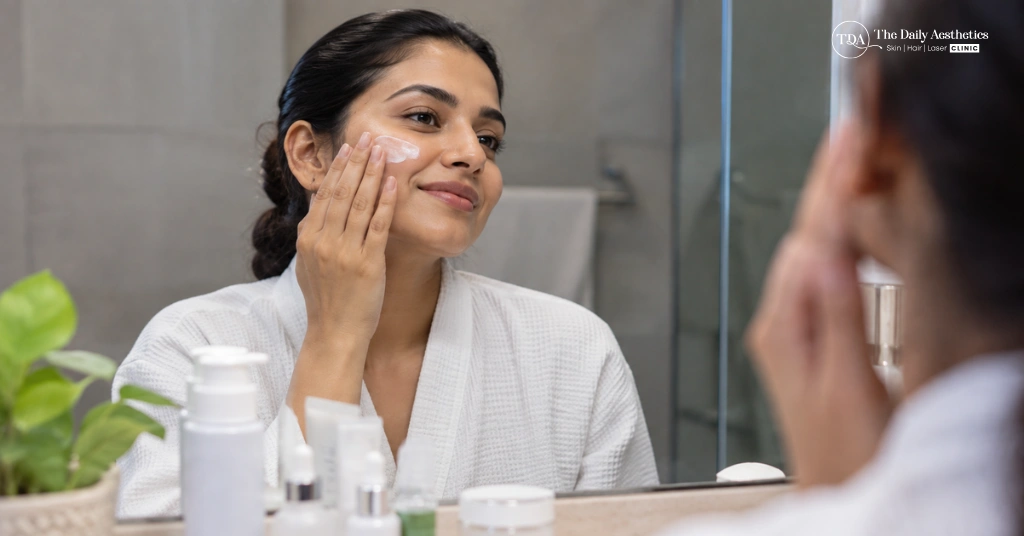
Introduction  Festive season skin has its own kind of pressure. You want your makeup to sit smoothly, your photos to look fresh, and your skin to feel calm through Garba nights, late dinners, travel, lights, sweets, outdoor events, and Diwali celebrations.  The reality is that your skin is doing a lot during this period. Sweat, heavy makeup, lack of sleep, pollution, extra sun exposure, dehydration, frequent cleansing, and last-minute product experiments can all show up as dullness, clogged pores, tanning, breakouts, dryness, or irritation.  This festive skincare guide is designed to help you move from Navratri to Diwali with practical care, not panic. At The Daily Aesthetics Clinic, we often see that the best festive glow comes from simple planning, gentle consistency, and choosing professional treatments only when they genuinely suit your skin.  Use this as a skin calendar for Pune’s festive season. It covers what to do before Garba, after long makeup nights, between Navratri and Diwali, on Diwali day, and after the celebrations when your skin needs recovery rather than more pressure.   Key Takeaways  How Should You Prepare Your Skin Before Navratri Begins?  Prepare your skin before Navratri by keeping your routine simple, consistent, and barrier-friendly. Focus on cleansing, hydration, moisturizing, sunscreen, and only one or two targeted actives if your skin already tolerates them. This is not the right time to start harsh scrubs, strong peels, or multiple new products together.  The goal before the festive rush is not to transform your skin overnight. It is to make your skin calmer, more hydrated, and less reactive so makeup applies smoothly and your skin can handle longer evenings.  A practical pre-Navratri routine can include a gentle cleanser, lightweight moisturizer, broad-spectrum sunscreen in the morning, and a calming night routine that supports the skin barrier. If you already use vitamin C, niacinamide, retinol, or exfoliating acids, keep them steady rather than increasing frequency right before events.  If your skin is acne-prone, pigmented, sensitive, or recently irritated, avoid copying routines from reels or friends. What gives one person a glow can cause another person redness, bumps, or peeling.  Want Festive Glow Without Product Overload? Start with a skin assessment so your routine matches your skin type, sensitivity, and festive calendar. Explore HydraFacial Treatment In Pune What Should You Do Before a Garba Night?  Before a Garba night, prep your skin for sweat, friction, makeup, and long hours. Choose lightweight hydration, non-comedogenic makeup, sunscreen for outdoor events, and a primer or base that suits your skin type. Avoid thick layers if your skin is oily, acne-prone, or easily congested.  Garba is beautiful, but your skin experiences heat, sweat, dust, lights, hair products, jewellery friction, and repeated touching through the evening. The best pre-Garba skincare is not heavy. It is breathable.  Cleanse your face before makeup so sweat and oil are not trapped under layers. Use a moisturizer that settles well and does not pill. If you are applying sunscreen, allow it to absorb before makeup. For oily or combination skin, choose lighter textures and blotting papers instead of adding powder again and again.  For sensitive skin, skip last-minute brightening masks, strong acids, and unfamiliar products. A calm skin barrier will always look better under makeup than irritated skin trying to hide under more concealer.  How Can You Protect Your Skin During Garba Sweat and Makeup?  During Garba, protect your skin by managing sweat gently instead of repeatedly wiping or rubbing the face. Use a clean tissue or soft towel to blot sweat, keep your hands away from acne-prone areas, drink water regularly, and avoid layering more heavy makeup over sweat and oil.  Sweat itself is not the enemy. The problem starts when sweat mixes with heavy makeup, dust, oil, sunscreen residue, hair spray, and repeated touching. This can make pores feel clogged and may trigger small bumps, blackheads, whiteheads, or irritation after a few festive nights.  Keep a small skin-safe kit with blotting paper, a clean tissue, lip balm, and water. Avoid using shared makeup, dirty sponges, or old brushes during the festival rush. These small hygiene habits can make a visible difference, especially for acne-prone skin.  What Should Your Post-Garba Night Routine Look Like?  After Garba, your routine should focus on complete makeup removal, gentle cleansing, hydration, and calming the skin. Do not sleep with makeup, do not scrub aggressively, and do not use strong actives if your skin feels hot, red, dry, or irritated after a long night.  This is the step many people skip because they are tired. But post-Garba cleansing is where you prevent the next morning’s clogged pores, dullness, and makeup-related breakouts.  A practical night routine can include an oil-free makeup remover or cleansing balm if suitable for your skin, followed by a mild cleanser. Then use a simple moisturizer or barrier-supporting product. If you use actives, pause them for the night if your skin feels sensitive or overworked.  Do not try to punish your skin after heavy makeup. Over-cleansing, steaming, scrubbing, and using several actives together can make the barrier weaker and the face more irritated the next day.  Seeing Breakouts After Festive Makeup? If your pores feel congested or your acne flares after heavy makeup, a concern-based facial may help your skin reset safely. Explore Medicated Facial Treatment In Pune What Should You Do Between Navratri and Diwali?  Between Navratri and Diwali, give your skin a recovery window. This is the best time to address dullness, dehydration, mild tanning, clogged pores, rough texture, or makeup fatigue without rushing into aggressive treatments too close to your main Diwali events.  Think of this phase as a repair week. Your skin may look tired because of late nights, outdoor exposure, sweat, pollution, dehydration, and frequent makeup. Instead of chasing instant brightness, aim for a healthier base.  If the main concern is dehydration and dull texture, professional hydration-focused options such as Skin Booster Treatment In Pune may be discussed after consultation. If the concern is surface dullness, congestion, or pre-event glow, a gentle facial plan may be

From Garba Nights To Diwali Lights: Your Festive Skincare Guide Read More »

Skin Care
Call WhatsApp
Scroll to Top